

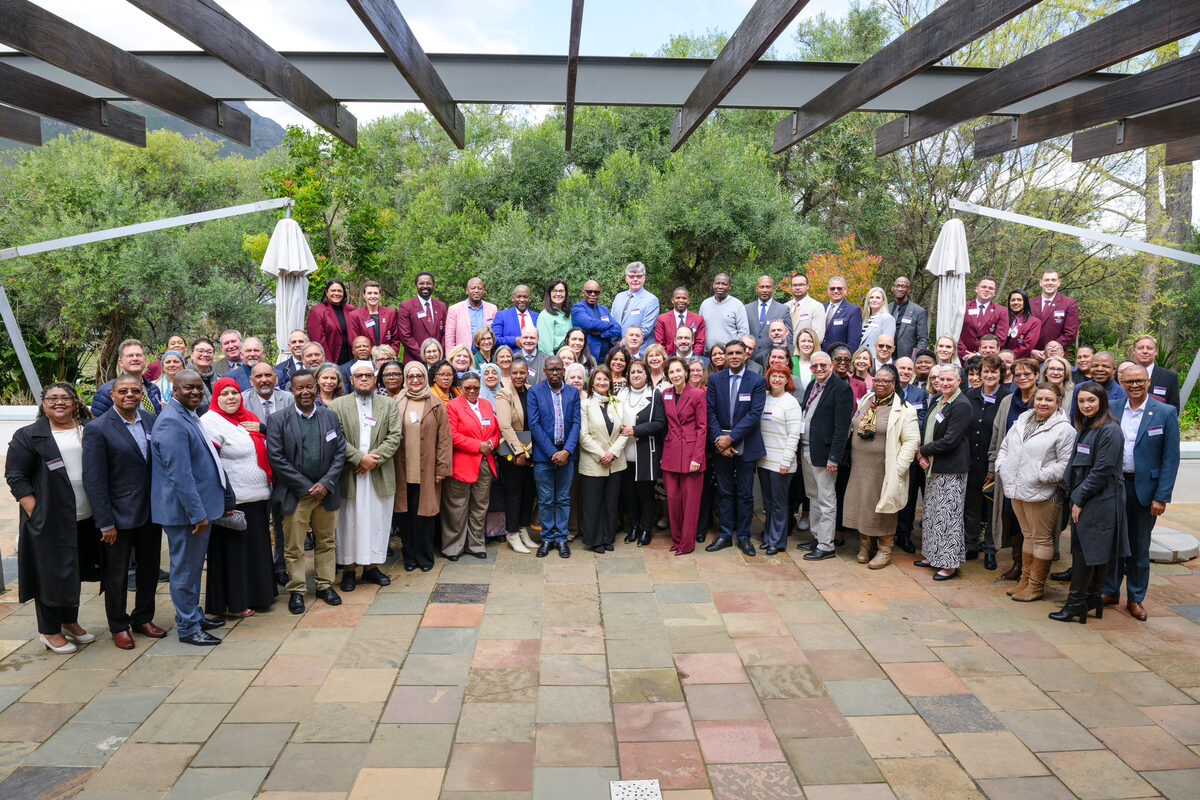
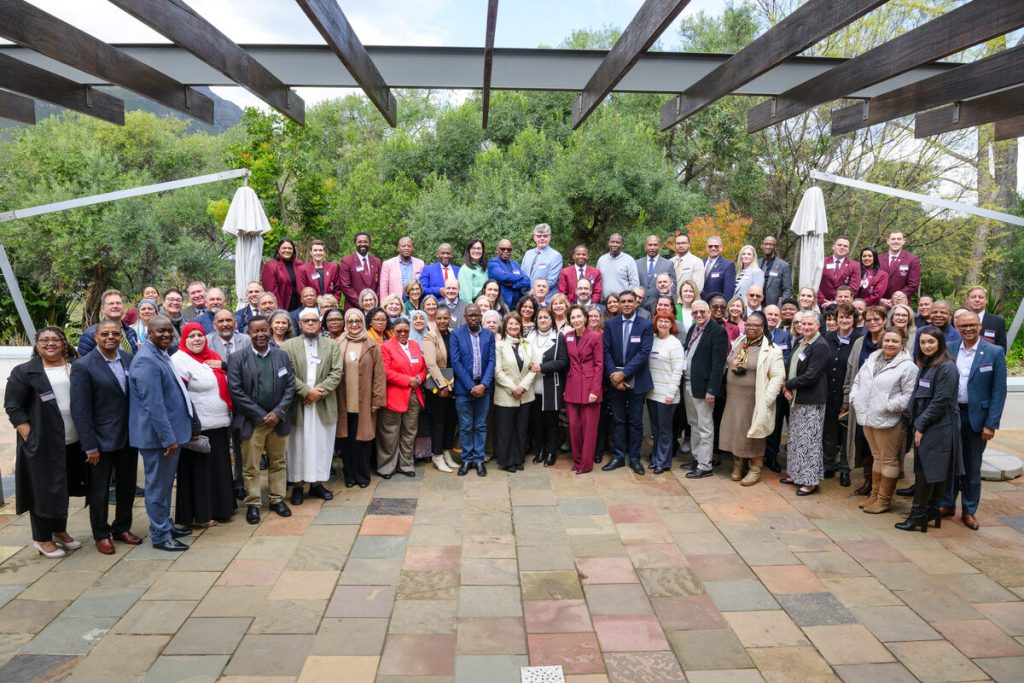
Stellenbosch University’s (SU) Student Recruitment Division hosted nearly 80 principals from priority high schools across the province along with representatives of the Western Cape Education Department (WCED).
The breakfast was held on campus at the Stellenbosch Institute for Advanced Study on Monday 22 September.
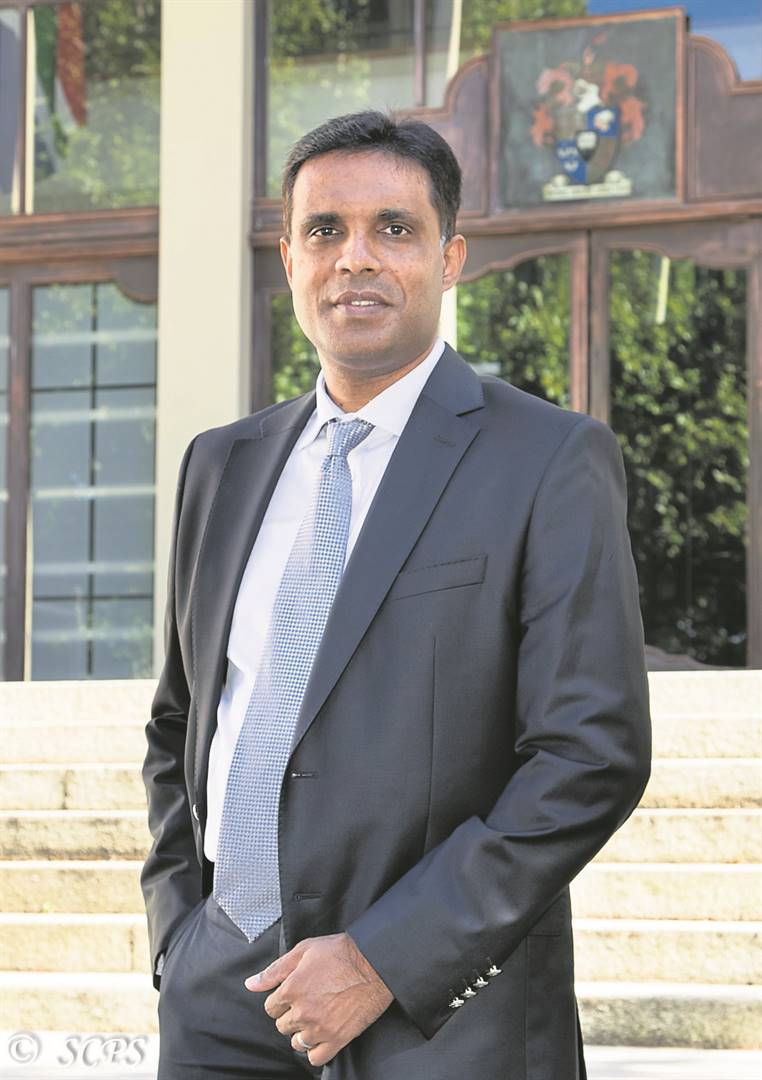
It provided an opportunity for principals from SU’s top partner schools in the Cape Town metro and Cape Winelands districts to engage with Prof Deresh Ramjugernath, SU rector and vice-chancellor, on his vision for SU, and to further strengthen their collaboration with the institution. Members of the rectorate and faculty deans were also present.
“Partnerships with schools are not just a nice-to-have, they are essential. They are part of our collective responsibility to the next generation. The work you do and the work we do as a university is about ensuring we leave the next generation more well-resourced and well-equipped than we are now,” Ramjugernath said in his address.
“Our story begins in your classrooms, your corridors and your care. The foundations you lay we continue to build on as an institution. Without your dedication the excellence we strive for at SU is not possible.”
He shared the university’s long-term vision, SU Vision 2040, and its aspiration to become Africa’s first global top 100 university. Calling on schools to support SU’s commitment to working in service of society, Ramjugernath said: “Education is not only a pathway to employment, but also a catalyst for positive social change.”
Highlighting SU’s focus on student success and employability, he pointed to the impact of initiatives such as the Dell Young Leaders Programme, which supports students from disadvantaged backgrounds and is often NSFAS-funded.
Ramjugernath also acknowledged ongoing challenges in higher education, such as student debt and the financial sustainability of the sector, and said transformation in education is a continuous process.
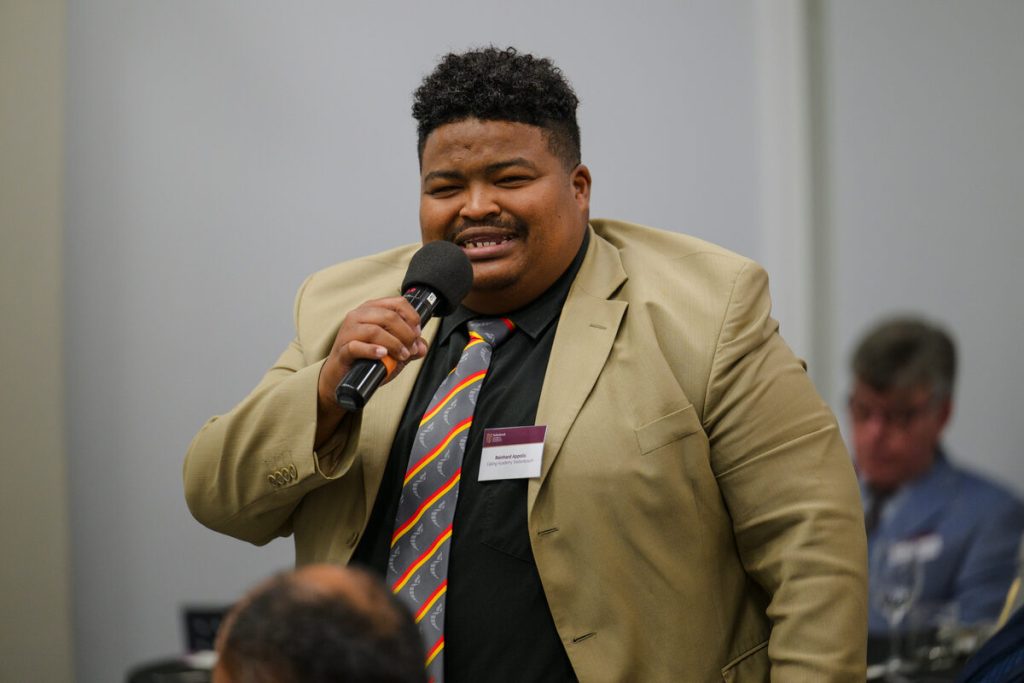
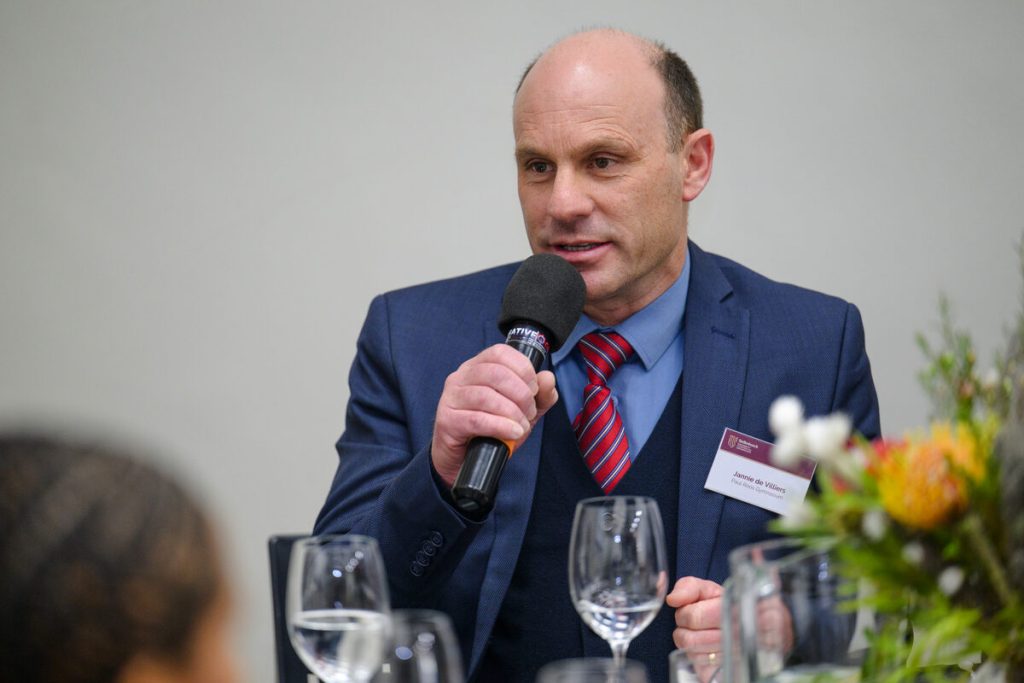
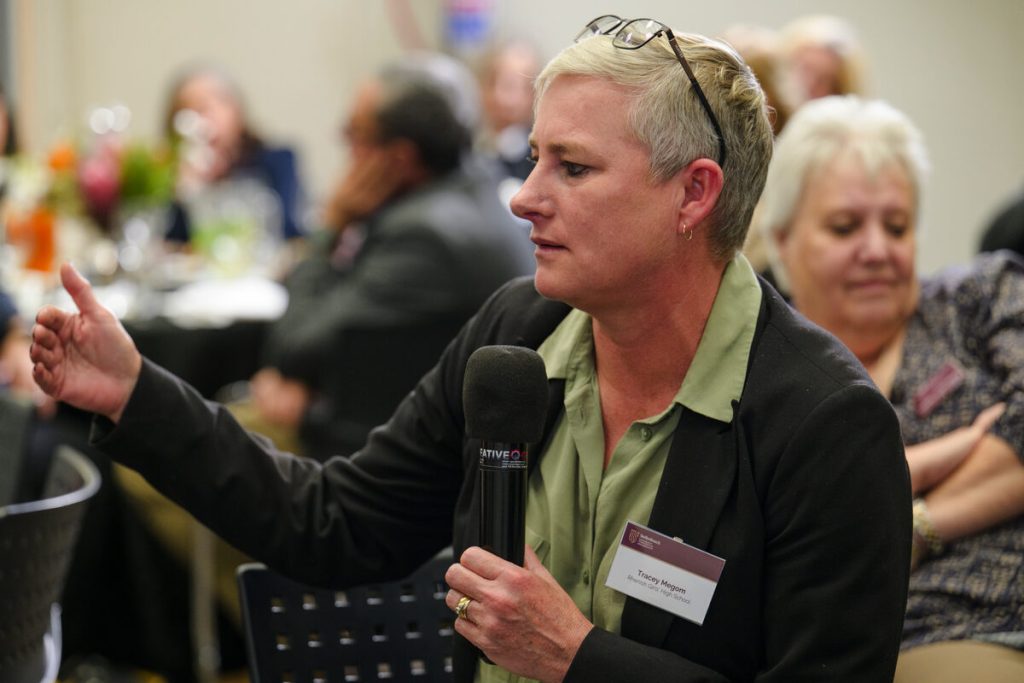
The principals used the platform to raise pressing questions and share perspectives on issues such as preparing learners for the demands of higher education, encouraging uptake of STEM subjects, navigating the ethical use of artificial intelligence, and ensuring education fosters academic achievement, critical thinking, values and ethical leadership.
They also drew SU leaders on having plans in place at the start of the academic year to manage potential disruptions of the institution when they occurred.
The gathering closed with a call for continued collaboration.
“The work you’re doing is essential for us to realise the vision of SU,” Ramjugernath concluded. “Together, let’s keep building a future South Africa, a future Africa and a world in which we can all be proud of our contributions.”

You must be logged in to post a comment.