


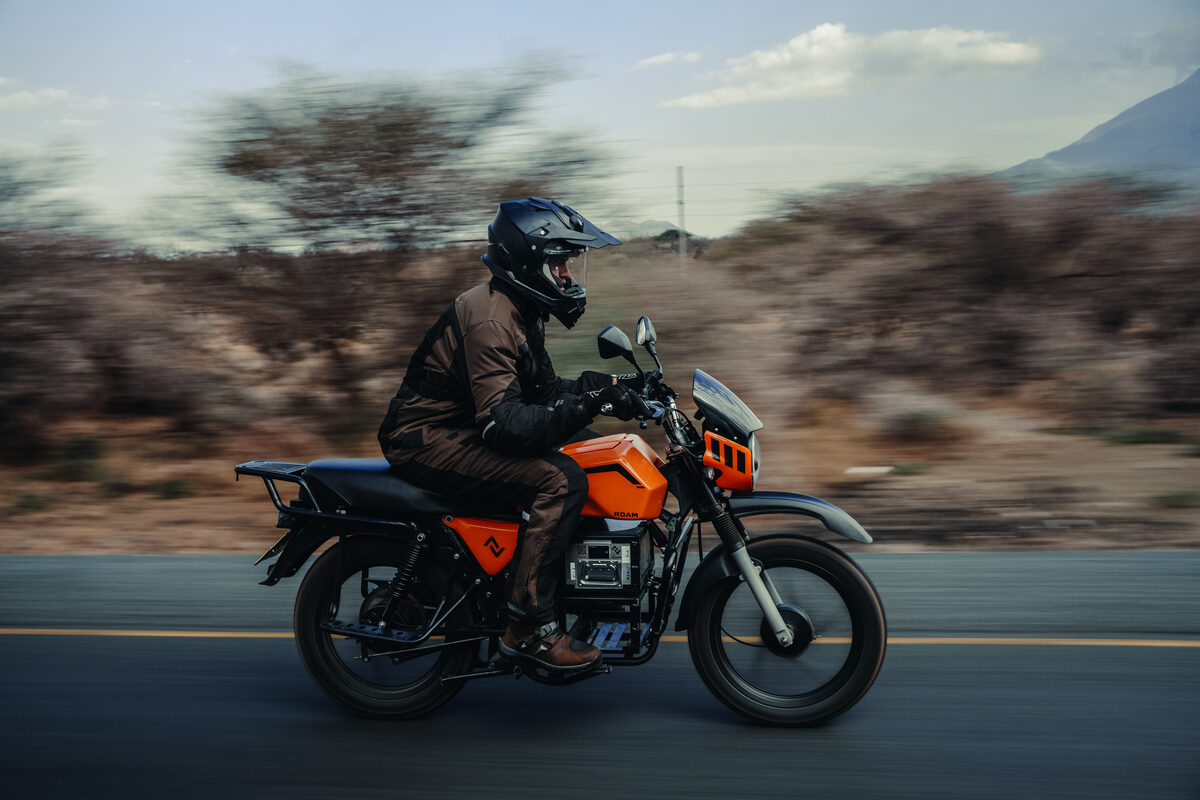
“The sun is your petrol?”
These are the words of a stunned Bostwanan man as he gaped open-mouthed at a solar-powered electric bike.
“You don’t need oil, you don’t need petrol,” he says when asked if he would like the bike to be available in his country. “Make a plan, Sir Stephan,” he pleads in episode six of an online documentary series titled Recharging Hope.
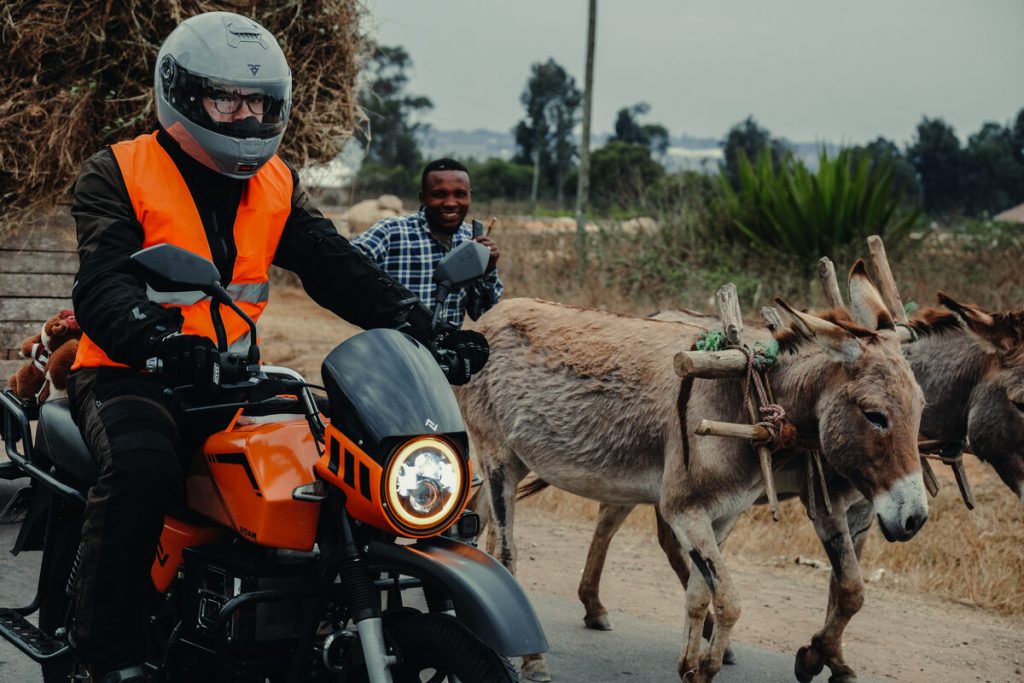
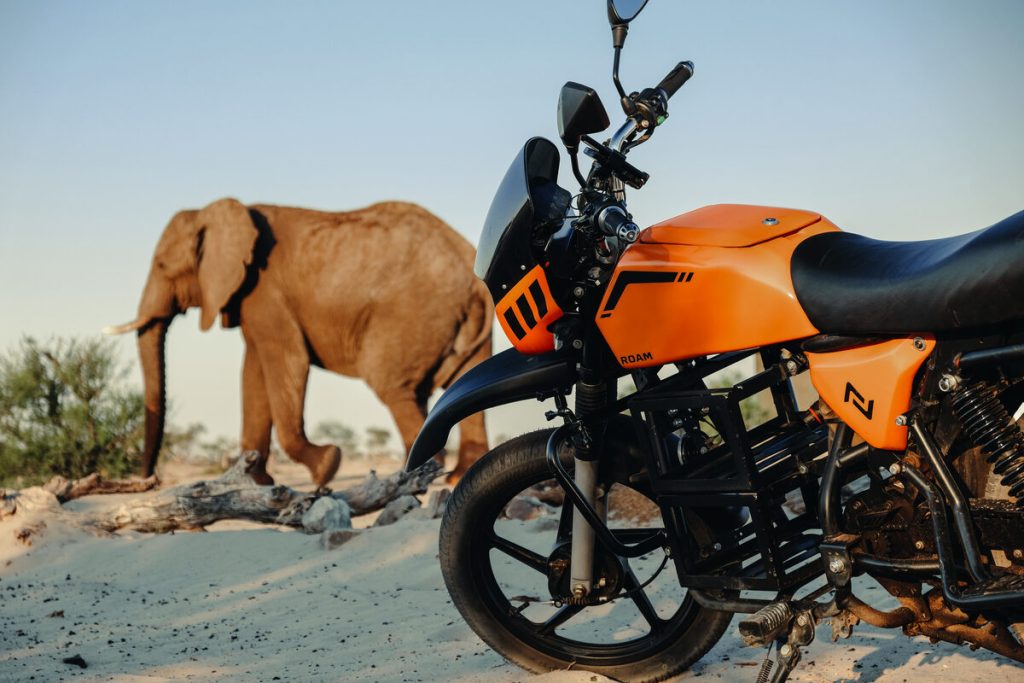
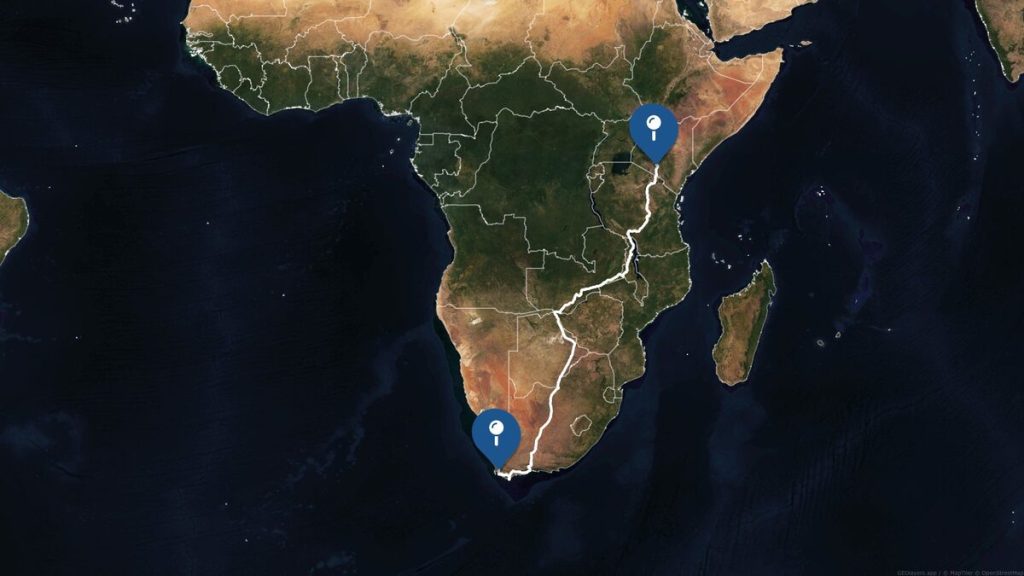
“Hopefully, we will,” replies Dr Stephan Lacock, a researcher specialising in electric mobility at Stellenbosch University. Lacock was one of a team of researchers who drove a groundbreaking 6 200-kilometre journey from Kenya to South Africa, using only solar power, creating an online documentary series and breaking an unofficial world record along the way. The Kenyan-manufactured Roam Air motorcycles made the entire trip without a single breakdown or grid charge.
Episode seven of the documentary will be released on Thursday 2 April.
Green electric mobility
Long before the hefty petrol price increase was on all South African’s minds, Lacock’s journey started when he and Professor Marthinus Booysen, director of the Electric Mobility Lab at Stellenbosch University had a funny idea.
“I’m specialising in electric mobility for the public transportation system of sub-Saharan Africa. We were doing research on taxis and I presented my work in Kenya. I met a company called Roam. They are the largest electric motorcycle manufacturer on the African continent. And I was absolutely blown away with what they’re doing and thought to myself, ‘why aren’t we doing this in South Africa?’” Lacock said. “I came back and we started forming a research agreement with Roam.”
Roam donated two Roam Air bikes to the university for its research but the team hit a snag trying to get them to South Africa.
Epic drive
“It got down to a point where we just couldn’t ship the bikes to South Africa. It was very difficult,” Lacock said.
“We were sitting in a Wimpy in Pretoria one day, he (Booysen) said, ‘there has to be a way’ and I told him, ‘Well, there is this one crazy idea and it’s to drive down the motorcycles. He just started laughing and I started laughing and in a month’s time we basically organised the entire trip.”
Political will
Once underway, the project took on new proportions.
Booysen said: “While we were doing this, we realised that the project is giving us an opportunity to demonstrate something that we’ve been talking about for a very long time. It gave us the opportunity to show that micromobility in Africa can be electric, it can be local and it can be green.”
He adds that there are still too many barriers to South Africa embracing greener transport.
READ ALSO: WATCH | Motoring adventurers drive length of Africa in three-wheeled car
“I think we have so many barriers and it’s mostly because of lack of political will. We have leaders who are not really pushing hard enough for us to transform our transport sector. As you can see now with the price of petrol, we are completely dependent on the imports of fuel.”
The designer of the bike, Masa Kituyi, who also went along for the ride, agrees.
“It’s easier to buy a German car and bring it to South Africa than it is to buy a Kenyan-made motorcycle,” said Kituyi, who is the Micro Mobility Product Owner at Roam.
“That kind of policy needs to change,” he says in the documentary.
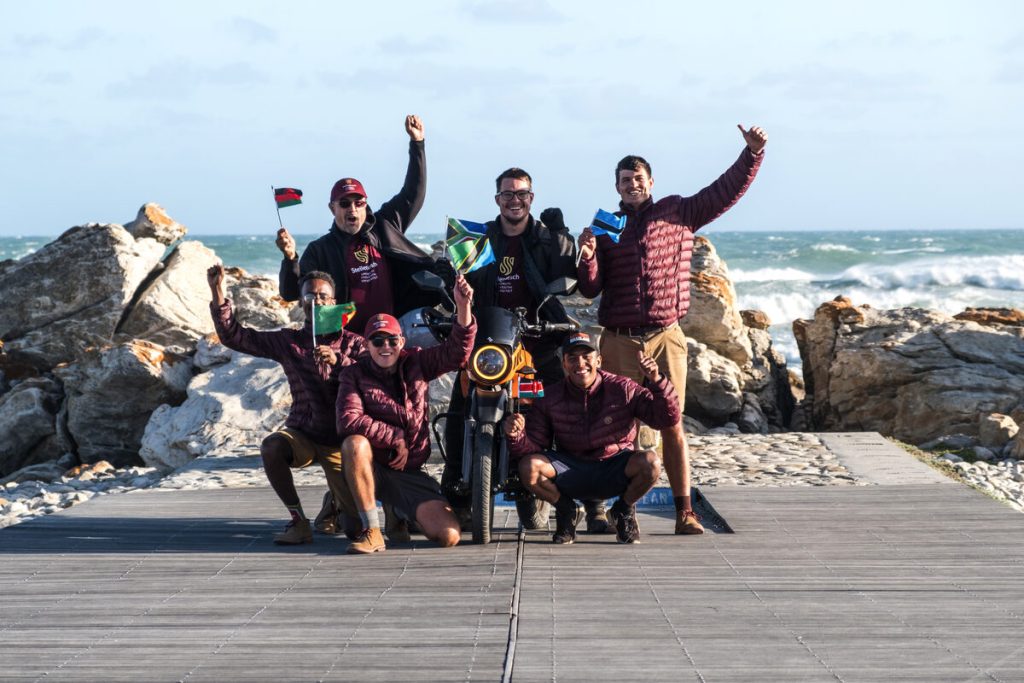
Booysen added: “We have leaders who are not really pushing hard enough for us to transform our transport sector.”
He pointed out that while more countries are moving onto greener fuels, South Africa hasn’t followed suit.
“We only produce petrol and diesel vehicles and we export all of those, most of those markets are going to dry up. That is approximately 450 000 jobs that are at risk,” he said. “We desperately need to convert to electric very soon to protect those jobs.”
He cited an electric vehicle project 20 years ago that was killed by political interference and red tape and called for greater African collaboration to overcome shared challenges, criticising borders “drawn by European hands” that separate countries with common problems and solutions.
“Electric mobility in East Africa is actually exploding,” Lacock adds. “They are by far ahead of South Africa. For instance, Roam alone has over 5 000 motorcycles on the roads of Nairobi.”
Documentary
During their South African leg, the team broke an unofficial world record by covering 1 009,6 kilometres in a single day on an electric motorcycle.
They captured the journey on camera and stitched it into a seven-part documentary to highlight southern Africa’s electric mobility difficulties and the solutions that can exist.
“Through doing this, we also realized that we could inspire young children and future engineers in our region to think bigger and to think towards really providing a clean and sustainable mode of transport to communities. It completely morphed into this big thing where we did something special and we were fortunate enough to capture the whole thing and to make a nice documentary out of it.”
The documentary is available on YouTube.



You must be logged in to post a comment.