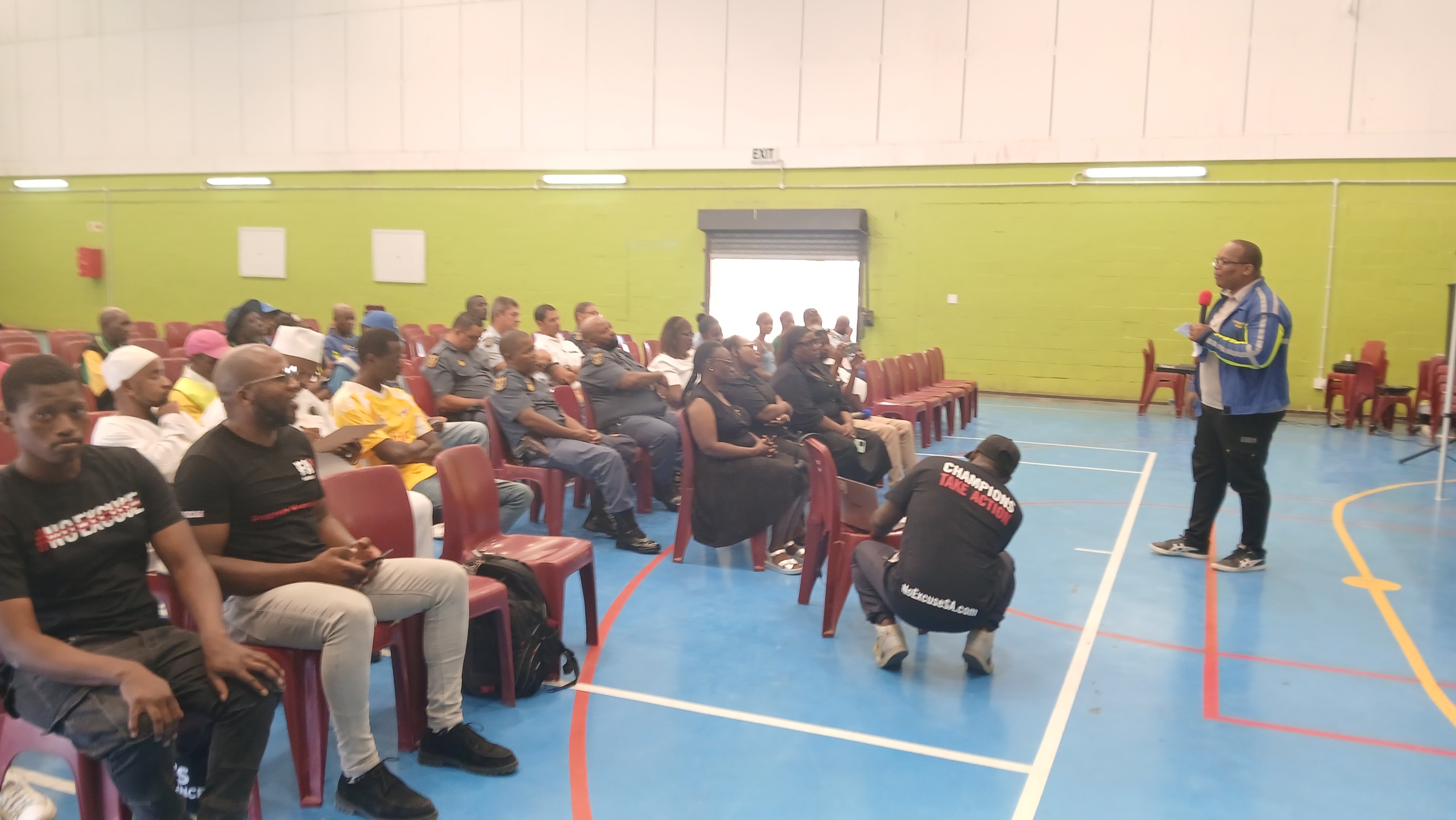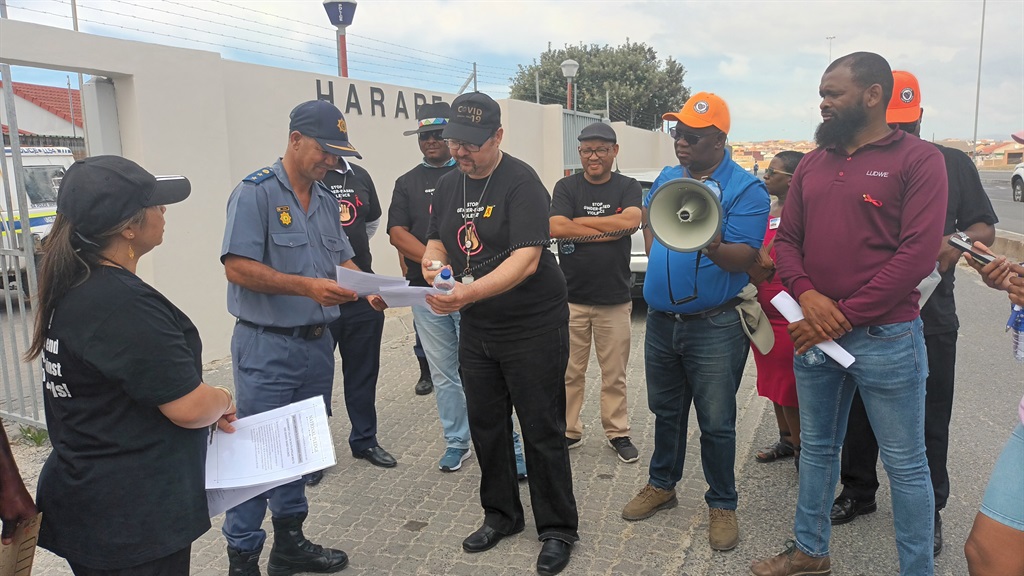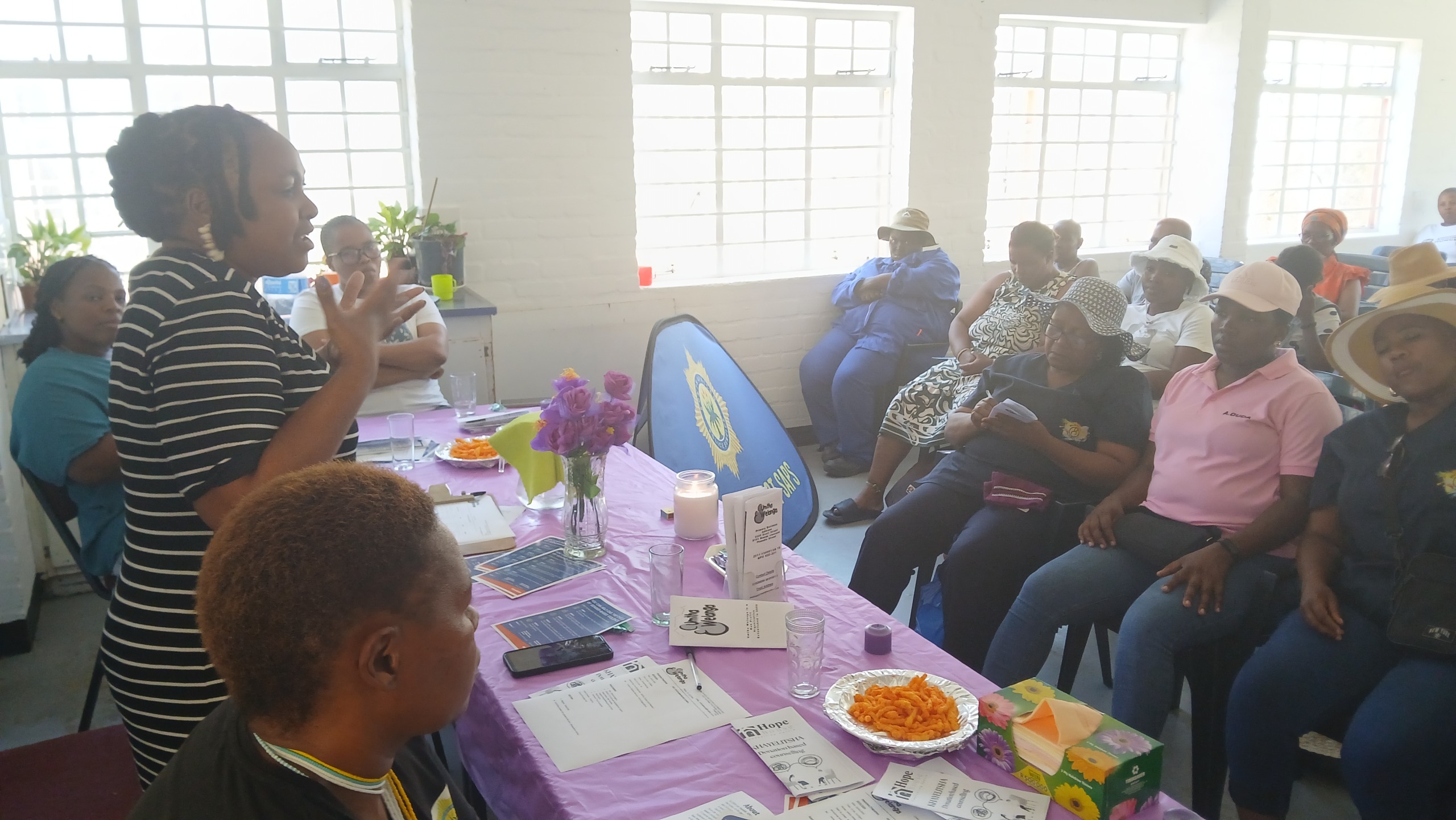

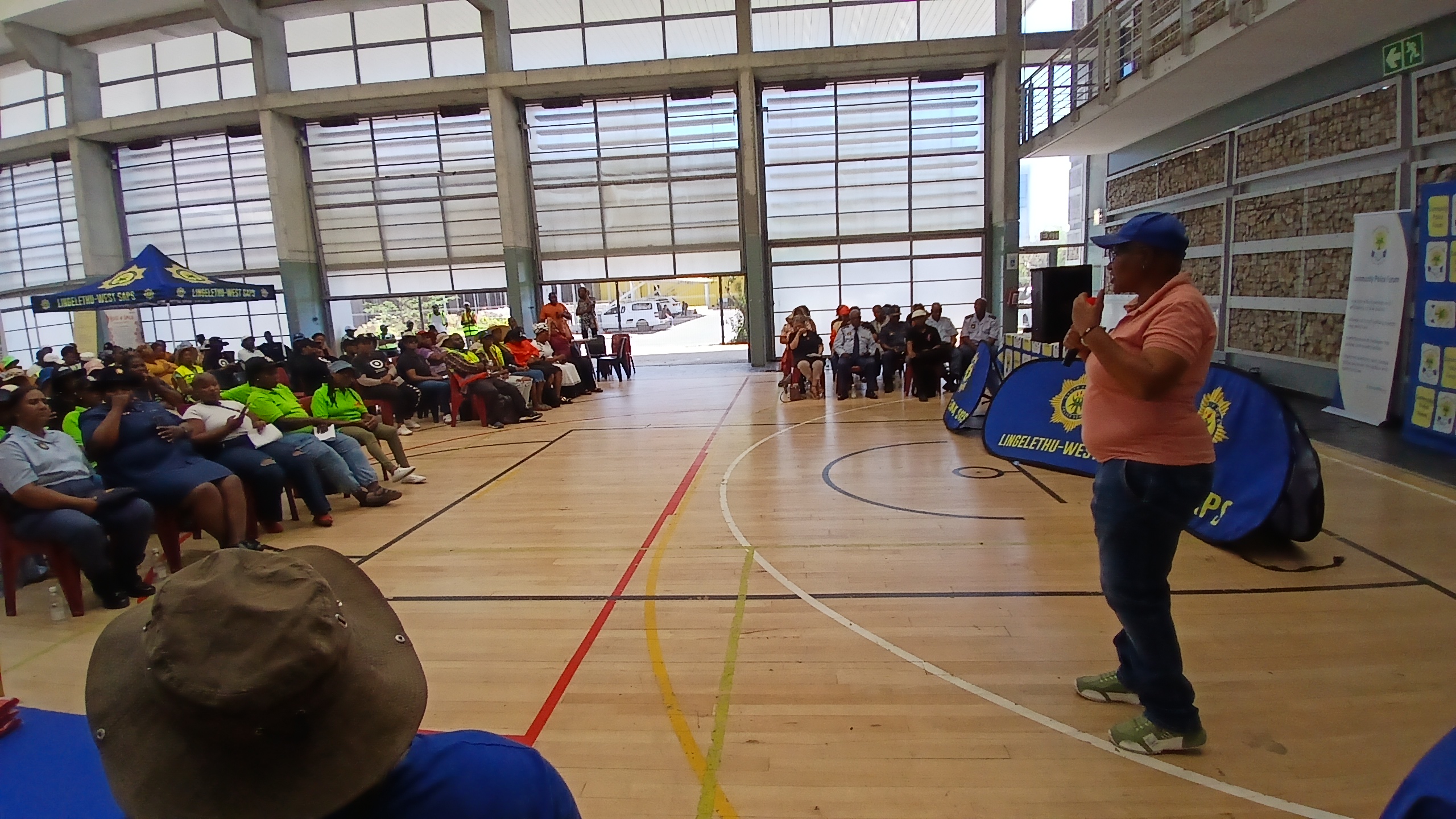
As the country observes 16 Days of Activism for No Violence against Women and Children the Khayelitsha Sub-District branch of the South African Police Service, consisting of nine police stations, hosted an anti-gender-based violence (GBV) and femicide at the Thusong Centre on Thursday 4 December. The idea was to create a platform for GBV survivors to speak out. Commissioner of the Khayelitsha Sub- District Brig Mnoneleli Magobiyani said the event formed part of a wider awareness campaign.
“We want to give the survivors a platform to express themselves. We want them not only to be survivors but to be conquerors. We want them to heal inside. We are trying to educate and empower people about the dangers of GBV in their lives.”
Magobiyani indicated Khayelitsha was one of the hot spots of GBV. He said both Harare and Khayelitsha Police Stations were among the top 30 police stations dealing with cases of reported GBV nationwide. He mentioned liquor and drugs as being big factors in GBV.
“As the Khayelitsha Sub-District we support all initiatives against GBV. We encourage victims to report their cases to the nearest police station. In our stations we have victim-support rooms. People must feel free to come.” He added this violence was forthcoming from both genders.
Khayelitsha Sub-District coordinator on GBV Funeka Soldaat described GBV as a pandemic that needed to be rooted out. She stated that the 16 Days of Activism campaign was not enough, and awareness raising needed to go beyond that. She advised people to get in touch with their neighbourhood watches as they were always more easily accessible.
One victim, Khuselwa Ngwexana-Khahlani from R section in Site B, Khayelitsha described the event as a great initiative. She urged other survivors to speak out about their ordeals.
“I was raped at age 14 in 2005 by someone I knew. I was coming from Sunday school practice in the evening with other choir members. We were accosted by 11 young men. All of them came to me. They grabbed me, wanted to rape me. They literally fought over me, but one overpowered them all and dragged me to nearby shacks.” She was raped outside, between the shacks. After Ngwexana-Khahlani’s rapist had finished he took her to another shack, where he and the other young men smoked dagga together.
She said inside another young man was sitting smoking dagga. They smoked together and the man raped her a second time while the other looked on. Afterwards he fell asleep, around 02:00. His friend asked Ngwexana-Khahlani if he could open the door for her so she could run home. “I said yes, and that is how I was able to escape!”
She said before her ordeal she knew both men, and told no-one about it until 2016, when she started sharing her experience. Ngwexana-Khohlani therefore encouraged others to open up and speak about their ordeals, sharing their stories as part of their own healing and that of others.