


The City of Cape Town has wheeled about 3,1 GW of electricity from private generators to business customers through its grid and plans to open the programme to the wider market in the months ahead.
The pooled wheeling programme allows businesses to buy renewable energy from private generators while still using the municipal electricity network. The City is reviewing the first pilot phases and aims to open pool wheeling to the market later this year, if all goes to plan.
Mayco member for energy Xanthea Limberg said the programme is looking at creating capacity for up to 200 MW over the next few years.
“Our pooled wheeling programme is another example of the innovation and expertise within the Energy Directorate, which is helping to position Cape Town as a leader in South Africa’s evolving electricity sector,” Limberg said.
ALSO READ: City turns trash into electricity at first gas-to-energy facility
How wheeling works
A private generator produces electricity and the City transports it across its network to the customer. The City continues to run the grid, read meters, manage billing and keep the network reliable. Customers pay for these services.
Limberg said the electricity market is changing from one main supplier to a system with many generators, traders and customers. “Wheeling helps the City prepare for this change.”
The tariffs are designed to ensure the City still recovers the costs of operating and maintaining the electricity network, she said. Wheeling customers still pay the correct network and subsidy-related charges, while customers can benefit from cleaner or lower-cost energy.
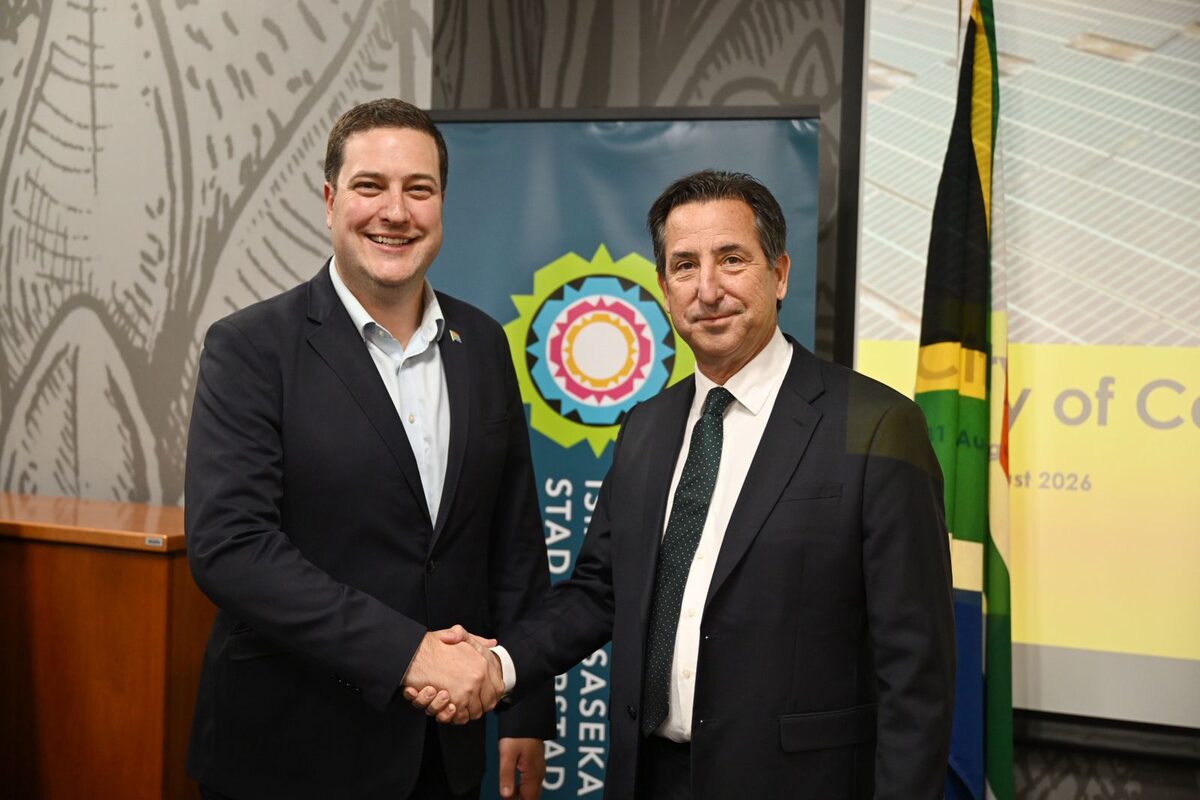
“South Africa needs reliable, affordable and cleaner electricity for residents and businesses,” Limberg said. “Wheeling does this, and Cape Town is once again setting the standard by giving businesses more supply choices, supporting investment that drives economic growth and job creation.”
She said wheeling can also help reduce carbon emissions while the City continues to recover the cost of operating and maintaining the network.
The City is preparing Cape Town’s participation in the South African Wholesale Electricity Market, supporting metro trading services reforms and policy and regulatory shifts aligned with its Energy Strategy objectives, Limberg said.
ALSO READ: Western Cape on track to add 1 800 MW to electricity grid
Other energy interventions
The City highlighted several other energy programmes:
– Capetonians have earned R67m from selling 150 GW of excess solar power back to the City through municipal bill credits and cash since June 2024.
– The Steenbras storage facility helped the City mitigate 24% of load-shedding during the extended Eskom generation crisis, making it the only city to do so.
– The first two Power Purchase Agreements were signed with Independent Power Producers (IPPs) for a total of 70 MW, with plans to secure up to 200 MW through the municipal procurement programme.
ALSO READ: Hill-Lewis: Cape Town seals first power deals below Eskom rates
– The City has completed its first own-built solar and battery energy storage plant in Atlantis, totalling 7 MW PV plus 10 MW battery storage, with plans for further utility-scale renewable projects.
– A large-scale energy procurement programme seeks to buy electricity from Energy Traders and IPPs, including waste-to-energy technology, to promote carbon neutrality and a circular economy.
ALSO READ: Public urged to comment on revised electricity pricing by 27 September

You must be logged in to post a comment.