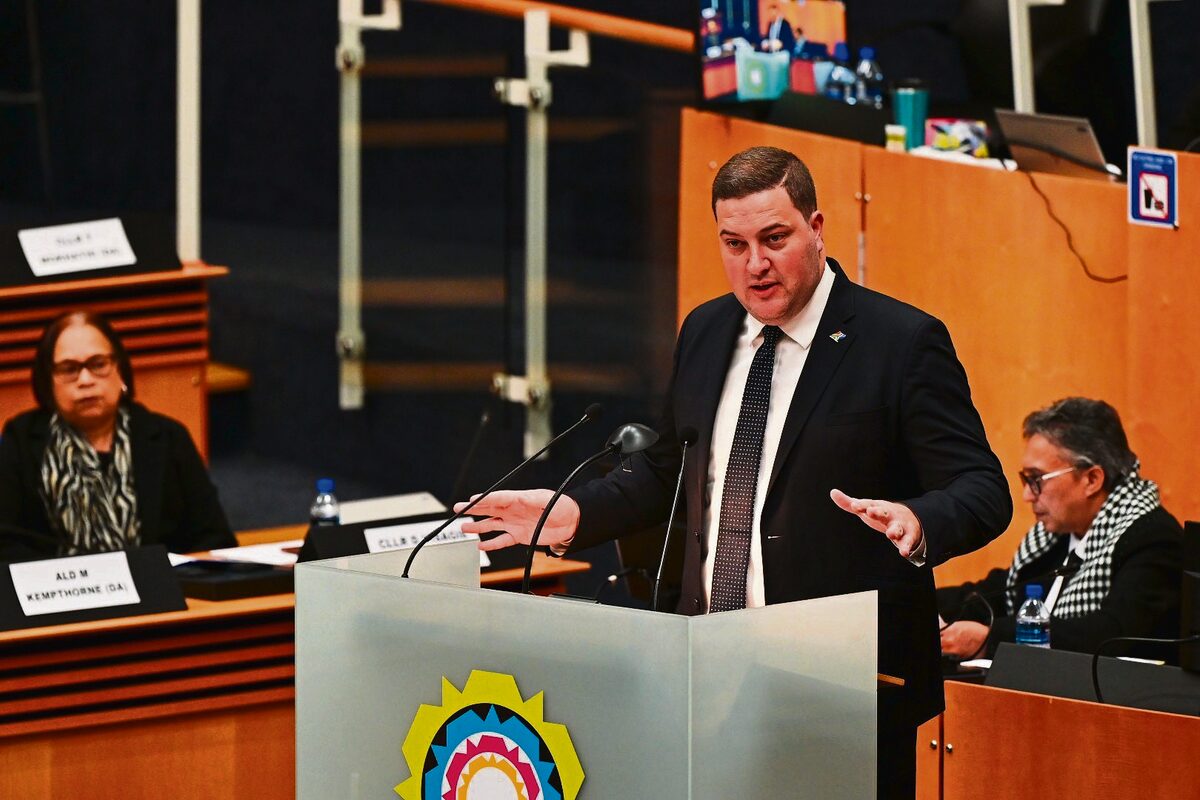

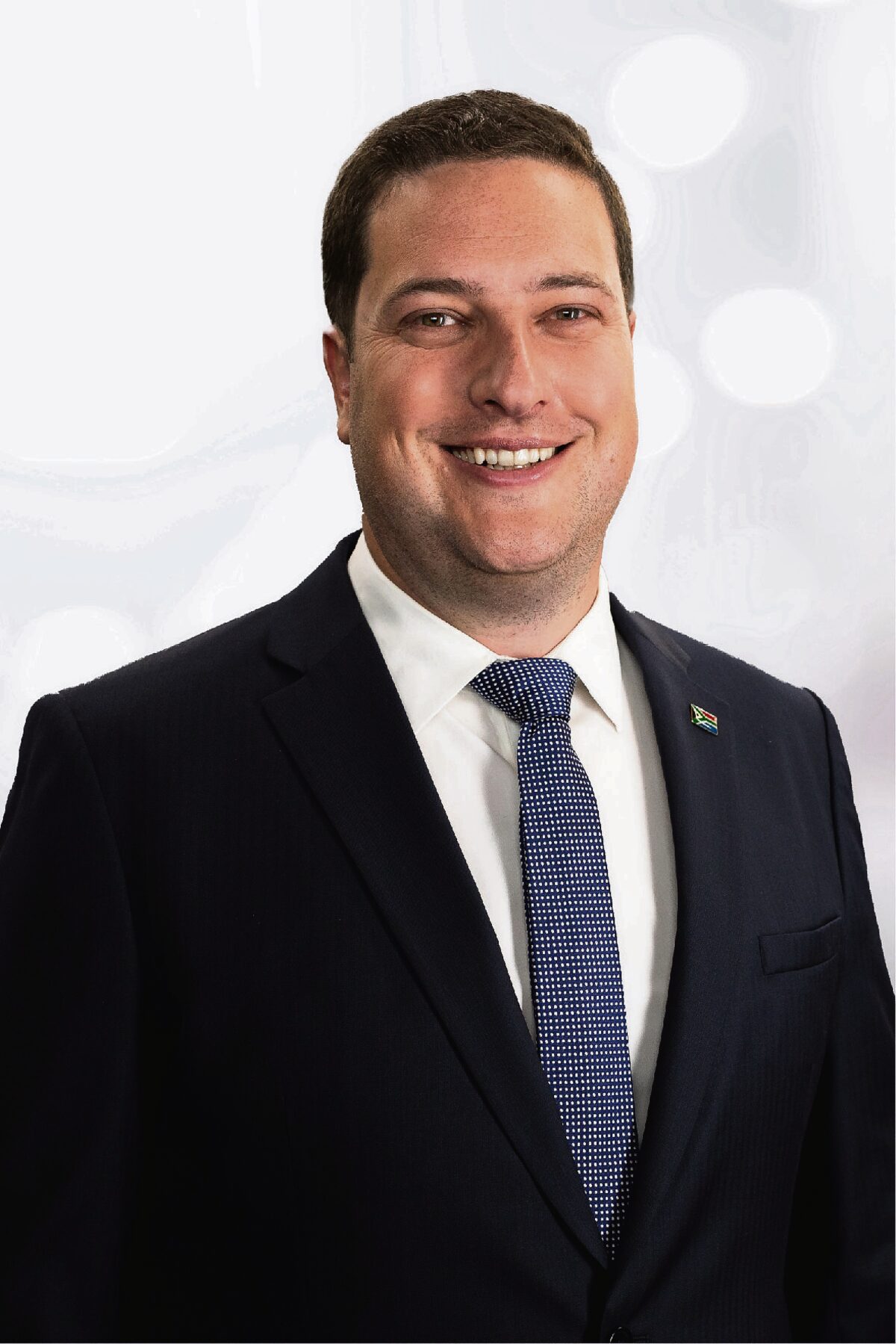
Cape Town’s final budget of the current mayoral term was adopted on Monday amid sharp divisions in Council, with Mayor Geordin Hill-Lewis hailing five years of infrastructure investment as a turning point for the City while opposition parties condemned the increases as unaffordable.
Hill-Lewis described the R87.8 billion budget as a defining moment, arguing that Cape Town had changed trajectory after years of infrastructure strain. But opposition councillors painted a starkly different picture, one of rising electricity, water and sanitation costs outpacing inflation, missed housing targets, and findings flagged by the Auditor General.
The budget, already revised following a court ruling that found the City’s method of calculating fixed charges unlawful, passed despite unanimous rejection from opposition benches, where speakers warned that ordinary residents, pensioners and the poor would bear the greatest burden of the increases.
ALSO READ: Western Cape High Court rules City of Cape Town’s fixed charges unlawful
Tabling the budget for final adoption at Council, Hill-Lewis said, “Five years ago, there was much of this City’s infrastructure grid that was under severe strain. The warning lights on the dashboard were flashing bright orange. Five years later, we have changed trajectory.”
He said every major infrastructure project is either under construction or complete, with sewer spills already down 30%, wetlands being cleaned, and new public transport projects under way to carry tens of thousands more passengers daily.
Hill-Lewis said the City worked hard to ensure no capital spending was cut as a result. “We cannot afford to make cuts to our capital budget,” he said, adding that the final draft had in fact seen the capital portion increase marginally by R50 million.
He warned that any reduction in infrastructure spending, whether to pipe replacement, wastewater upgrades, electricity grid investment, road repairs or waste facilities would set Cape Town on the same downward trajectory as other South African cities.
Opposition united in rejection
During the ensuing discussions, opposition parties through their council representatives, strongly rejected the budget.
Nasmie Jacobs of the National Coloured Congress (NCC) said coloured communities have not seen infrastructural improvement. “This is not reflected in our communities where we have daily sewer overflows. The mayor boasts about winter readiness, but we are flooded. The electricity increase is unaffordable. Some residents have to cook over open fires because we cannot afford the current rates.”
Referring to the City’s 2024/25 reported audit outcome, and the City’s failure to achieve a clean audit, Cheslyn Steenberg from the Patriotic Alliance (PA) said, “We cannot, in good conscience, support a budget that asks people to pay more when money is being mismanaged.” In the latest reported outcome for 2024/25, Cape Town did not get a clean audit, but rather an unqualified audit with findings relating to procurement non-compliance.
Steenberg added that while informal settlements continue to grow, residents in the Cape Flats are still waiting for housing.
Pieter Jansen van Vuuren from the Freedom Front Plus said while the City may highlight increased poverty-relief thresholds and a modest 2% reduction in the rates-in-the-rand for the 2026/2027 financial year, the reality on the ground tells a story of rising costs that will further impoverish ordinary salary earners and loyal ratepayers.
“The recent general property valuation process has led to a significant increase in property values, particularly for middle- and higher-income households. This means higher rates bills for homeowners whose incomes have simply not kept pace with these increases. Furthermore, this sharp increase in property valuations threatens to exclude many beneficiaries and pensioners from essential electricity rebates,” he said.
Our current rates relief system is clearly inadequate, and many residents will simply be unable to absorb these escalating fixed service charges, which have increased by as much as 68.3%.
He noted that the fixed electricity charges for properties valued above R1 million are set to rise to R424.30 per month, which follows a substantial increase from R281.78 to R390.87 per month last year, representing an additional 8.5% increase on top of a 38% hike.
“Our current rates relief system is clearly inadequate, and many residents will simply be unable to absorb these escalating fixed service charges, which have increased by as much as 68.3% since the 2024/25 financial year. These increases are completely beyond the reach of ordinary salary earners, whose wage increases do not come close to matching such excessive tax and tariff hikes.”
‘The poor are getting poorer’
Delmaine Cottee of the ANC highlighted the impact of the electricity increases, noting that residents currently pay R100 for 25 units, on top of fixed charges. After the increases take effect, that same R100 will only yield 22 units.
He pointed out that most residents need to purchase R100 of electricity every second day, making the increase a significant burden. Cottee added that 70% of pensioners’ income is already consumed by electricity costs, and that the water and sewage charges compound the hardship further. “The poor are getting poorer,” he said.
Sandra Dickson from the GOOD Party noted that all the proposed electricity, water and sanitation and refuse increases are above the City’s own CPI assumption of 3.4%.
She also noted to illustrate what she views as a blatant disregard for large sums of money. “The current-year forecast for free basic services in informal settlements is R1.393 billion. For 2026/27 it rises to R3.404 billion, an increase of R2.011 billion, or 144%. And of that new calculation R1.6 billion is simply described in the budget as “Other”.
Referring to several projects, Dickson argued that the City is missing its own targets on housing and wastewater, and instead of fixing the problems, it is quietly lowering the targets. At the same time, it is asking residents to pay more.
She refers to Annexure 25 that shows that in 2024/25, the City delivered only 873 formal housing serviced sites against a target of 2 400, just 36% of target. And the response, she says, is not a recovery plan, but a reduction of the 2026/27 target from 4 000 sites to 3 200.
She says seven land parcels awarded since 2022, capable of delivering approximately 5 000 housing opportunities, remain untouched.
Cape Town residents are being asked to pay more. They are entitled to transparency, accountability and specifically delivery.
“The same pattern appears in wastewater. Compliance with treated-effluent standards has dropped from 88% in 2012/13 to 77% – against a required minimum of 90%. Yet the 2026/27 target is set at only 78%, reaching 82% by 2030. This budget does not present a path back to compliance. It formally budgets for continued non-compliance.”
Across housing, wastewater, and service delivery, the pattern is the same, according to Dickson. “When performance falls, targets are lowered rather than standards restored. Cape Town residents are being asked to pay more. They are entitled to demand more than repetitive explanations, reduced targets buried in thousands of pages of annexures. They are entitled to transparency, accountability and specifically delivery.”