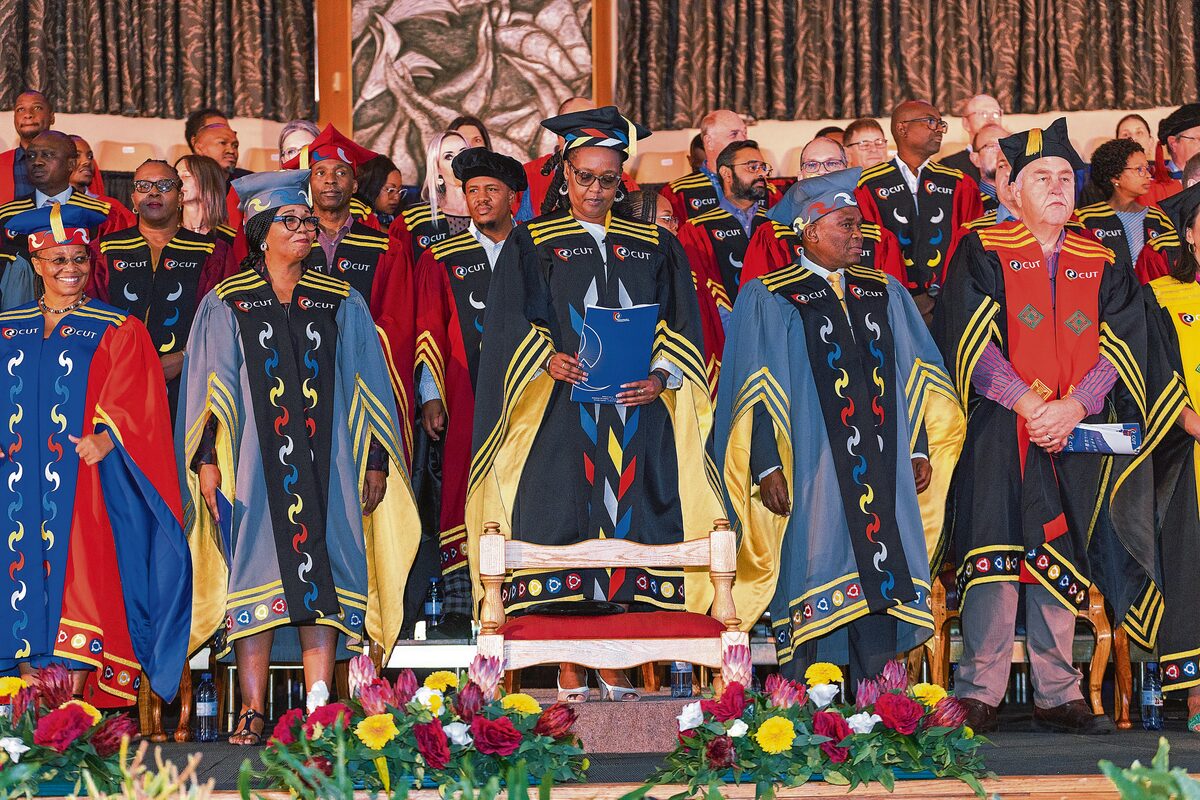

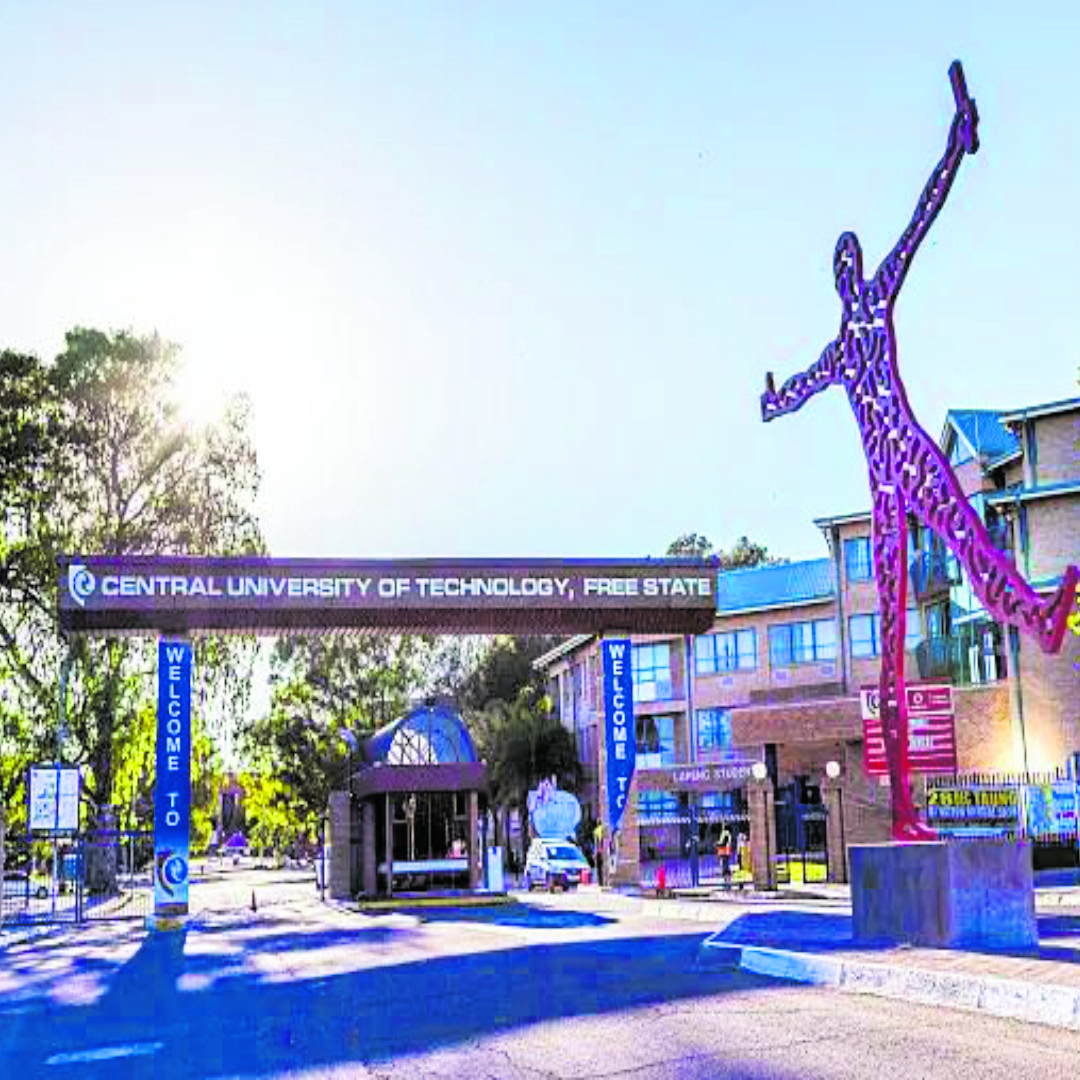
Central University of Technology’s autumn 2026 doctoral graduates emerge not just as masters of their fields but as custodians of knowledge and stewards of justice.
Having demonstrated unparalleled resilience and tenacity, this new cohort of Doctors is poised to redefine research, drive innovation, and solve the complex challenges facing society.
Seven of CUT’s newest doctoral graduates, in their own words, shared their stories.
From rural Limpopo to the floors of mechanical engineering labs, from energy-starved communities to the frontlines of educational reform, their journeys are as diverse as the challenges they set out to solve.
This is what they had to say…
Dr Victoria Mokone – Doctor of Education
My interest in novice teacher induction was sparked by the gap between theory and practice and observing passionate educators struggle with classroom management and the emotional weight of their new roles.
Driven by empathy, my initial curiosity focused on preventing burnout and keeping bright teachers in the profession. As my PhD progressed, this personal concern evolved into a rigorous research agenda.
My passion shifted from simply asking why teachers fail to investigating how institutions, mentors, and policies can actively build a teacher’s self-efficacy within diverse classroom settings.
My biggest breakthrough was realising that induction support is a transformative systemic responsibility rather than a simple orientation.
Initially, I saw it as a procedural checklist, but I now understand it is critical for building professional identity and resilience.
I realised that purposeful mentoring creates the conditions for teacher growth, which directly ensures both the viability of the profession and the quality of education for students.
Pursuing a PhD in education requires a clear sense of purpose and a genuine passion for your topic.
This dedication is what allows you to persevere through obstacles and realise the revolutionary potential of your work.
Beyond the academic certificate, focus on becoming a scholar-practitioner. By embracing mentorship and self-reflection, you develop the ability to truly influence policy, practice, and people’s lives.
Dr Gareth Andrew Gericke – Doctor of Engineering
My passion for engineering was sparked by a childhood love for building things and a fascination with how they are put together.
I always looked for the detail hiding in plain sight, and playing with Lego really set off that interest.
Throughout my academic journey, this evolved into an opportunity to give back. I now volunteer as a mentor, teaching robotics and training young students to use scientific methods in their own journeys.
My ideas came at an early stage when I noticed a gap in software architectures.
Everyone needed certain information, but they all came up with different ways to get it instead of putting it together and sending it on.
When I saw that gap, I couldn’t sleep because I kept thinking about what more research it could lead to. From there, I planned out my entire study and future publications.
My advice is to stay curious and really understand what you are doing. If you can deeply understand the material you learn, you can start seeing how to improve it and build your own studies one day.
To keep motivated, remember that the first degree is always the hardest and look at how far you have already come.
Dr Moabi Kompi – Doctor of Philosophy
What inspired my passion for my field is the desire to solve real-life challenges.
This has evolved throughout my doctoral journey by involving others, such as my previous students, who played a critical role in my studies.
I developed a software tool that helps in reporting waste collection and assists the municipality in bridging the communication gap with its residents.
Coming up with a framework that solves not only today’s challenges but also future ones was fulfilling and one of the best moments of my doctoral journey.
This breakthrough was truly rewarding and changed my perspective on the impact of my research.
I would advise anyone who intends to pursue a PhD in my field to carefully choose a research topic that interests them.
A PhD is a journey, not a 100-metre marathon; therefore, you need to consistently love and be interested in what you are doing at all times.
Dr Joseph Eminsang Conduah – Doctor of Engineering
My interest began with a concern about energy challenges in South Africa and how rising costs impact industries.
I became curious about how smaller industries, like microbreweries, manage these constraints without access to advanced solutions.
Over my doctoral journey, that curiosity evolved into a focused goal. I moved from simply understanding where energy is used to developing practical models that help industries optimise performance and reduce costs.
One of my biggest breakthroughs came when my predictive model and optimisation framework began producing realistic results.
By combining artificial neural networks with optimisation techniques, I generated energy schedules that reduced costs while meeting production requirements.
This moment stood out because everything came together in a way that could actually work in practice. It showed me that the true value of research lies in providing solutions for real-world systems.
It is important to choose a topic that genuinely interests you and has practical relevance, as this keeps you motivated during challenging periods.
Focus on balancing theory with application. The ability to use concepts to solve real problems is what makes your work truly impactful.
Stay consistent and trust the process; even little progress adds up over time.
Dr Khanyisa Shirinda – Doctor of Engineering
My passion began during an undergraduate module on electrical distribution, where I was introduced to renewable energy.
This quickly became personal, as I grew up in rural Limpopo, seeing both an abundance of natural resources and the reality of limited infrastructure.
As South Africa faced electricity supply crises, pumped hydro storage captured my attention. It felt like a bridge between my lived reality and the solutions our country urgently needed, driving me to research its feasibility as a standalone storage solution.
I realised the real value was not just in the technologies but in how they are integrated.
This shifted my perspective from finding the “best” source to asking how these systems can work together most efficiently.
I began seeing my research as a practical solution for farming communities, reinforcing that energy systems must be designed with both environmental and economic context in mind.
I would advise seeing a PhD as a journey that shapes how you think and solve problems, rather than just a course to complete.
In the field of energy systems, it requires patience and the discipline to stay committed even when progress feels slow or when ideas need reworking.
Finally, take ownership of your work, stay proactive, and never hesitate to collaborate when needed.
Dr Nthabiseng Nhlapo – Doctor of Engineering
My research interest began at university, fuelled by an instinct that I would eventually pursue multidisciplinary work.
Ironically, I initially pursued various degrees to prepare for a career in industry rather than academia.
However, my diverse educational background ended up creating more opportunities within the research world.
Today, I feel that doing research is more of a calling than just a career, and I’ve become incredibly passionate about the impact it allows me to make.
Research is a constant evolution, so it’s hard to pinpoint one moment.
However, a breakthrough was discovering the sheer breadth of mechanical engineering.
I never saw myself in a traditional workshop environment, so learning about the field’s extensive role in medicine was a turning point.
It allowed me to bridge the gap between engineering and my early interest in healthcare, defining my entire research path.
Before embarking on a PhD, ensure it is truly what you want to do, as the commitment is not for everyone.
In mechanical engineering, projects can be particularly labour-intensive, so be prepared for it to become your primary focus. Most importantly, choose a project that is both interesting to you and impactful.
Dr Tsholofelo Gaonwe – Doctor of Engineering
Growing up, I thought mechanical engineering was limited to fixing cars.
When the job market proved difficult after my diploma, I began exploring other paths and discovered research – a career I hadn’t previously considered.
At the same time, the impact of load shedding in South Africa made me question how energy systems function.
This curiosity evolved during my doctorate into a focus on problem-solving, using critical thinking to develop practical solutions for energy efficiency and a more reliable power supply.
My biggest breakthrough happened during my Master’s when COVID-19 blocked my data collection, forcing me to pivot and model behaviour using literature instead.
This taught me to find meaningful solutions under extreme constraints.
This resilience continued into my doctorate as I managed complex datasets and taught myself machine learning. A turning point was receiving heavy feedback on a paper; using it to improve rather than being discouraged led to a successful publication.
These experiences showed me that research is a continuous process of adapting and growing rather than just getting everything right the first time.
One piece of advice I would give is to be sure about your purpose, not just the qualification.
A PhD is more than just a title; it is a journey that tests your patience, discipline, and resilience when things don’t go as planned.
It is essential to be patient with yourself. Progress can be slow, and there will be moments when you feel stuck or unsure, but those challenges are a fundamental part of the process.