

BLOEMFONTEIN – The Free State provincial commissioner of police, Lt. Gen. Thabang Lesia, has blamed the rise in sexual abuse – specifically sexual offences committed by a family member (intra-familial) – on a lack of good moral values. He was responding during a BloemNews Express interview on the sidelines of the release of the province’s crime statistics for the fourth quarter of 2025-’26 and the first quarter of 2026-’27 on 1 September.
While a general decline was recorded in the preceding fourth quarter, the first quarter of 2026-’27 painted a sharp contrast – an upward trajectory specifically in violent crimes, including sexual offences (1,4%), contact crime (3,6%) and other serious crime (8,0%).
Lesia stressed that good moral values act as an internal compass that prevents wrongdoing, and dismissed a lack of knowledge on the part of perpetrators. “If you are a father, you fully understand and know that you should not engage in sexual intercourse with any minor, including your daughter,” said Lesia.

“The challenge lies with moral values. Most of these cases are in homes – fathers, uncles, brothers, and people known to the victims, especially vulnerable young ones. In some cases, you find that the perpetrator agreed with the minor, which is an offence in terms of the law, thinking that agreeing with a minor you can have intercourse.
“Our function as the police is to prevent such from happening – and where we could not prevent, to ensure we prosecute perpetrators; hence we have secured remarkable convictions and sentences,” said Lesia.
He cited results in gender-based violence (GBV) convictions, working together with the National Prosecuting Authority (NPA). “We have secured 14 life sentences and 8 people were convicted receiving between 20 and 30 years’ imprisonment. Furthermore, 28 people were convicted with between 10 and 29 years’ imprisonment, while 80 were convicted for between 1 and 9 years’ imprisonment,” said Lesia.
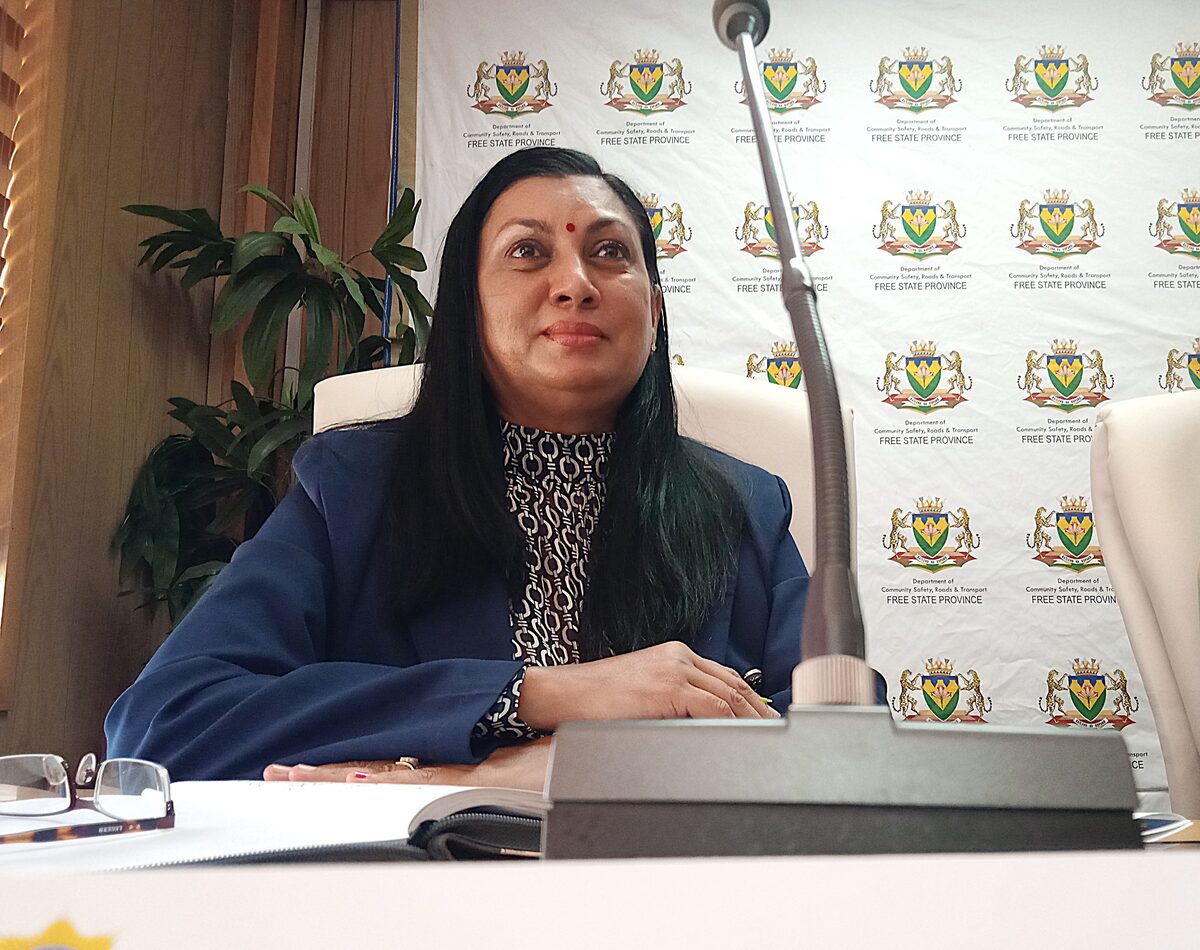
Adv. Navilla Somaru, Director of Public Prosecutions (DPP) in the province, underscored external pressure and financial reasons as another challenge in effectively dealing with cases involving close family members.
“From our side as prosecutors, we find very often after the charges have been laid and the perpetrators have been arrested, family members are under pressure to proceed with the matter. They will come to court for children, with family wanting to withdraw because of external pressure placed on them, because of financial reasons – often the perpetrator is the breadwinner. The source of income is taken away if the person is in custody and makes repeated court appearances,” said Somaru.
She highlighted the fact that such cases trigger deep internal family conflicts, resulting in the reduction of cases taken to trial and successful prosecution.
“When considering the arrests and first appearance statistics, and those we finally take to trial, the number reduces in the interim – because family members, particularly partners and spouses, do not want to testify against the perpetrators.
“Families want to resolve the matter differently, outside of court, impacting on our caseload,” explained Somaru.
Also ready: Man accused of brutal murder of female teacher set to stand trial in High Court



You must be logged in to post a comment.