

BLOEMFONTEIN – The Changing Faces, Changing Lives initiative at the Central University of Technology (CUT) in Bloemfontein has achieved several medical and technological milestones and transformed the lives of more than 5 000 patients across South Africa’s public and private health sectors.
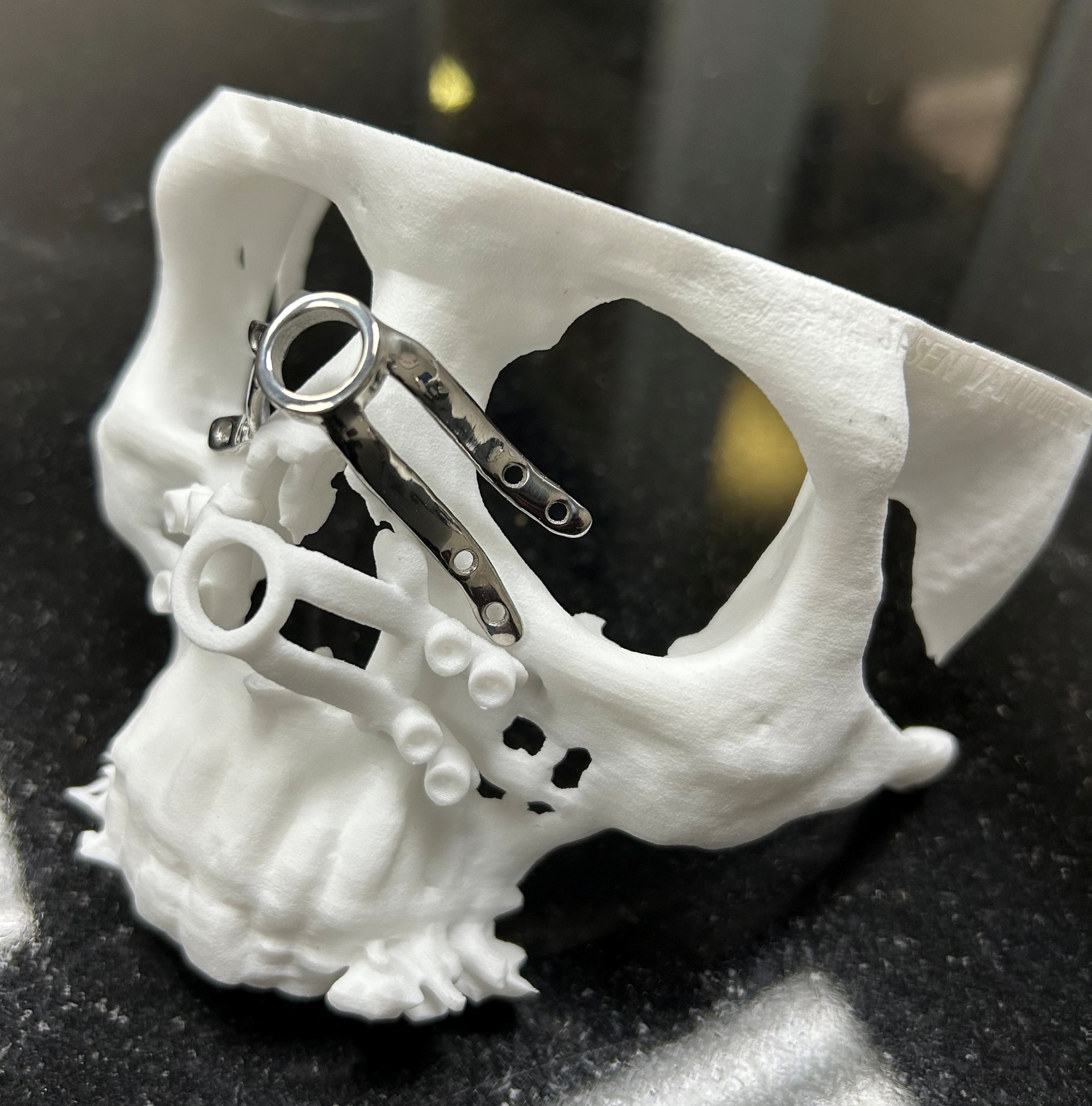
The project treats patients with severe disfigurements caused by cancer, trauma or congenital conditions, combining medical science with advanced mechanical engineering and 3D printing (additive manufacturing) to produce custom implants and devices, many of them in titanium. About 300 patients have been treated free of charge through donor funding.
A number of firsts achieved here
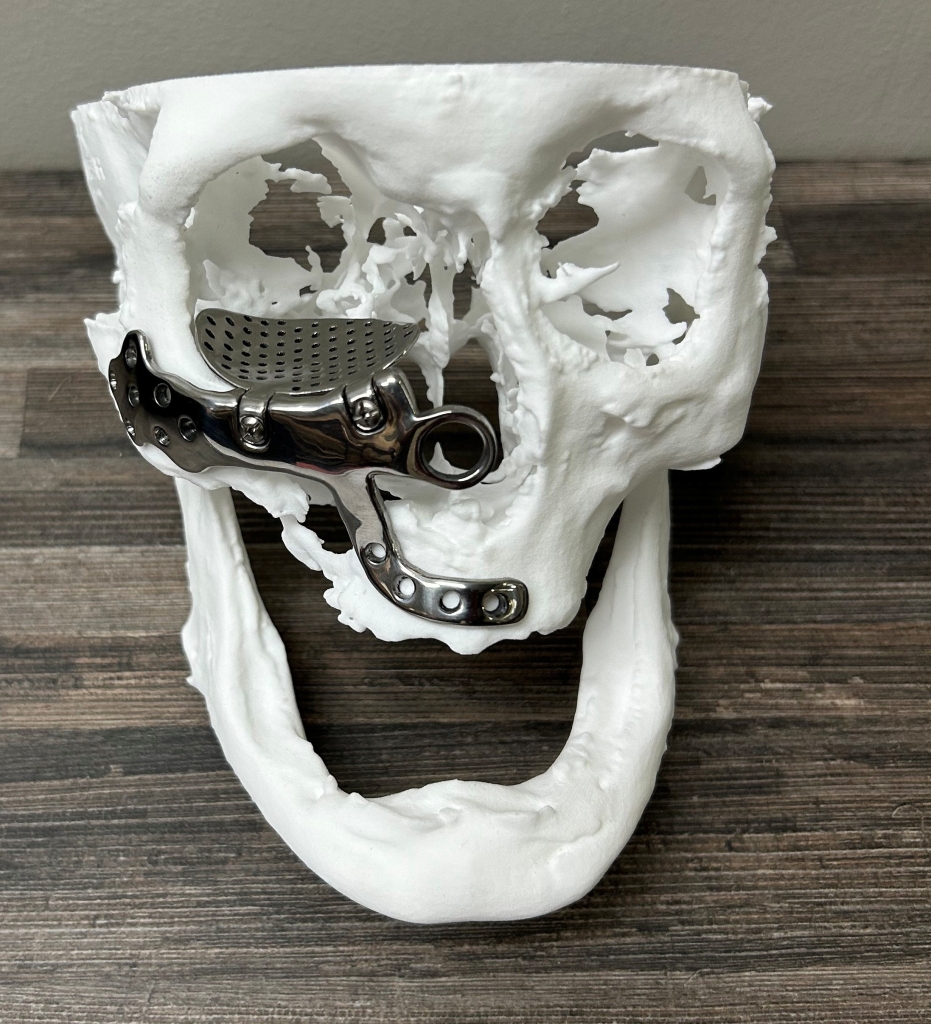
Driven by CUT’s Centre for Rapid Prototyping and Manufacturing (CRPM), it has achieved a number of firsts. The centre installed Africa’s first titanium 3D printer, and it is the first and only establishment in Africa to be internationally certified to manufacture medical devices using 3D printing. It has also pioneered several complex medical devices that were the first of their kind on the continent, such as custom maxillary frame implants.
In 2025, Changing Faces, Changing Lives was one of 23 case studies selected for Universities South Africa’s (USAf’s) Impact Initiative, which showcases the positive influence of South Africa’s universities on society.
True stories shared of lives changed for the better
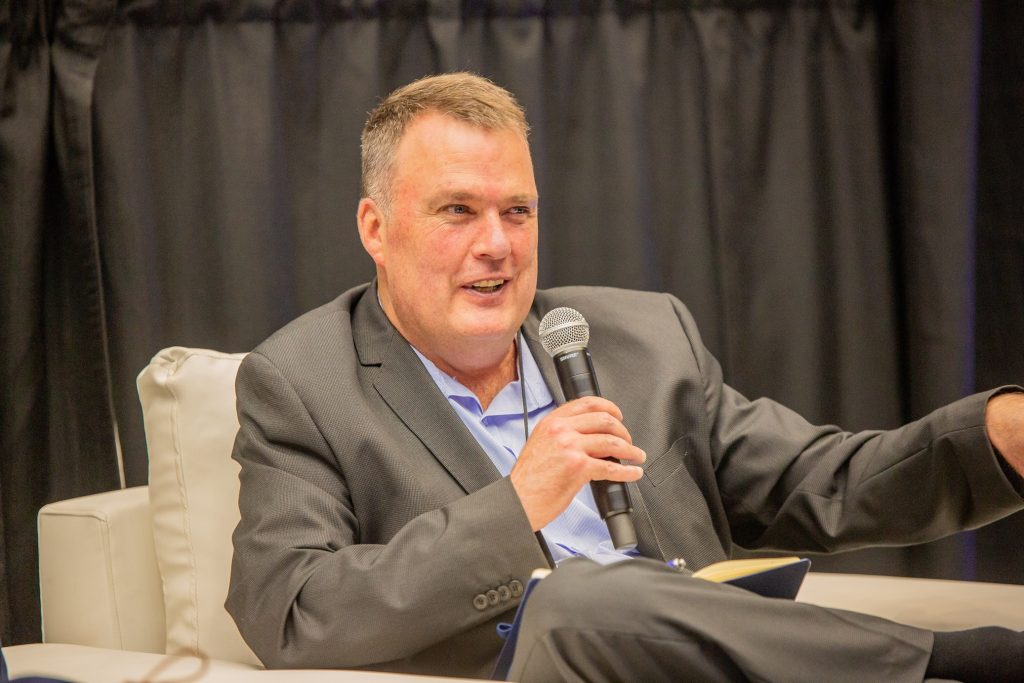
Speaking at the 4th USAf Higher Education Conference in Tshwane, CRPM director Dr Gerrie Booysen explained how the project bridges the gap between academia, state healthcare and private philanthropy, and described some of the patients behind the numbers.
One is a girl who was 10 months old when rats attacked her. She is now 10 years old and has never been treated.
“So how do I explain to this child that she’s not important?” Dr Booysen asked.
She is a public sector patient, and his team has tried without success to get her a theatre slot at a public hospital. As a stopgap, the centre is making her a facial prosthesis, and it is looking for help to pay for it.
In state hospitals, he said, surgeons will remove a tumour, but there is often no capacity to rebuild what is lost. One of his patients had basal cell carcinoma, a form of skin cancer, which had spread to the eye socket. Surgeons had removed skin and bone.
“If you don’t have a top jaw or a palate, you can’t swallow and you can’t speak,” Booysen said.
The CRPM team designed titanium implants that lift the eye socket and anchor an external prosthesis.
Another patient, a 19-year-old in the public sector, cannot open his mouth. Gangrene that began as a gum infection destroyed part of his upper jaw, and he eats by pressing his food against the roof of his mouth with his tongue. The CRPM arranged his transport to Universitas Hospital in Bloemfontein so that specialists could see him, and it is now making him a prosthesis.
For a patient with a tumour of the jaw, the team designed a guide that fits over the tumour so that surgeons could cut precisely on both sides, and a patient-specific titanium jaw implant that “just slots in”. That means less time in theatre and a faster recovery.
ALSO READ: Technology ready to serve all
The benefits reach whole families.
“I don’t think people realise that if you have somebody with a tumour, there is always somebody who needs to look after that person,” Booysen said.
“So when you can assist such a patient, the mother or father can actually go back to work.”
Not every case involves the face. Matthew Booth, an active young athlete, lives with a permanent tracheostomy tube. When his parents contacted the centre in mid-2025, he was still using one meant for a young child. He needed a wider tube for better airflow, but standard options did not work for him: adult tubes are too long and paediatric tubes too narrow.
His father had already built a series of models at home. The CRPM team used Matthew’s CT scan data to create a 3D model with the correct airway, angle and diameter, then designed and printed a titanium tube. According to his father, the new tube has given Matthew a real boost in confidence, and he now competes nationally in mountain biking at the same level as his peers.
“He’s doing very well,” Booysen confirmed.
It started with SA’s first academic 3D printing unit
The CRPM was set up in 1997 as South Africa’s first academic 3D printing unit. It installed its titanium 3D printer in 2007, and in 2013 a patient received the first jaw designed and 3D-printed in South Africa. In 2015 CUT was awarded a research chair in medical product development under the South African Research Chairs Initiative.
The Changing Faces, Changing Lives project began in 2016 with R2,25 million over four years from the Carl and Emily Fuchs Foundation. That year the centre also received ISO 13485 certification, the international standard for medical devices. Then government asked the obvious question, Booysen said: “How do you take this from 40 patients to thousands of patients?”
The Department of Science, Technology and Innovation and CUT funded a national Medical Device Additive Manufacturing (MedAdd) technology demonstrator, and the centre is now licensed by the South African Health Products Regulatory Authority (SAHPRA) to manufacture medical devices.
The work is done by a small team of engineers, Booysen among them, and a clinical adviser. The engineers go into theatre, and the surgeons sit beside the designers at the computers to plan each case.
“Not all of them are pro bono,” Booysen said of the centre’s patients.
“We have to find a balance between the public and private sectors, because to maintain a centre like this, and to get enough money for the ISO certification, you need to find a balance between academic research and industry support projects.”
‘Sometimes societal challenge should come first’
Booysen’s strongest message was for universities.
“Universities quite rightly protect intellectual property, research outputs and institutional interests, and I understand those mechanisms are important,” he said.
“But there are situations where I believe the societal challenge should come first, and Changing Faces, Changing Lives is one of those situations.”
“If one university has the clinical expertise, another has the engineering capability, another has the patient population, and then we get a funder who is willing to support the intervention, I don’t think the first question should be: who owns the IP? I think the first question should be: how do we help the patient?”
ALSO READ: Trauma-personeel byeen vir simposium in Bloemfontein
CUT’s students are involved too. Booysen described a community school where one child has to operate a computer keyboard with a pen in his mouth, and a mouse with the side of his face.
“It’s nice to say you can install eye tracking, but sometimes they don’t even have computers, or they have very old computers,” he said. CUT’s honours mechanical engineering students took on the problem, and their designs are now being developed into 3D-printed devices.
“Changing Faces, Changing Lives demonstrates that the ultimate value of universities is not only what we know, what we publish or what we patent,” Booysen said.
“It is what becomes possible in society because that knowledge exists.”



You must be logged in to post a comment.