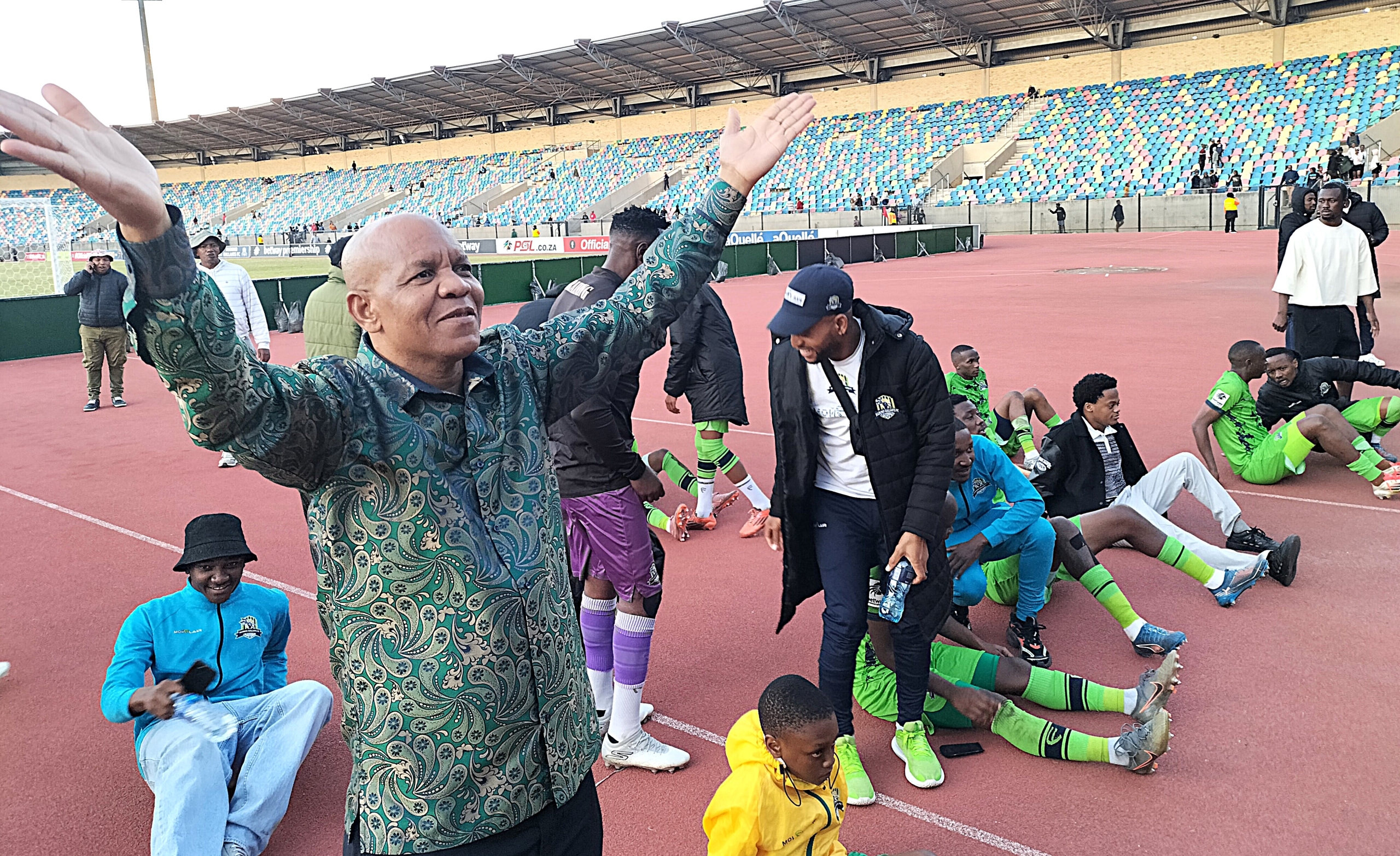


THABA NCHU – Thaba Nchu’s rising football force, Motlatla FC, is bracing for a grueling campaign in the far more demanding South African Football Association (SAFA) Regional League, the third-tier division of the association. Marking a significant chapter in their ascent toward elite football, the rural outfit secured a hard-earned promotion to the regional league, climbing up the ranks alongside fellow promotion-earners Pro Mates and Black Cross.
The outfit won the Interstate Bus Lines (IBL) Champion of Champions tournament, securing gold medals, R5 000 in cash, balls plus jerseys. The team’s journey began in the SAFA Mangaung Super League, spending at least two years before being promoted to the IBL Promotion League.
Hailing from Motlatla Village, a traditional agricultural area nestled on the outskirts of Thaba Nchu, the outfit carries the identity and aspirations of its tight-knit rural community onto the pitch. The club’s owner, Itumeleng Masekwa, said it has been a rollercoaster journey since he took over in 2023.
“Initially, it was a development team for Small Rangers FC. Then the club had plenty of talented players, and to allow everyone the opportunity to play, I was motivated to start a development side. In 2025, I got the rights to change the name to Motlatla FC, naming it after the village,” said Masekwa.
The squad boasts a blend of talented young players aged between 16 and 27 years. Masekwa said that football serves as a powerful tool for social cohesion, keeping the youth motivated and unified. He added that the club currently caters to boys due to financial constraints.
ALSO READ: Mangaung Unite renews its quest hoping to break the promotion curse
As they transition from local grassroots play to the fierce regional stream, it is no longer just playing for points for the players – they are playing to put their village on the national football map.
However, Masekwa admits to having mixed emotions about reaching the third tier, commercially known as the Hollywoodbets Regional League. “I do not know whether to be happy or sad about achieving the promotion. The reason is that it is very expensive to run a team from a rural area, and it will be difficult to compete in this division owing to a lack of funds. Operational costs exceed R20 000 per season. A budget of R6 500 simply will not suffice for us as a team,” Masekwa explained.
Essential expenses include traveling, match referees’ fees, and meals for the players.
“Looking at the operational costs makes me sadder because these boys want to play, and it feels like I sold them a false dream,” said Masekwa. He stated that the immediate challenge facing the team is purchasing additional soccer balls.
“As the owner, I am struggling to run the team, and it has been difficult to secure donations to relieve us of this burden,” Masekwa concluded.