

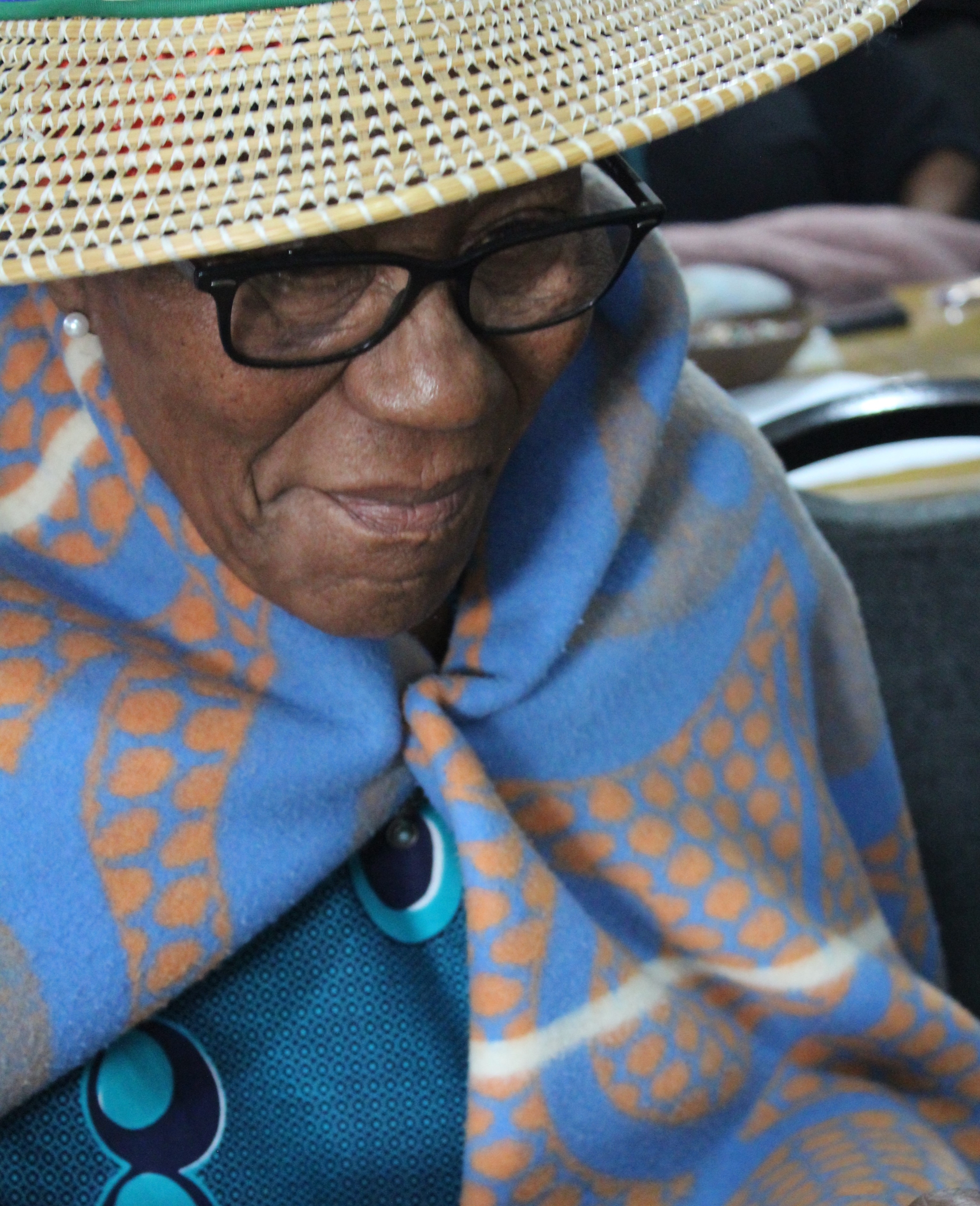
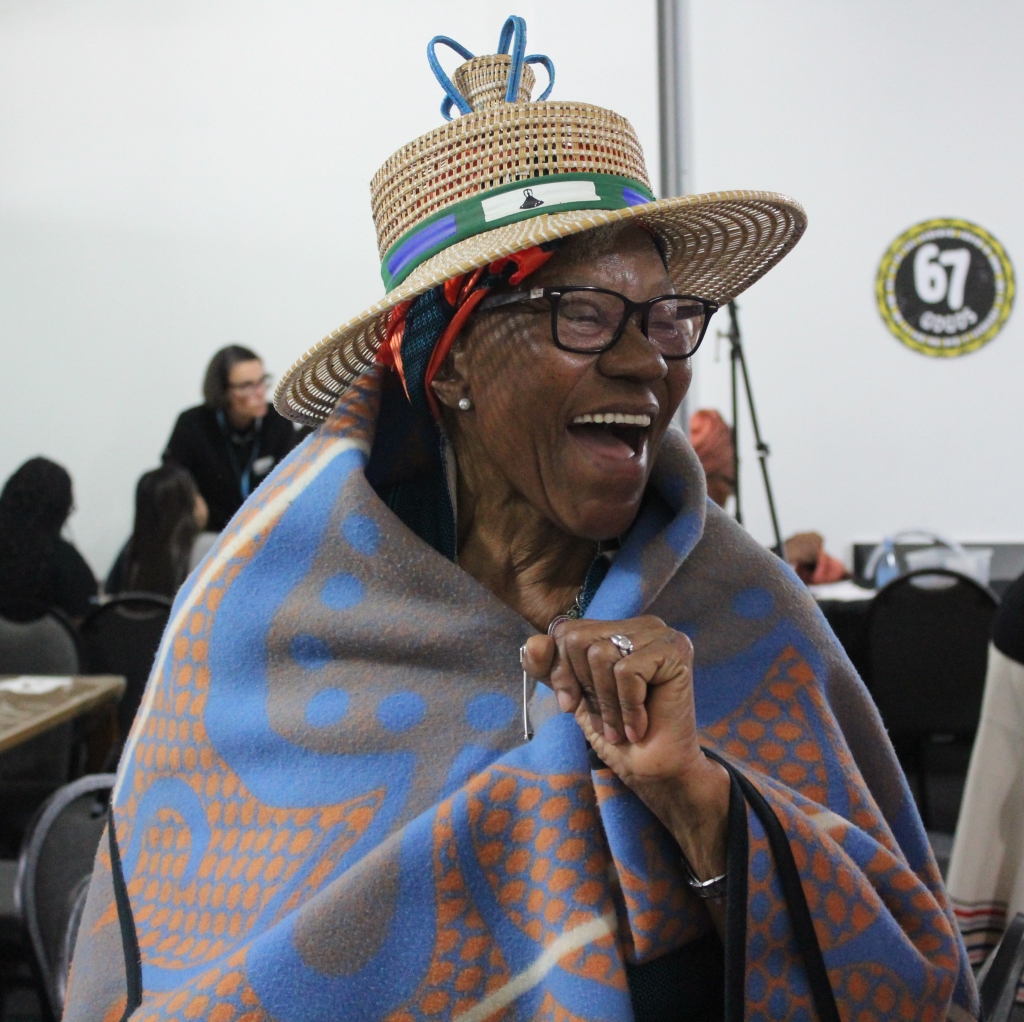
Mary Heqeane carries within her the story of two countries; one before Nelson Mandela’s release in 1990, and one after.
At 81, the Khayelitsha resident betrays no trace of bitterness, nor any suggestion of her years. Her fingers move deftly across the beadwork, a quiet smile resting on her face.
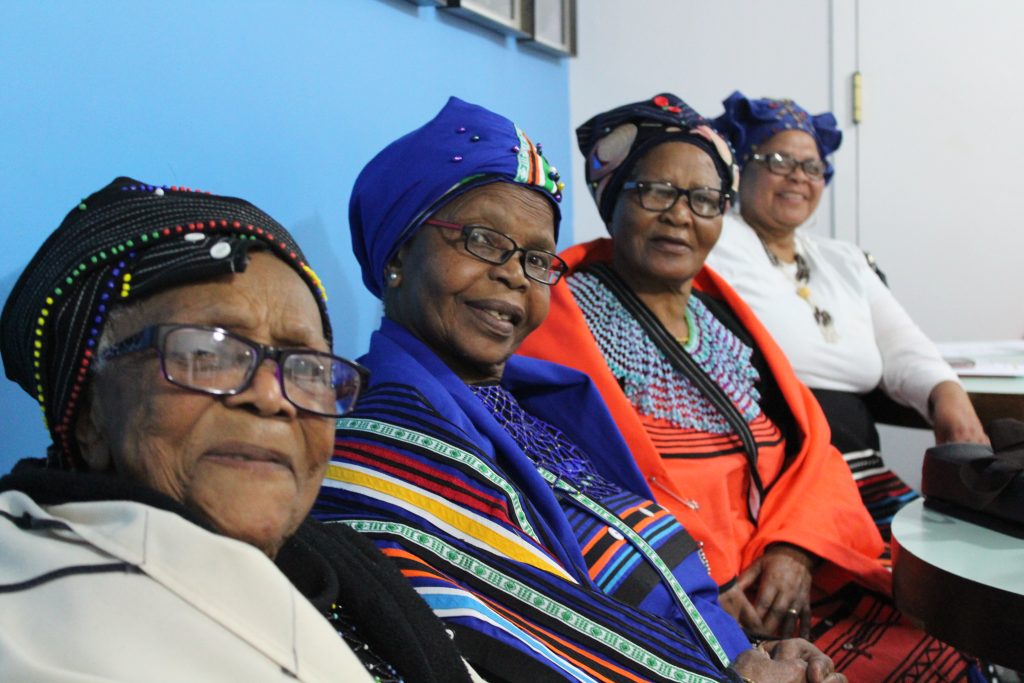
Mary is one of 67 grandmothers who gathered for an endearing Mandela Day celebration at the Ikamva Labantu Legacy Centre in Woodstock on Friday.
The annual 67 Gogos event brings together elders from township communities around Cape Town with members of the public in interactive beading circles. While hands are busy beading bracelets, a space is held for an intergenerational dialogue about apartheid, Nelson Mandela’s release, democracy and the hopes for our new South Africa.
Mary’s story
Mary’s story starts in Somerset West, where she was born. Her father later bought a house in Crawford, and she was schooled in Mowbray.
At 18, she started working as a domestic worker for none other than apartheid architect DF Malan. “It is so funny, he didn’t like black people but all his staff were black. He never really spoke to us, mostly stayed in the lounge and dining room. He was not nasty to me, but to some others,” says Mary.
“The pay was not wonderful but I could afford everything I needed at the time.”
She worked there for about six years before moving on to a family in Pinelands. It was during this time that she was arrested by apartheid police for not having a working permit. “I was taken to Roeland Street jail and locked up overnight. My employer came to bail me out the following day,” she says, adding that this type of thing was the order of the day.
In her forties, she started working for a couple and stayed with them for 44 years.
“I was part of the family,” she says of the gay couple with whom she moved around Cape Town’s suburbs, from Camps Bay to Rondebosch.
“There life was good. I didn’t have much to complain about. I never felt oppressed like so many others and was carried on the hands by my employers. It was beautiful working for them. They were the best people in the world.
Both in their eighties, they passed away a couple of years ago. Of that day, Mary says, “I couldn’t stop crying, I just could not.”
The only form of oppression she felt in those years was not being able to move around freely without a pass book, a restriction, she acknowledges, that paled in comparison to the heavy oppression endured by so many others.
Freedom and choice
She remembers Mandela’s release as “heartbreaking, but so wonderful”.
“He was at the town hall and we all rushed to get there. We cried like babies on the train. To see someone, who was part of a family and in jail for 27 years, sacrifice his life for our freedom was so wonderful.”
Her first vote was no quieter. “Oh, it was chaos in Khayelitsha. You have never seen such long lines in your life. It took me half a day to get to the front to cast my vote.”
After the first elections, freedom had a taste — to go anywhere, to work wherever they wanted and to walk into any shop. But the memories turn bittersweet as she looks back on some two decades of life in Cape Town and the dreams that never came.
“We are now captives again, captive in the conditions we live in,” she says. It is very sad, she reflects, to think that someone was in jail for 27 years for a freedom that didn’t last for half that time.
“We were dreaming dreams that were not to be. The way we live now is almost worse than during apartheid. They put no money into building things to make our lives better,” she says.
“They did nothing for us, it all went into their pockets. There were so many struggle heroes in jail and in exile, but when they came out they didn’t think of us. To them it was all about money. It saddens me.”
Of the hardships that surely marked her life, she does not speak. When asked, she offers only this: “I do hope that things can be peaceful in South Africa.”
“I believe in God, and whenever I ask Him for something He gives it to me. Whenever I needed anything, there was always someone there to give.”
It is this quiet faith that has carried Mary through a lifetime. Now dependent only on her old age grant and the modest income from her beadwork, she remains hopeful, not in the grand promises that once echoed across the nation, but in the small, steady kindnesses that still find their way to her door.
“My children are educated and look after me,” she says, and there is pride in her voice. “My granddaughter works at Nedbank, and my daughter is a caregiver. They brought me food and groceries just the other day.”
But she knows she is one of the fortunate ones. Many other grandmothers who join her at the elderly clubs are not so lucky.
“You can see they suffer,” she says. “When the food is served, you can see it is the first decent plate they have had all day. They tell me how their own children and grandchildren threaten them and take their money. The elderly centre is their only safe haven.”
Carrying our country
Meaning “The Future of the People,” Ikamva Labantu is a non-profit organisation that has been working inside Cape Town’s townships for over 60 years.
The organisation’s elderly programmes form the core of its work. Through vibrant senior clubs, it provides spaces for companionship, health monitoring and psychosocial support. Elders are empowered to maintain their independence through traditional beadwork and by crafting cause-marketing bracelets in collaboration with the Relate Trust.
For frail and isolated elders, a door-to-door homecare programme brings support directly to their homes, with community-based workers conducting daily outreach.
According to the organisation, approximately 38% of South African children are being raised by grandparents. Across township communities, older persons are stretching their limited Older Persons Grant to provide food, stability, and love to grandchildren. They struggle to access support in our townships due to mobility issues and lack of accessible public transport.
They are abused physically and financially by the very children and grandchildren they raised.
“Our elders helped carry South Africa through one of the most significant periods in our history,” says Ishrene Davids, director of Ikamva Labantu. “Many are still carrying our country today. They are raising grandchildren, holding families together and strengthening their communities, often while facing poverty, ill health and isolation themselves.”
The tragedy of their lives, says Spokazi Skepe, a coordinator of the elderly programme is the abuse suffered by so many grandmothers.
“They are abused physically and financially by the very children and grandchildren they raised. They are neglected, and in some cases sexually abused. It is a suffering they dare not speak of, shrouded in silence and taboo,” she says.
Ordinary people
Today, Ikamva Labantu’s work focuses on two flagship programmes: strengthening early childhood development and supporting the health, dignity and independence of older persons.
The programmes speak to the fact that township communities are not peripheral to the future of our country, but rather central to it.
“Our work is built on the foundational belief that ordinary people can make an extraordinary impact when they choose to act. We support this extraordinary impact and encourage others to join this movement to build a brighter future for our nation,” says Davids.
ALSO READ: The library built on a crime scene that changed a generation
At the event, Lulama Sigasana, elderly persons’ programme manager at Ikamva Labantu, said the gathering was about honouring a man whose life was a masterclass in resilience, courage and love for his country and all its people. But beyond celebration, she said, Mandela’s legacy — a heart of service — was something he wanted others to carry forward.
A society that does not value its older people denies its roots and endangers its future.
“When one reflects on the lives of great men in history, you note that they were ordinary people who chose to stay and in staying achieved extraordinary things,” she said.
Sigasana said walking away was the easiest thing to do in the modern world. When confronted with poverty, systemic inequality or the painful history of the country, it was simple to turn away and tell oneself that it was someone else’s problem to fix.
She said Mandela’s message remained at the core of the organisation’s work: “A society that does not value its older people denies its roots and endangers its future. Let us strive to enhance their capacity to support themselves for as long as possible and when they cannot do so anymore, to care for them.”



You must be logged in to post a comment.