
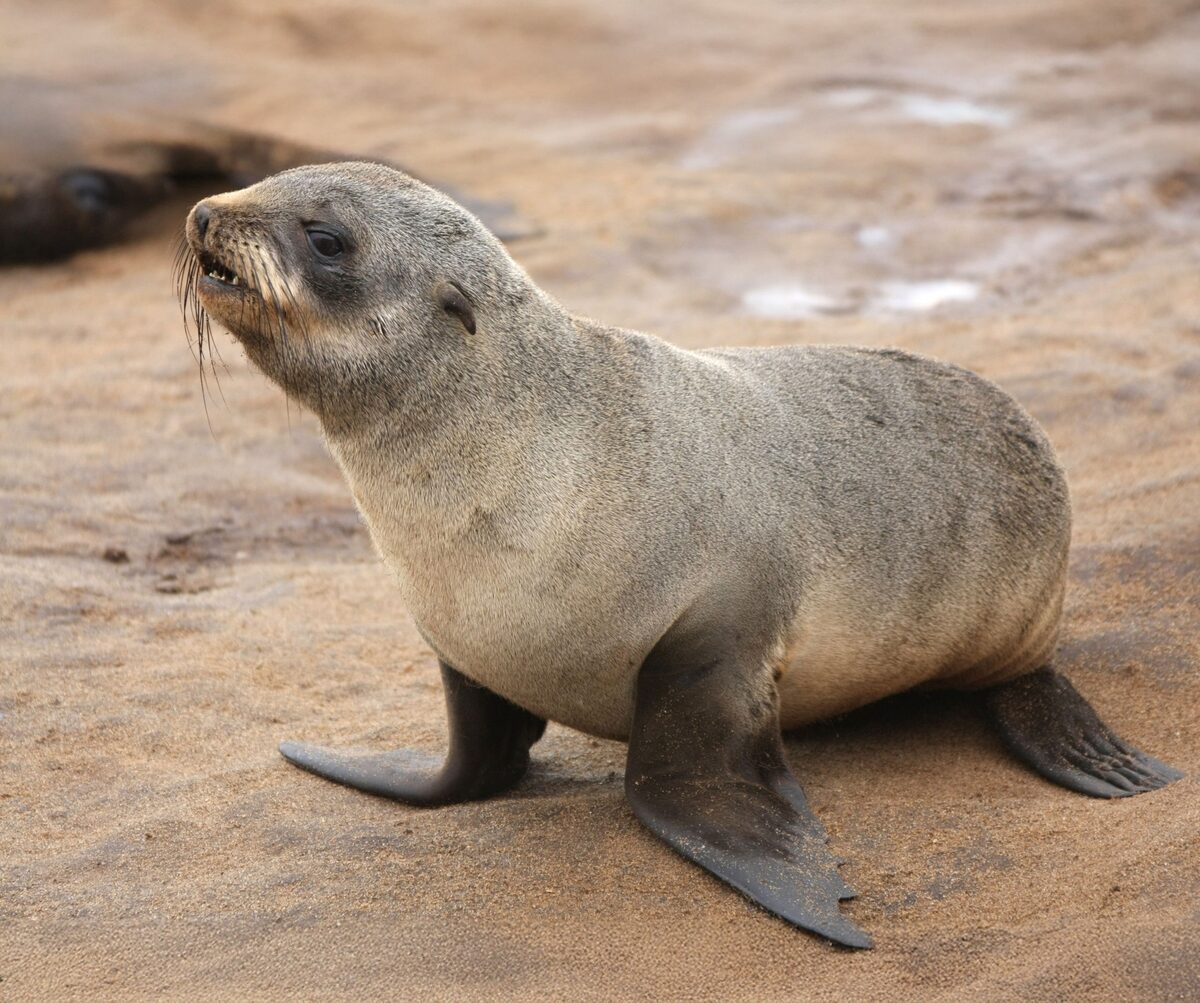
Rabies has been detected in Cape fur seals along South Africa’s coastline. At least 176 people were bitten by seals by the end of 2025.
CapeNature has issued a public cautionary urging residents and visitors to keep their distance from seals. People should act immediately if they or their pets are bitten, scratched or exposed to a seal’s saliva. This warning comes on World Rabies Day (28 September).
The warning has added significance following the recent sighting of an elephant seal along the coast.
A male elephant seal, estimated to be at least three meters long and about three years old, was recently found ashore. A local observer confirmed that this seal was not Bakkies. Bakkies is an elephant seal that has previously visited the area.
The spotted seal had no flipper tag and had apparently never been tagged.
A Two Oceans team was placed on standby to tag the seal and administer a rabies vaccination. However, the seal returned to the water before the team could reach it and had not yet returned to land.
While efforts are made to tag and vaccinate the elephant seal, its location has not yet been disclosed.
Vaccination rationale
The reported rationale for vaccinating the animal is not necessarily to prevent it from contracting rabies. Instead, it is to reduce the possibility of it carrying the virus southwards. If it does, it could reach a seal colony where an outbreak could have serious consequences.
CapeNature said that most seals do not pose a threat to people. But they remain wild animals and should never be approached, touched, fed or encouraged to interact with humans.
Seals regularly come ashore to rest. Therefore, their presence on a beach does not necessarily indicate that they are sick or stranded, the conservation authority confirmed.
A seal infected with rabies may behave aggressively, appear disoriented, move unusually or show little response to its surroundings. However, similar behaviour can also be caused by injury, illness or distress.
CapeNature urged the public to not attempt to diagnose, move or assist seals themselves.
“World Rabies Day is an important reminder that simple precautions can protect both people and wildlife,” said Mbulelo Jacobs, executive director of Conservation Operations at CapeNature. “Cape fur seals are an improtant part of our coastal ecosystem, but they remain powerful wild animals.”
Jacobs added that “the safest response is to keep your distance, avoid any interaction and report concerning behaviour o the relevant authorities”.
Anyone bitten or scratched by a seal or exposed to seal saliva through broken skin, the eyes, nose or mouth, should wash the affected area with soap and running water for at least 15 minutes. Afterwards, they should seek urgent medical attention.
CapeNature also urged pet owners to keep dogs and other animals away from seals. In addition, they should ensure their rabies vaccinations are up to date.
Concerning seal behaviour can be reported to CapeNature on 083 236 2924. Members of the public should provide an accurate location and, if safe, photographs or video taken from a distance.