UCT has launched a £4.4 million (R86.8 million) programme to give African scientists advanced microscopes for studying the continent’s deadliest infectious diseases.
A Wellcome Trust initiative
The Wellcome Trust funds the four-year openScopes AIDDiA (Advancing Infectious Disease Discovery Research in Africa) programme. It aims to cut reliance on laboratories outside Africa by building and maintaining imaging equipment locally.
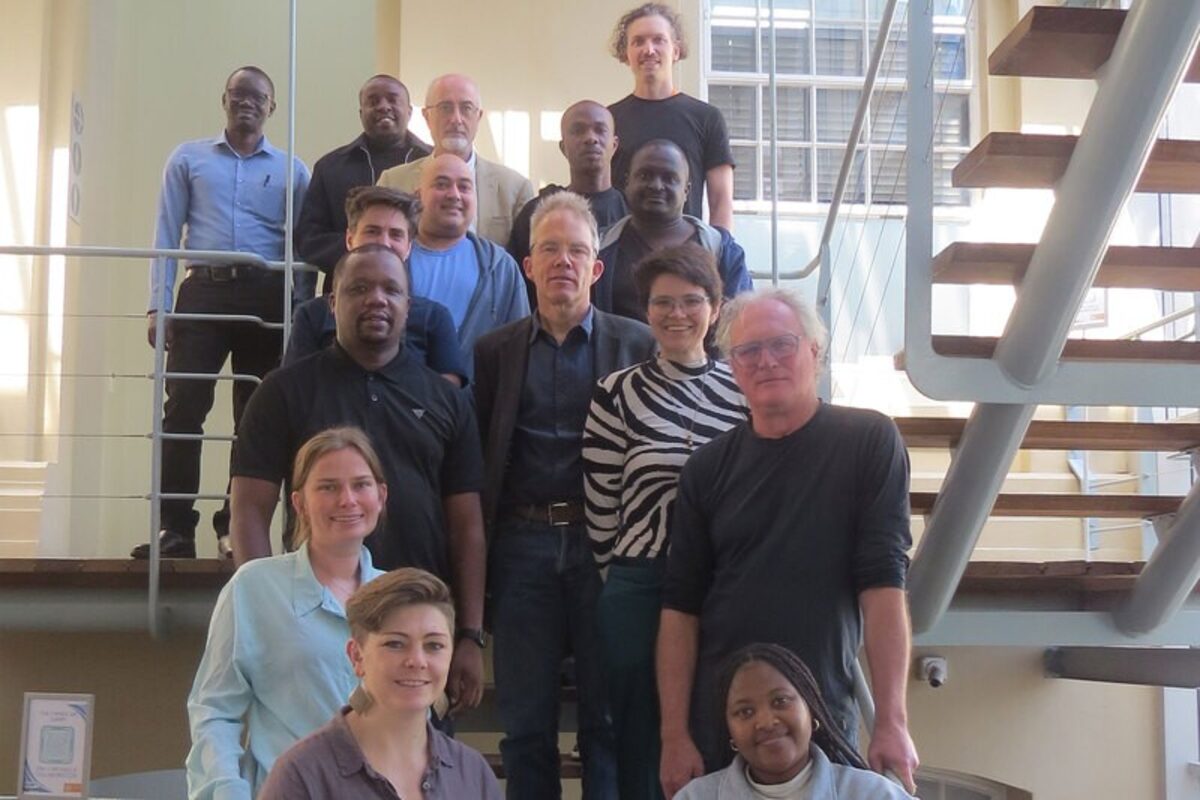
UCT’s Institute of Infectious Disease and Molecular Medicine (IDM) hosted the launch meeting from 7 to 11 September.
Diseases where tools are scarcest
In particular, the programme targets tuberculosis (TB), malaria, Buruli ulcer and other infectious diseases. These account for more than 292 million cases and 1.7 million deaths worldwide, according to a 2024 World Health Organization (WHO) report. In fact, more than 90% of cases occur in Africa.
Buruli ulcer is a bacterial skin infection causing severe open sores, most common in West and Central Africa.
However, researchers studying these diseases often lack access to advanced imaging technology. Commercial microscopes are expensive and difficult to maintain. Therefore, researchers must send samples collected locally abroad for analysis, which slows research and limits local scientific capacity.
‘Putting imaging where patients are’
“The diseases we’re working on TB, malaria, Buruli ulcer and others are most prevalent where the tools to study them are hardest to come by,” said Caron Jacobs, who co-leads the consortium with Digby Warner, both from UCT’s IDM.
“And the questions we care about, such as how these pathogens survive and resist treatment, call for imaging that reveals how the infection actually works. Putting that imaging in researchers’ hands, where the patients are, means the scientists closest to these diseases can lead the discovery.”
Two open-source platforms
In addition, the programme will develop two microscopy platforms with freely available designs, so researchers can build, repair and upgrade them locally.
For instance, mobile travellerScopes will move between research sites, extending access beyond major centres. UCT’s IDM and the Faculty of Engineering & the Built Environment developed them jointly.
Moreover, four African partner sites will host more advanced microbeScopes, and teams will adapt them to local research priorities.
The programme will also produce training materials in English and French, building a network across anglophone and francophone Africa.
Five-country consortium
The consortium includes UCT, the Kenya Medical Research Institute (KEMRI), Mbarara University of Science and Technology (MUST) in Uganda, the Centre Suisse de Recherches Scientifiques (CSRS) in Côte d’Ivoire and Imperial College London.
Notably, it is the only one of nine projects in this Wellcome funding round with leadership outside the United Kingdom.
Each African partner will lead on diseases of local priority. UCT focuses on TB, CSRS on Buruli ulcer, MUST on malaria and KEMRI on other neglected and emerging infections.
Studying TB cell by cell
As a start, TB will provide the programme’s first major test. Specifically, researchers in South Africa and Kenya will use the new microscopes to study drug-resistant TB directly in patient samples. They will examine the bacteria at the level of individual cells.
At UCT and KEMRI, high-containment imaging facilities will allow researchers to safely study live, highly infectious pathogens on site.
The programme will also develop methods that suit African research conditions. These include unreliable electricity, limited cold storage and restricted access to imported biological supplies.
Making sense of the data
“A microscope captures an image, but the discovery happens afterwards, in how the data is handled and analysed,” said William Wasswa, who leads the project’s image-analysis and machine-learning work at MUST. “So we are building both the pipelines to manage the data, and the machine-learning tools to make sense of it into openScopes AIDDiA from the start.”
Similarly, Viv Goosens, research manager for Discovery Research at Wellcome, said the Bioimaging Technology Development Awards were “highly competitive.” “OpenScopes AIDDiA stands out for its multi-pronged approach and the strength of an international team, which will address challenges faced by researchers across Africa.”
A lasting network
Finally, the programme builds on the openFrame, an open-source microscope system that collaborators at Imperial College London developed. Earlier Wellcome funding supported prototypes now ready for researchers to refine and deploy through openScopes AIDDiA.
Above all, the ambition is to leave behind expertise, infrastructure and research networks, not just equipment. The goal is a self-sustaining African bioimaging community that continues after the four-year grant ends.
OpenScopes AIDDiA is one of three projects in this Wellcome funding round with UCT involvement. The University of Exeter and the University of Oxford lead the others, with UCT researchers as co-principal investigators.
ALSO READ: Orientation at UCT approaches, 4 500 first-year students expected