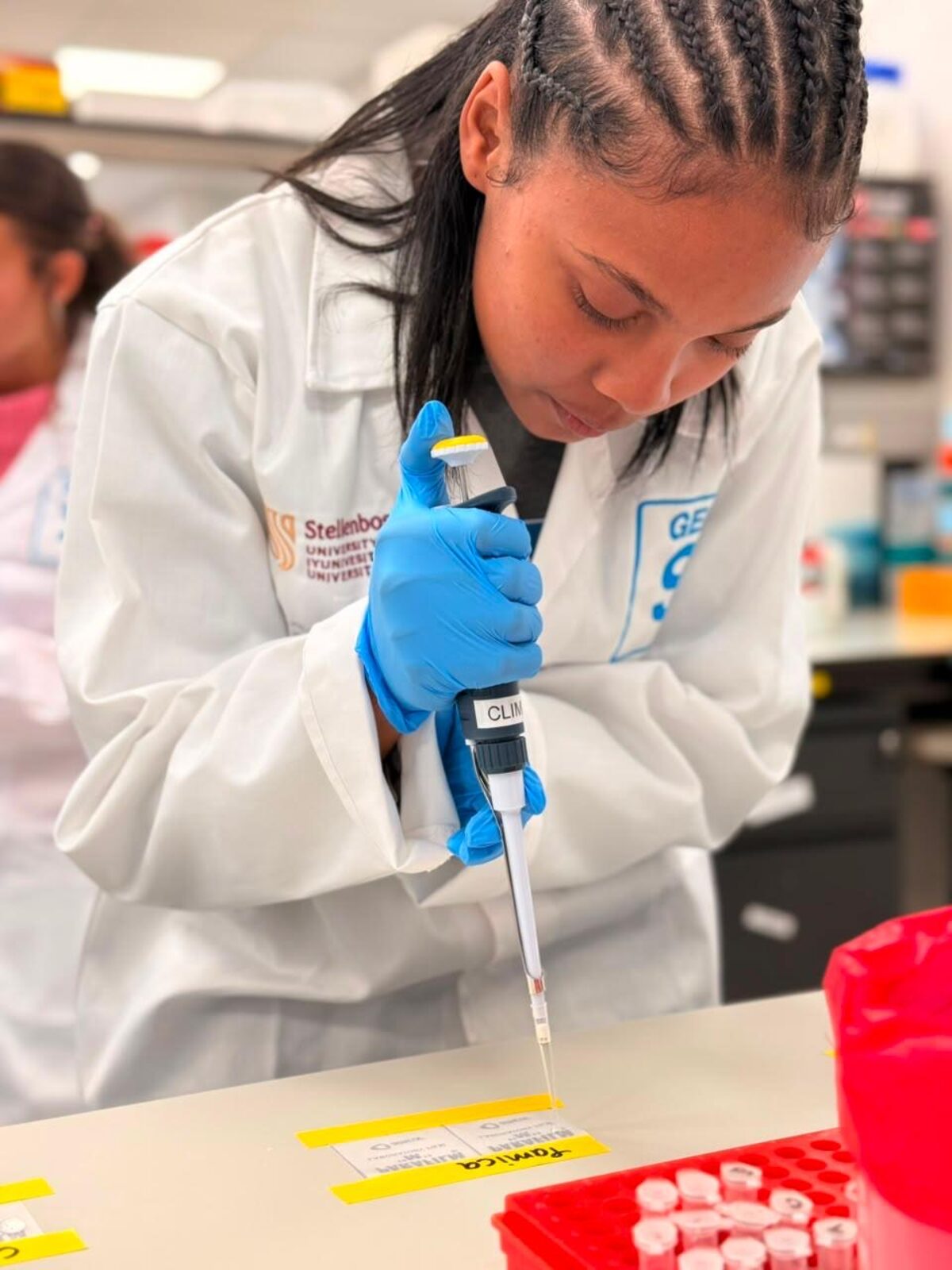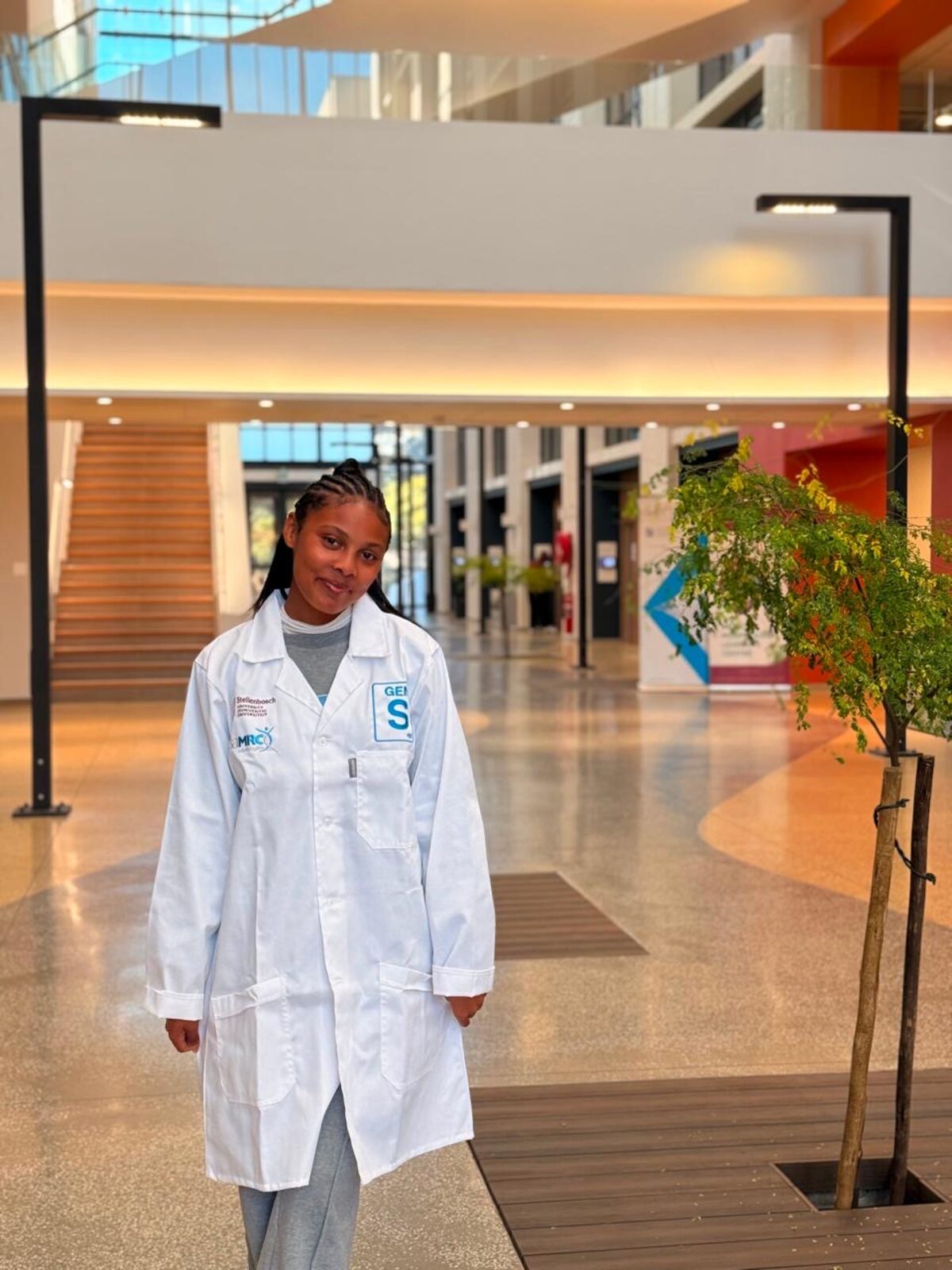
Teenager Tamica Lakay has always been drawn to the idea of a career in science, but it was a single day spent shadowing researchers at Stellenbosch University’s Biomedical Research Institute that gave these aspirations a fillip. Not to mention a more profound respect for scientists.
The Christel House South Africa head girl, who lives in Manenberg with her mother, brother, and sister, heard about the GenS Job Shadow Programme through her life-sciences teacher and seized the chance to experience the world of a scientist first-hand.
Day in the life
“The job programme is about shadowing scientists and exposing children to what being a scientist entails,” she explained. “We visited labs and saw different aspects of work scientists do on a daily basis, what scientific research involves.”
Tamica described the experience as very exciting and insightful, particularly the hands-on activities that gave her a real sense of laboratory work, through direct experience.
“Everyone was very excited about being in the labs and we got the chance to keep one of the lab coats, which was nice. They showed us how to use pipettes and centrifuge things and learn more about this field. Now, when I apply to study science I have more knowledge and a sense of what it’s all about.”
What struck her most was understanding the purpose behind scientific research, and especially how it affects South Africans at grassroots level.
New perspective
“We often don’t think of the reason they do the research or why they study for so long. It helps the country; there are people, for instance, doing research on TB, which is a big problem in South Africa, and HIV.”
The high-school student enjoyed hearing the thought processes of the scientists, who discussed the problems they were researching and how their work could impact the country and its citizens.
The experience also gave her a new perspective on the relationship between doctors and scientists.
“When I was exposed to the scientists, I picked up that doctors are there only to cure you, but the blood and diagnosis they give must still be sent to a lab, where the scientists find the actual reason or cause of the sickness. The doctor tells you what’s happening, but the scientists explain why it’s happening.”
Tamica admitted she felt anxious about adapting to an unfamiliar environment. “I was nervous to see how I would fit in, as it was very new to me, and be able to understand it.”
However, the experience pleasantly surprised her, exceeding her expectations.
Tamica hoped to pursue a career in medicine, science, nursing or occupational therapy, and the day spent at the lab has given her enough knowledge and confidence to take the next step.
ALSO READ: Rescue dogs turn artists to raise funds for TEARS Animal Rescue