Schools hold the key to youth unemployment, UWC professor tells Parliament
Youth unemployment starts long before young people reach the labour market. It begins in South Africa’s classrooms, where overcrowding, unequal resources and administrative pressures on teachers leave learners already disadvantaged by the time they look for work.
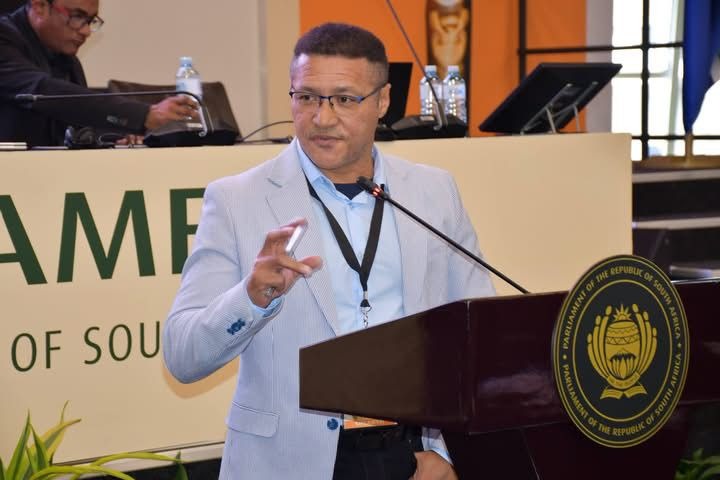
That was the message Prof Rouaan Maarman delivered to Parliament’s Youth Skills and Employment Colloquium on Monday 31 August . The colloquium, organised by Parliament’s Research Unit, brought together young people, policymakers, educators and civil society to discuss the structural causes of youth joblessness.
Maarman is the Deputy Dean for Research and Postgraduate Studies in the Education Faculty at the University of the Western Cape. Drawing on years of research into education, poverty and human development, he urged policymakers to look beyond unemployment statistics and examine the inequalities shaping young people’s futures long before they enter the workforce.
The colloquium took place against a stark backdrop. Statistics South Africa’s Quarterly Labour Force Survey for the second quarter of 2026 put the youth unemployment rate at 47.4%, with five million young people aged 15 to 34 out of work.
A deeper problem
Maarman challenged Parliament to view youth unemployment as the outcome of deeper structural inequalities rather than a skills deficit. He argued that many young people arrive at the labour market already disadvantaged by unequal schooling, overcrowded classrooms and limited opportunities.
For him, unemployment is not the starting point of the crisis but one of its consequences. “We can dream: freedoms and life-worthiness of basic education in a democratic South Africa,” he told the colloquium. The challenge, he said, is that these freedoms do not reach all learners equally.
Education as freedom, not just job preparation
Central to his presentation was the argument that education should expand people’s freedoms and capabilities rather than simply prepare them for employment. He urged policymakers to create meaningful educational opportunities that allow learners to develop agency, confidence and the ability to pursue a life they value.
“All the man-made structural challenges in basic education can be changed for the better if there is public agency, coordinated educational discourse and accountability,” Maarman said. Sustainable change, he argued, requires collective commitment across society.
The gap between policy and reality
Maarman emphasised that access to schooling alone is not enough. The real measure of a successful education system, he said, is whether it creates meaningful opportunities for learners to thrive. His research highlights the gap between constitutional rights and everyday educational realities, particularly in under-resourced communities.
“Constitutional rights and education policies do not automatically translate into meaningful freedom and opportunity for learners,” he said. “Large Foundation Phase classes create learning gaps that often remain with learners throughout their educational journey. This includes excessive administrative demands on teachers, which reduces the time and attention available for teaching and learning.”
Foundation Phase refers to Grade R to Grade 3, the first years of formal schooling. Maarman warned that learning gaps established at this early stage follow learners throughout their education.
While South Africa has progressive education policies, he argued that systemic barriers continue to undermine their impact. Overcrowded classrooms, unequal resource distribution, administrative pressures on teachers and fragmented public accountability all contribute to persistent inequality.
These obstacles are not inevitable, he told Parliament. But addressing them requires looking beyond the labour market to the classroom where the crisis begins.
ALSO READ: Cape Town youth gain fashion skills through Stitch Ahead programme