Seven years later, I still think about that question on live TV
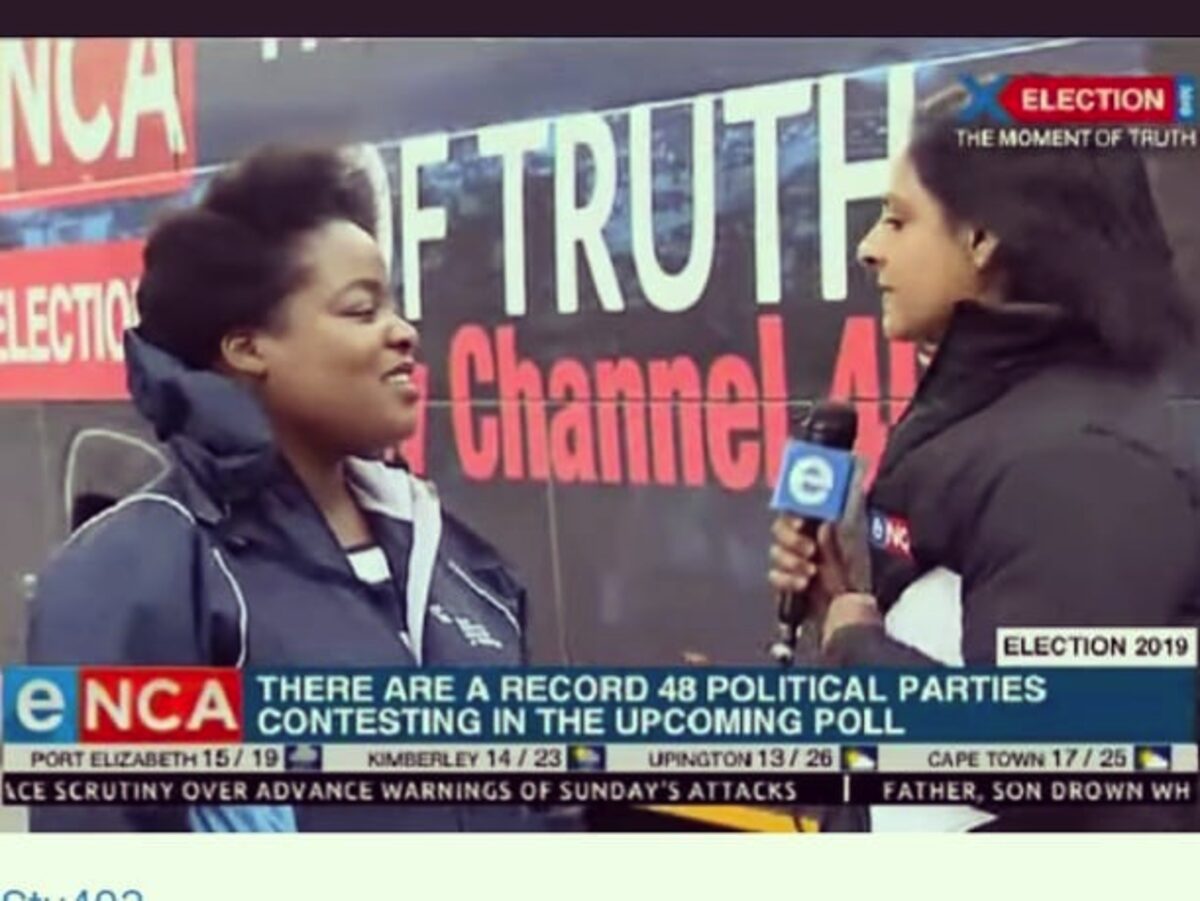
I recently stumbled upon a Facebook memory that took me back seven years. It was an election year, and a younger version of myself on the eNCA election bus, live on television.
I was asked a simple question: “Are you voting?”
I said no.
Around me, the answer was almost unanimous. Yes.
My response landed awkwardly, as I expected it would.
It was not because I did not understand the importance of voting. I did. Political awareness was not foreign in my home. But I also understood something else; the framing theory.
Conversations about politics among young people are often uncomfortable terrain. Speak too earnestly and you risk being labelled “too serious”. Push too far and the conversation turns into humour, deflection, or disengagement. Politics becomes something to joke about, avoid, or reduce to personalities instead of policy.
So I answered deliberately. Not to reject democracy, but to disrupt the script. I wanted to see if anyone would pause long enough to ask why. Very few did.
What that moment revealed about political engagement
That moment has stayed with me, not because of the answer I gave, but because of the gaps it revealed. Young people are consistently encouraged to vote, but not always equipped to understand what that participation demands. We are told our voices matter, but seldom guided on how to interrogate manifestos, unpack ideology, or locate ourselves within a complex political landscape.
Participation is promoted. Political literacy is not.
At the time, my answer frustrated people close to me. I was accused of making myself appear uninformed on live television during an election cycle. But as a journalism student I understood the power of framing. I was willing to sit with that discomfort because the moment was never about showing off how politically aware I was .
It was about forcing a conversation that is often avoided, even in spaces meant to encourage engagement.
Young people are engaged, but not always supported
In many ways, I was not speaking only as an individual. I was reflecting a broader reality: young South Africans navigating politics with awareness, but without consistent spaces to deepen that understanding.
There is curiosity, but not always guidance.
There is exposure, but not always explanation.
Politics is not an image. It is not PR.
It shapes the cost of living, the safety of communities, the quality of education, and the opportunities available to young people. It requires more than following personalities or slogans. It requires critical engagement with leaders, parties, manifestos, and governance records, and making decisions grounded in understanding rather than allegiance.
Seven years on, the question remains the same
Now, seven years later, as the country approaches another local government election, I find myself returning to that same question. Not whether young people will vote, but whether they are being prepared to decide. Because voting, on its own, is not the endpoint of democracy. It is only meaningful when it is informed. A ballot cast without clarity is participation in form, but not always in substance.
We cannot continue to measure civic engagement only by turnout while ignoring the uneven foundation beneath it. Political understanding remains fragmented. In some spaces, it is discouraged. In others, it is reduced to slogans, party loyalty, or surface-level debate. The result is a generation expected to participate in a system it is not always fully equipped to navigate.
Beyond voting: building political literacy
This is not an argument against voting. It is an argument against shallow engagement. If democracy is to be strengthened, political education cannot be optional or incidental. It must be intentional, accessible, and ongoing. It must create space for questioning, disagreement, and uncertainty. It must allow young people to wrestle with ideas, make mistakes, and refine understanding without being dismissed or ridiculed.
These conversations also cannot be confined to formal spaces. They must exist in homes, schools, campuses, communities, and media platforms. They must be normalised among peers, not avoided. Political literacy should not require specialised interest or professional training. It should be part of how we understand the world we live in.
The real challenge
The challenge is not apathy. It is access. Access to knowledge. Access to dialogue. Access to spaces where political understanding is developed, not discouraged.
As local elections draw closer, the question should not only be how many young people will show up at the polls. It should be whether they arrive with clarity, confidence, and urgency. Whether they understand not just who they are voting for, but why. Because participation without understanding is not enough.
READ ALSO: OPINION | Change is uncomfortable due to unknowns