Residents and community activists have questioned the City of Cape Town’s proposed N2 safety wall, saying communities living alongside the highway should have a greater say in how public money is spent and how safety interventions are designed.
Residents from across Cape Town gathered at Cissie Gool House in Woodstock last week for a meeting convened by community organisation Movement for Care to discuss the proposed project.
The meeting brought together residents from Khayelitsha, Nyanga, Langa, Gugulethu, Bonteheuwel and Mitchells Plain, as well as people from Woodstock, Salt River, the City Bowl and other parts of Cape Town, according to Movement for Care.
The discussion focused on the concerns of communities living alongside or near the N2 and whether the proposed safety intervention would address the problems they face in their daily lives.
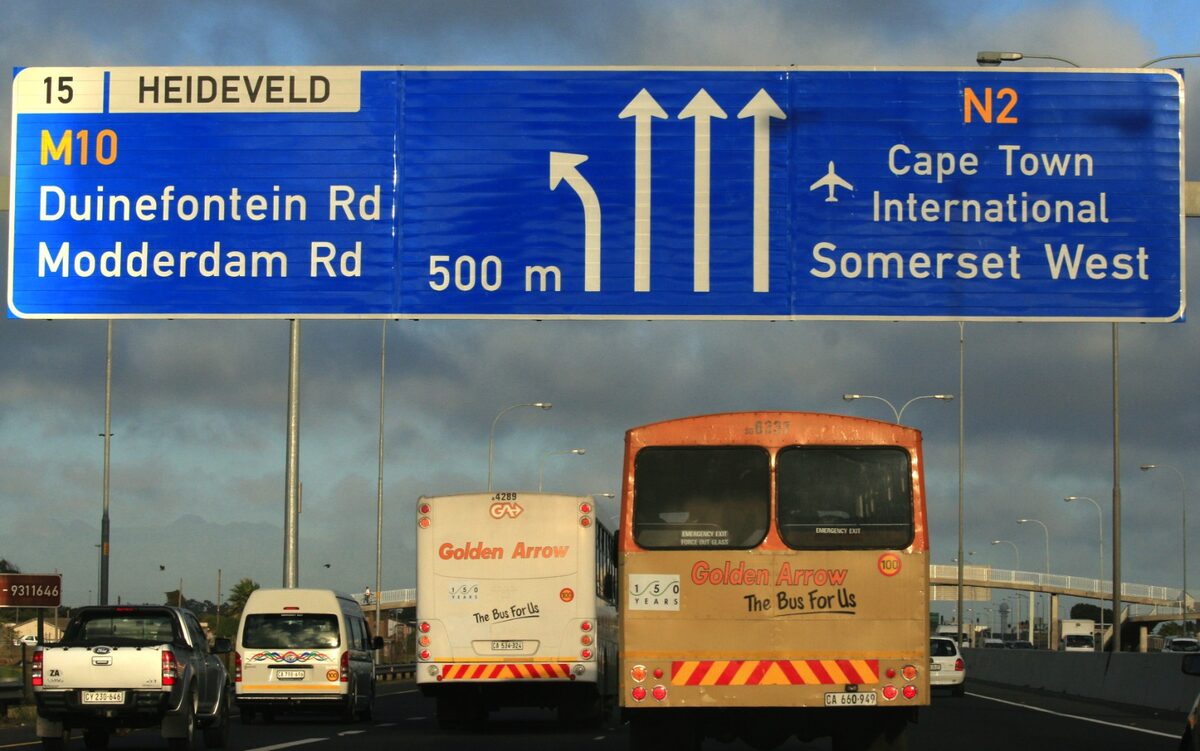
The City has said the project, known as the N2 Edge Safety Project, is aimed at improving safety along a 9km stretch of the highway near Cape Town International Airport. It includes a wall along a section of the highway, as well as pedestrian crossings, lighting upgrades, access control and reinforced barriers.
Movement for Care coordinator Nkosikhona Swartbooi said residents questioned the extent to which communities directly affected by the project had been consulted.
“The very communities that are next to where the wall would be built have not been consulted,” Swartbooi said.
He said residents were concerned that the City could proceed with the project without meaningful public participation from communities living alongside the N2.
“They also raised an issue to say if the wall is a safety project, whose safety is being prioritised?” he said.
Whose safety is being prioritised?
Swartbooi said residents argued that crime associated with the N2 could not be separated from the broader safety problems experienced by communities in surrounding areas.
He said residents raised concerns about incidents such as hijackings and smash-and-grabs, but questioned whether protecting motorists travelling along the N2 would address the underlying safety problems faced by people living in neighbouring communities.
“Those are things that these communities are subjected to,” he said.
Swartbooi said residents believed a broader approach to safety was needed, including interventions within communities themselves.
Among the issues raised at the meeting was the need for better street lighting, particularly in areas where residents walk at night to access work, public services and basic amenities.
Swartbooi said residents questioned whether money allocated to the N2 project could instead be used for interventions such as lighting in communities.
He said residents were particularly concerned about the safety of women who have to walk through poorly lit areas when travelling to and from work or accessing basic services.
However, he stressed that residents were not necessarily opposed to safety projects.
“They have made it clear that they are not against any safety project that the City wants to embark on,” he said.
Rather, he said, residents wanted to be involved in decisions affecting their communities.
Calls for public participation
Swartbooi said public participation should be central to the planning of major municipal projects.
“Public participation becomes the cornerstone of our democracy,” he said.
He said residents wanted clarity about the process, including who was involved, what stage the project was at and what opportunities communities would have to provide input.
The City has said the project remains in its early planning phase, with technical, statutory and governance processes still under way.
This means the details of the project and the process through which affected communities will be engaged remain important questions for residents and community organisations.
Movement for Care plans community engagements
Movement for Care said Wednesday’s meeting was the first in a series of planned engagements with communities it considers affected by the project.
The organisation said it intends to hold further meetings in Bonteheuwel, Langa, Nyanga, Philippi, Gugulethu and Khayelitsha.
Swartbooi said the organisation would use the meetings to hear directly from residents and ensure their views are represented.
He said residents would be free to express whether they supported the proposed wall, opposed it or wanted greater involvement in the planning process.
The organisation also indicated that residents could consider demonstrations or other forms of public action, while observing constitutional rights and responsibilities.
Swartbooi said the organisation wanted communities to have an opportunity to make their views known before decisions affecting them were finalised.
Questions over cost and responsibility
Residents also questioned the amount of public money being committed to the project and whether those funds could be better directed towards safety and basic services in communities.
Swartbooi questioned how the project would be implemented and which authorities were responsible for it.
He also raised questions about the respective roles of the City and national government, given the N2’s status as a major national route.
City response
The City has said the project is intended to improve safety along the N2 through a combination of physical barriers and other interventions, including pedestrian crossings, lighting, access control and reinforced barriers.
Mayco member for Urban Mobility Rob Quintas has said the project remains in its early planning phase, with several technical, statutory and governance processes still under way.
For residents living alongside the N2, the debate is not simply about whether a physical barrier should be built. It is also about whether safety interventions designed to protect people travelling through the city adequately consider the people living in the communities surrounding the route.
As Movement for Care prepares to take the discussion into affected communities, residents are expected to continue debating what safety should look like — and who should have a say in how public money is spent
ALSO READ: R180 million N2 security wall planned by Cape Town to protect motorists