Homeless people in Claremont and surrounding areas can now access essential services through Mi-change digital vouchers, a cashless donation system piloted in Cape Town.
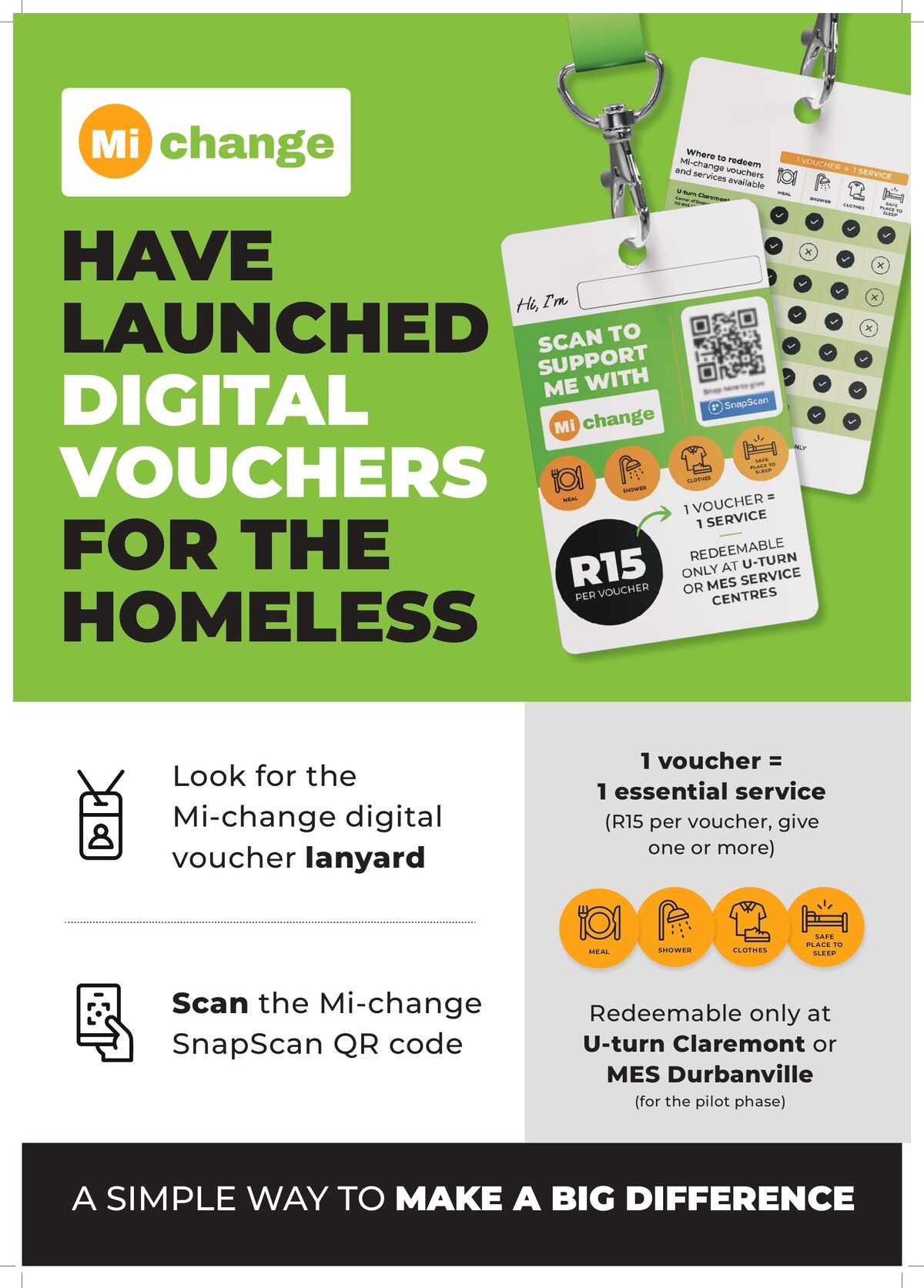
Mi-change, a national voucher initiative, is testing the system at U-turn in Claremont and Mould Empower Serve (MES) in Durbanville. As a result, community members can provide direct support without giving cash on the street.
How the Mi-change digital voucher system works
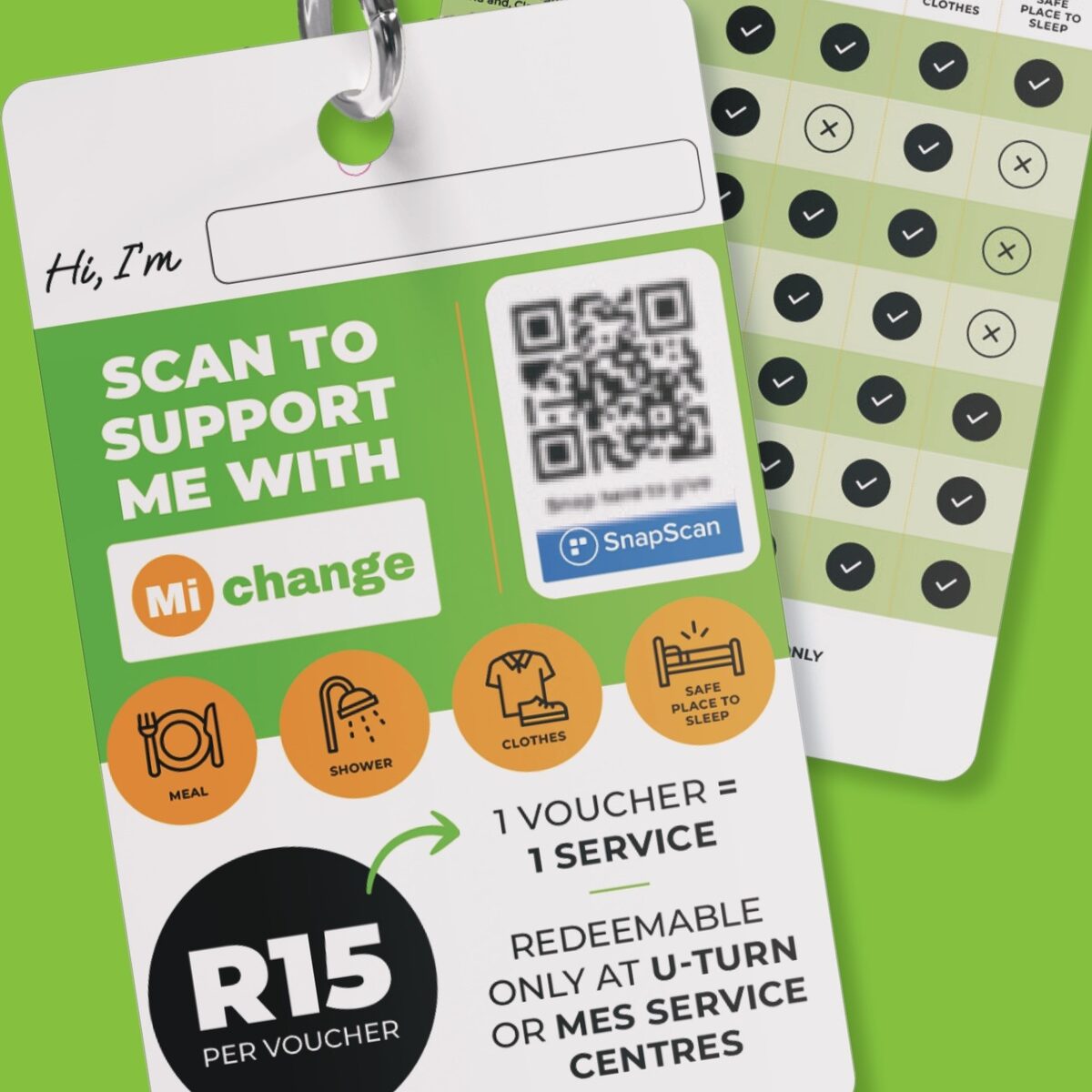
Each Mi-change digital voucher costs R15 and community members can purchase it instantly via a SnapScan QR code. The QR code links donors directly to registered participants, which speeds up the process.
Participants can then redeem vouchers for meals, clothing, a warm shower or a safe place to sleep at participating organisations.
“Many people already use SnapScan as part of their daily routines, so there is no new learning involved,” says Carmen Dickenson, Mi-change national manager. “Because of this, people can give in the moment.”
Reducing misuse while supporting recovery
Unlike cash or physical donations, Mi-change digital vouchers cannot be sold or exchanged. Consequently, donations support essential needs and reduce misuse.
In addition, the vouchers signal active participation in the programme and progress towards exiting homelessness.
“Our goal is to provide people with a pathway out of homelessness,” Dickenson says. “Therefore, digital vouchers reduce street solicitation and limit cash on the streets, while they also connect people with support services.”
Research-backed pilot with expansion plans
The digital voucher programme was developed with behavioural research organisation ideas42. During development, the team conducted interviews and user testing with both donors and participants.
Meanwhile, the pilot forms part of a broader partnership between U-turn, MES and the Citi Foundation. The organisations will use insights from the pilot to guide future expansion.
Mi-change plans to roll out the digital voucher system to additional centres across Cape Town in the new year. Ultimately, the organisation aims to expand the programme to other regions.
“As the economy becomes more digital, small cash donations are becoming less common,” Dickenson says. “For this reason, these digital vouchers offer a practical alternative.”