Editor’s note: In a previous version of our report, an individual referred to as ‘Boksie’ was named as a suspected role player in gang-related activities of the Terrible Josters in the Hangberg area. Boksie subsequently informed People’s Post through his lawyer that he denies being a member, leader or associate of any gang operating in the Hangberg or Hout Bay area and denies participating in any illicit poaching or drug-related activities. Our report was based on the GI-TOC report which has removed references to Boksie in its report.
In Hangberg and Imizamo Yethu, gang structures reportedly finance community projects. They position themselves as local problem-solvers, building loyalty. This makes it socially costly for residents to cooperate with police.
The Global Initiative Against Transnational Organised Crime (GI-TOC) reveals this in its Western Cape Gang Monitor Issue 9, published recently. The Geneva-based organisation tracks criminal networks worldwide.
Extortion and protection rackets run alongside the goodwill. Gangs allegedly recruit children as runners, lookouts and couriers. This pulls the next generation into the same criminal economy.
Behind this sits an alleged criminal entrepreneur based in Hangberg.
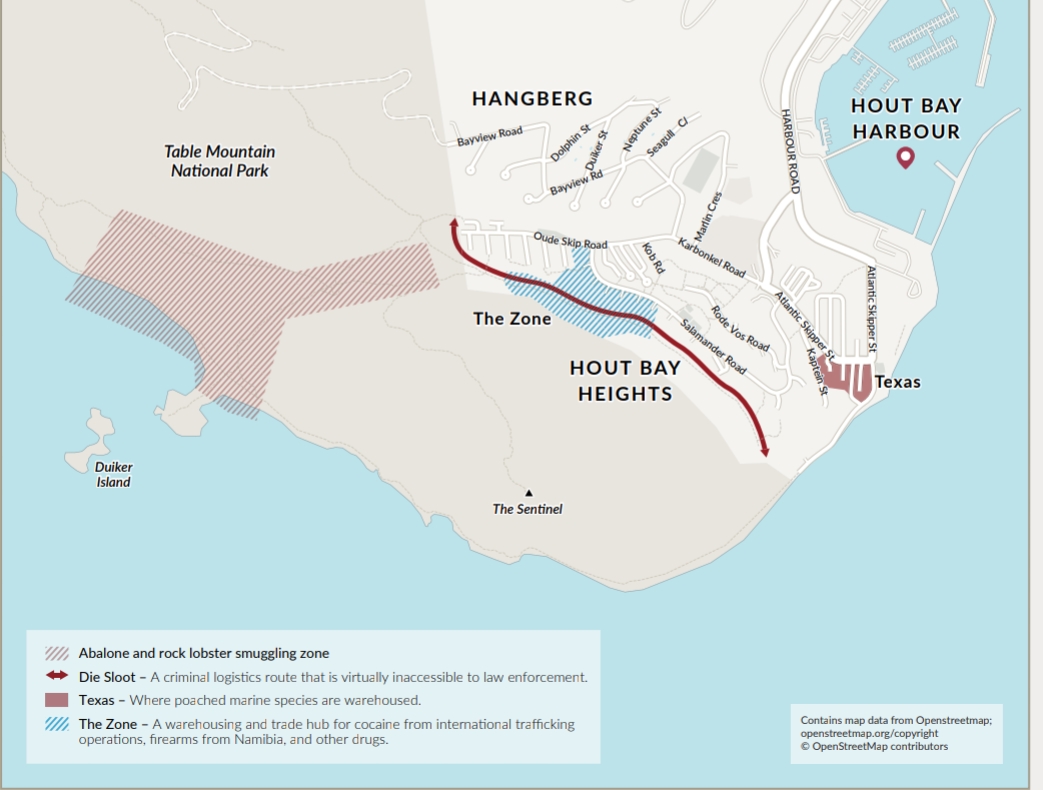
GI-TOC claims the alleged entrepreneur controls the network that turned Hout Bay Harbour into a cocaine gateway.
The organisation say he controls the majority of poaching operations in the area. He operates with the Terrible Josters gang, a Western Cape outfit affiliated with the 28s.
“Networks allegedly tax or extort ‘subsistence’ poachers for their catch. ‘Poaching schedules’ reportedly regulate operations,” GI-TOC said.
The man’s network decides who goes to sea, when, and under what terms. Those who operate outside that arrangement reportedly face consequences.
Researchers believe this scheduling system doubles as a logistics operation for offshore cocaine retrievals. Small, fast boats collect cocaine packages that large container vessels drop in international waters. The boats move through coastal waters under cover of routine poaching runs.
The ward councillor responds
Ward 74 Cllr Roberto Quintas represents Hangberg and Imizamo Yethu. He told People’s Post the GI-TOC report was “fairly reliable,” based on his own experience and community information.
Fear was, he said, the single biggest barrier to progress.
“People feel they know those involved and due to relationships as family, friends or neighbours are unwilling to come forward. There is very obvious fear about coming forward with information as witnesses will be at risk of retribution.”
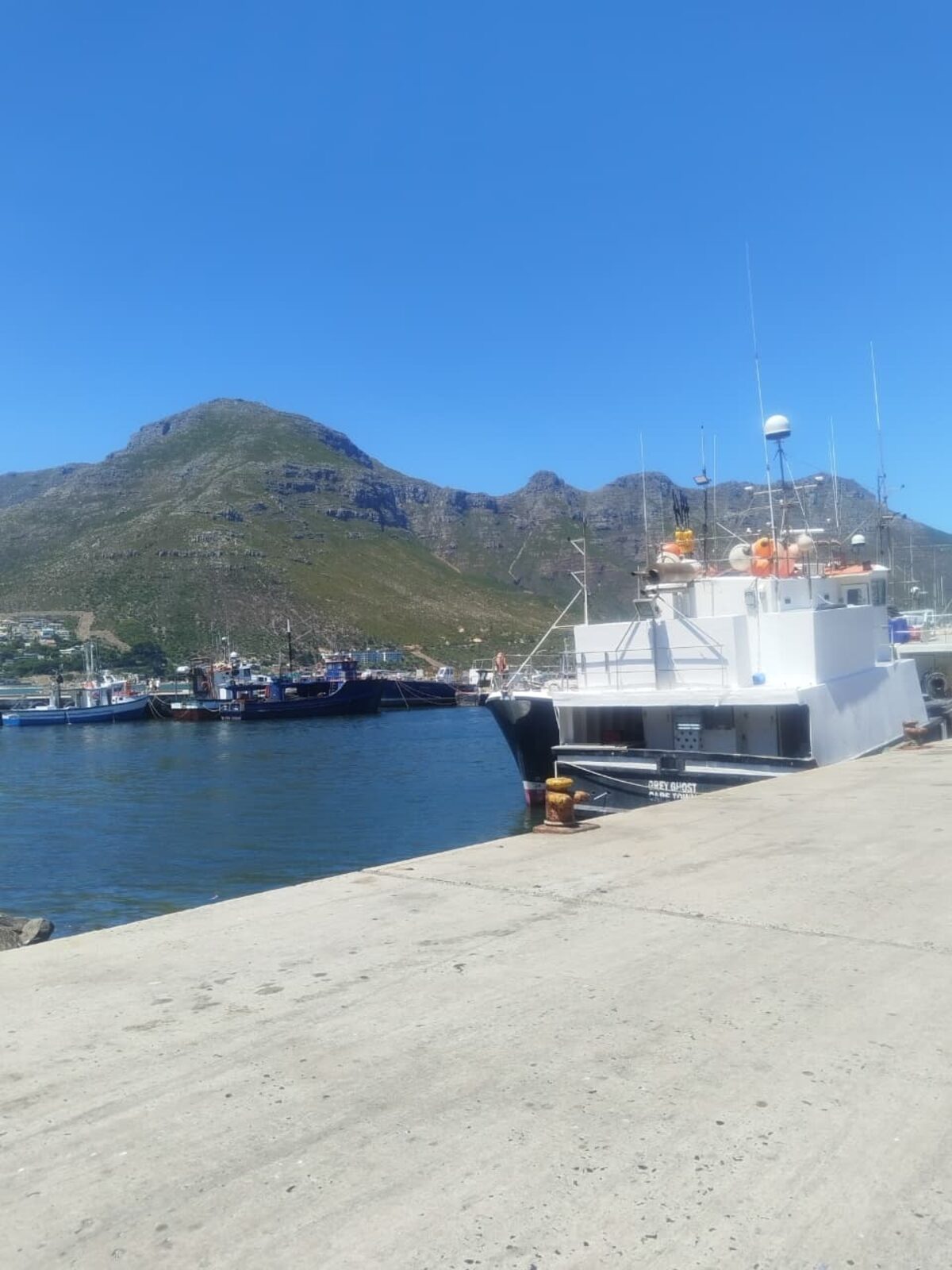
On the harbour, Quintas was direct. Poor security and porous access had allowed criminal elements to create what he called a “no-go blind spot” for authorities.
Quintas has pushed for the re-imagining of Hout Bay Harbour since 2018. He tabled a Motion of Exigency calling for private sector investment, retail, hospitality and fish markets. His principle was simple: a busy, well-lit harbour is harder to exploit.
He says National government ignored his overtures from 2018 to 2023. Only then did the National Department of Public Works and Infrastructure begin engaging stakeholders. Quintas said officials used near word-for-word the motion he had tabled five years earlier.
He anticipated resistance once the harbour opened to private investment. “Those who do not wish eyes on and busyness in the area” would push back, he warned.
What must change
“Interviews with gang members and police officials both indicated that Hout Bay is a major point of entry for cocaine into South Africa,” GI-TOC said.
People’s Post sent enquiries to Lt Col Siyabulela Vukubi of the Directorate for Priority Crime Investigation, the Hawks. The Hawks did not respond before deadline.
The Hout Bay Neighbourhood Watch declined to comment. It said gang-related matters fell “way outside” its purview. The Department of Forestry, Fisheries and the Environment, Transnet National Ports Authority had not responded at the time of going to print.
GI-TOC argues that police operations alone cannot break this cycle. The R823 million army deployment to the Cape Flats earlier this year had minimal lasting effect on gang structures.
“Progress should be measured by the weakening of gangs’ recruitment, income generation, territorial control and community support, not by arrests and seizures alone,” GI-TOC said.
GI-TOC issued a clear warning. Without coordinated action across police, port authorities and fisheries officials, Hout Bay Harbour’s role as a drug gateway will only deepen.
ALSO READ: Hout Bay Harbour named as cocaine gateway in New Intelligence report