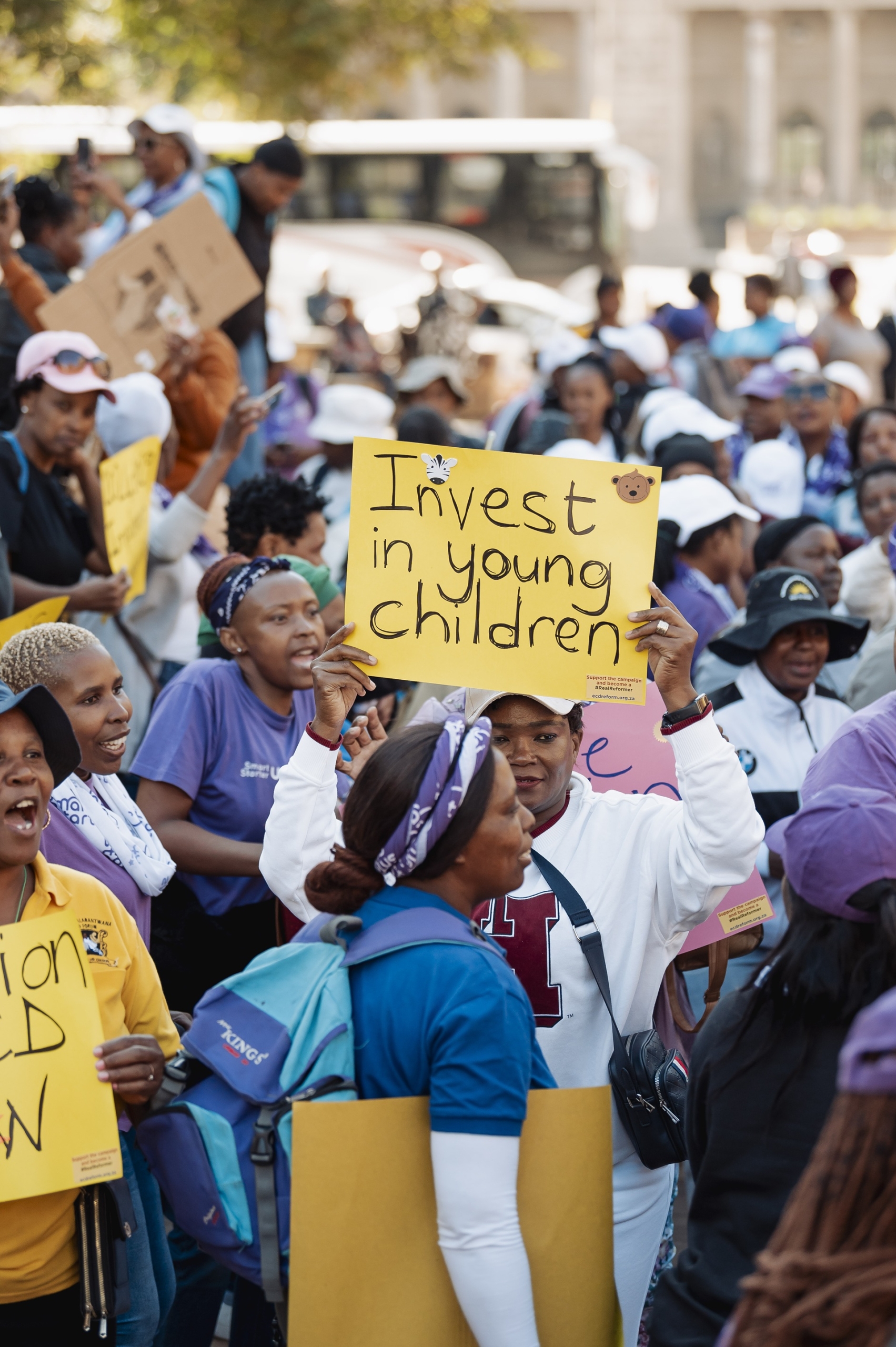
Real Reform for ECD (RR4ECD) has called on the government to increase funding for early childhood development (ECD), warning that the 2027 Budget must do more to support young children and the people who care for them.
RR4ECD is a movement advocating for holistic, well-funded, inclusive and quality ECD services for all children in South Africa.
RR4ECD wants the government to increase the ECD subsidy to R50 per child per day by 2030, bring the Child Support Grant in line with the cost of basic nutrition and ensure funding for ECD meals reaches children.
The call follows Finance Minister Enoch Godongwana’s presentation of the 2026 Medium-Term Budget Policy Statement (MTBPS) in Parliament yesterday (21 October).
While the organisation welcomed allocations for maternal and child nutrition and additional social workers, it criticised the absence of increases to the ECD subsidy and Child Support Grant, as well as continued delays in implementing a nutrition programme for young children.
Godongwana said the country’s debt had stabilised, creating fiscal space for the government to protect frontline services and vulnerable households.
However, RR4ECD said in a press statement there were still no signs of a budget that prioritised children.
“Under-investment in early childhood is a choice, one with disastrous consequences for our children, our economy and our democracy. We should no longer be making such a choice,” read the statement.
Subsidy falls short
Real Reform for ECD said the ECD subsidy was last increased on 1 April 2025 and currently stands at R24 per child per day, well below the R45 target set in the Department of Basic Education’s 2030 Strategy for universal access to quality ECD programmes.
Real Reform for ECD said the subsidy had not kept pace with rising food, energy and other operational costs faced by early learning programmes.
The organisation said families in poorer communities, where unemployment is widespread, cannot make up the difference through fees.
As a result, children attend under-resourced programmes or miss out on early learning altogether, while practitioners earn below the minimum wage or work without pay.
About one million children aged three to five still do not attend an early learning programme, while more than 90% of ECD practitioners earn below the minimum wage, according to figures cited by the organisation.
The organisation also raised concerns about the Child Support Grant, which stands at R580 a month, 33% below the food poverty line of R868.
The organisation also warned that funding for the Department of Basic Education’s ECD nutrition pilot remained at risk, despite R743 million being set aside over the medium term.
It said the allocated funding must be protected and the programme implemented urgently.
Investment in children
The organisation welcomed R1.6 billion allocated over the medium term for pre-birth care and the first 1 000 days of life, as well as R3.8 billion to employ more than 3 500 social workers.
It said additional social workers could help strengthen child protection and family support, including the registration and improvement of early learning programmes, which would help more providers access the ECD subsidy.
Real Reform for ECD also highlighted the economic benefits of investing in early childhood development, noting that quality programmes for disadvantaged children had delivered lifetime returns of 13.7% a year.
Research cited by the organisation also shows that every R1 spent on ECD generates an average of R9 in benefits.
“With economic growth forecast at just 1.2% this year, a budget statement built around infrastructure cannot overlook the social infrastructure that makes work possible,” read the statement.
RR4ECD called on the government to progressively increase the ECD subsidy to R50 per child per day by 2030, ensure the Child Support Grant keeps pace with the food poverty line and urgently launch the ECD nutrition pilot while protecting its allocated funding.
ALSO READ: Thousands of unqualified ECD teachers disadvantage children, warns NPO