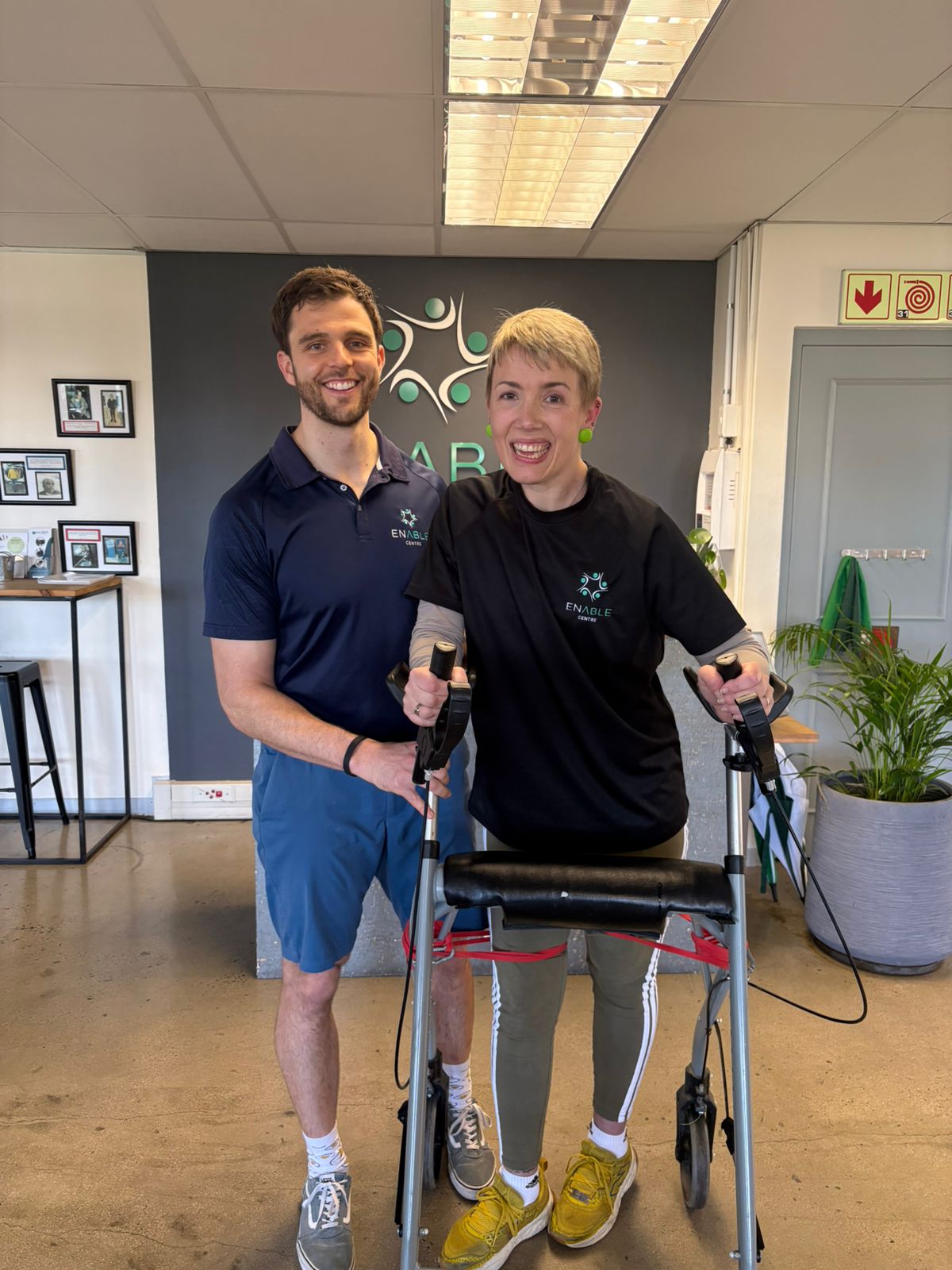
Dr Sarah Whitehead has spent her career using her lived experience of disability to advocate for others. Now she is bringing that mission to the Enable Centre in Kenilworth.
A medical doctor and disability advocate, she joined the centre in August. She will help raise the profile of the Enable Initiative and the Equal Access Programme (EAP), the centre’s non-profit arm.
Whitehead has a developmental venous anomaly in her brainstem — a rare blood vessel condition present from birth. A congenital malformations of veins causing fluid to build up, putting pressure on surrounding structures and resulting in a physical disability.
“My own rehab journey has been a rollercoaster ride, plenty of ups and downs,” she said. “Throughout the ride, I have been very lucky to have had great support and access to really good rehabilitation healthcare professionals.”
Her lived experience, she said, is what drives her advocacy. It has made her a more passionate advocate because she genuinely empathises with the people she represents.
“I know firsthand what discrimination feels like, what exclusion because of disability feels like,” she said. “I have also experienced what it feels like to be fully accepted and treated as an equal with able-bodied people.”
Equal access for all
The Enable Centre is an interdisciplinary rehabilitation facility in Kenilworth. It offers physiotherapy, occupational therapy, clinical psychology and neuropsychology. The centre also uses advanced technology, including wearable robotic mobility devices, to support neurological recovery.
Through the EAP, established in 2021, the centre provides subsidised rehabilitation to patients who cannot afford private rates. Access is means-tested based on household income, with discounts ranging from 20% to 80%. The programme has provided more than 2 000 subsidised sessions since its launch.
“The rehabilitation an EAP client receives is no different to what I receive from the private practice,” said Whitehead. “We all have access to the same venue, the same equipment and the same rehabilitation healthcare professionals.”
She said the approach bridges the gap between South Africa’s socioeconomic divides. “Someone should not be denied the opportunity of receiving quality rehabilitation simply because they can’t afford the full going private rate.”
A new role
Whitehead’s goal is to grow the profile of the centre’s non-profit arm. She plans to create a steady source of funding by engaging with trusts, foundations and corporate social investment programmes.
She said simply asking for funding is not effective. An organisation’s impact and real success stories need to be visible to the public.
“People don’t fund what they don’t understand,” she said. “As a disability advocate, I am very passionate about educating society about disability and rehabilitation.”
Whitehead said being a voice for others with disabilities helps motivate her. She is naturally private, but sharing her story becomes easier when it serves a purpose.
“My mission feels easier with more and more life experience,” she said.
She wants to challenge the common narrative that disability means inability. “Just because someone or something looks different, it is not bad or wrong,” she said.
A mission cemented
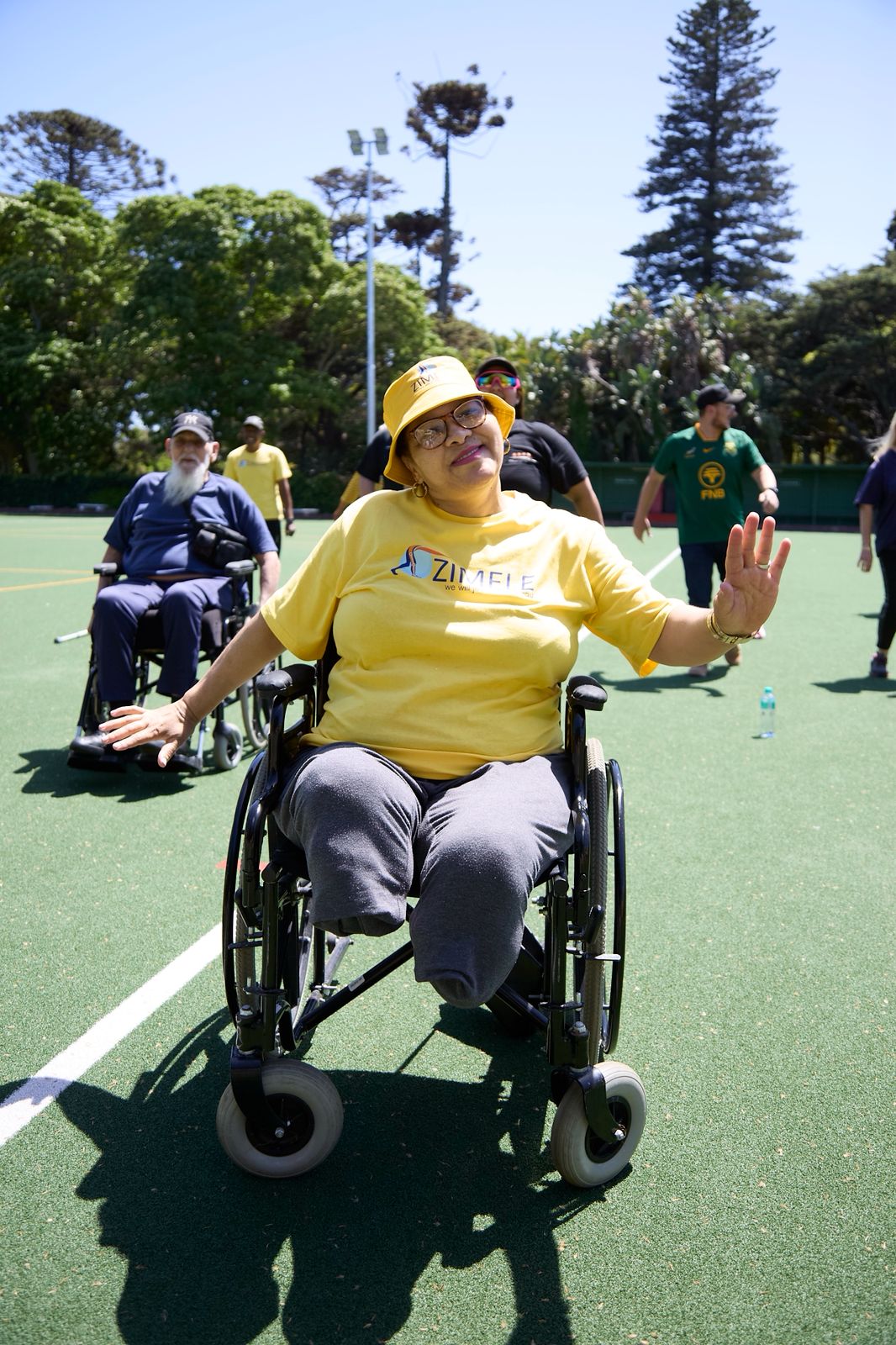
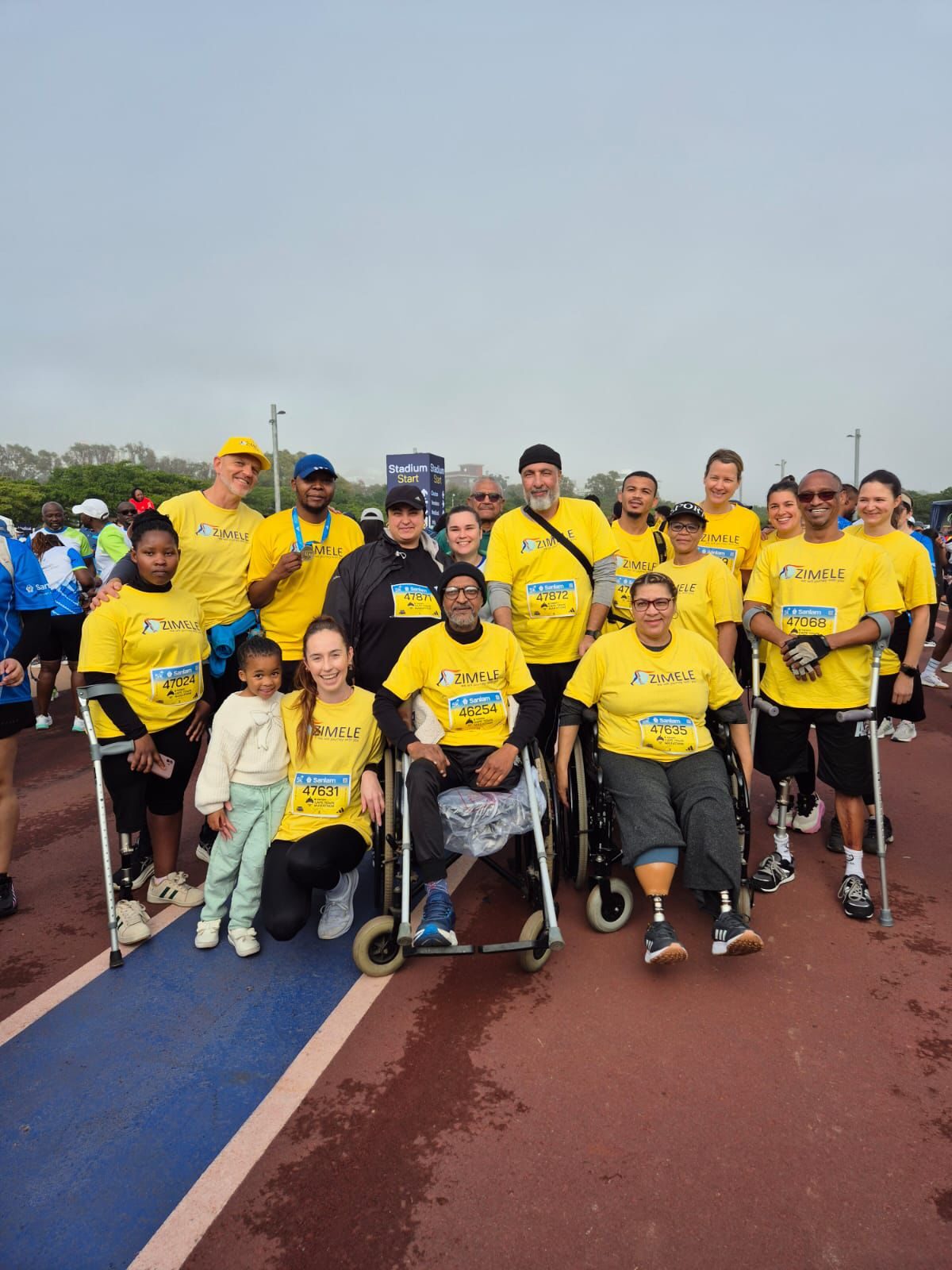
Before joining the Enable Centre, Whitehead co-founded Zimele, a Pinelands-based non-profit supporting amputees from disadvantaged backgrounds. Zimele means “independence” in Xhosa.
She founded Zimele in 2020 with prosthetist Jayson Chin and businessman Rodney Lakay. It provides prosthetic fitting, therapy, skills training and help finding employment. Since 2022 it has helped more than 50 amputees improve their quality of life.
Her six years with Zimele re-emphasised that South Africa has major gaps in meeting the needs of people with disabilities. These gaps exist in just about every sphere of society.
“It really showed that taking the time to educate society about disability is a very effective way to get the needs of people with disabilities met,” she said.
She announced her departure from Zimele in August, describing it as a decision made “with a heavy but extremely full and grateful heart.”
“Choosing to leave was not an easy decision but I know it’s the right one for me,” she said.
She rounded off her time at Zimele with the Sanlam Cape Town Marathon, calling it “the best way to finish my time with Zimele.”
A personal journey
Whitehead graduated with a medical degree from the University of Cape Town (UCT) in 2010. She later earned a PhD focusing on the inclusion of disability in medical curricula.
She has been attending the Enable Centre’s private practice for her own rehabilitation for more than a year. Her hope is that the disability advocacy movement in South Africa keeps gaining momentum. Society needs to understand how quality rehabilitation can improve the lives of people with disabilities, their families and communities.
She said she does not know exactly what the future holds. But her years at Zimele ensured it would be “an interesting adventure.”
Quoting Nelson Mandela, she said: “It always seems impossible until it’s done. I look forward to seeing how this evolves.”
ALSO READ: ‘Disability does not mean inability’: Zimele team takes on Cape Town marathon