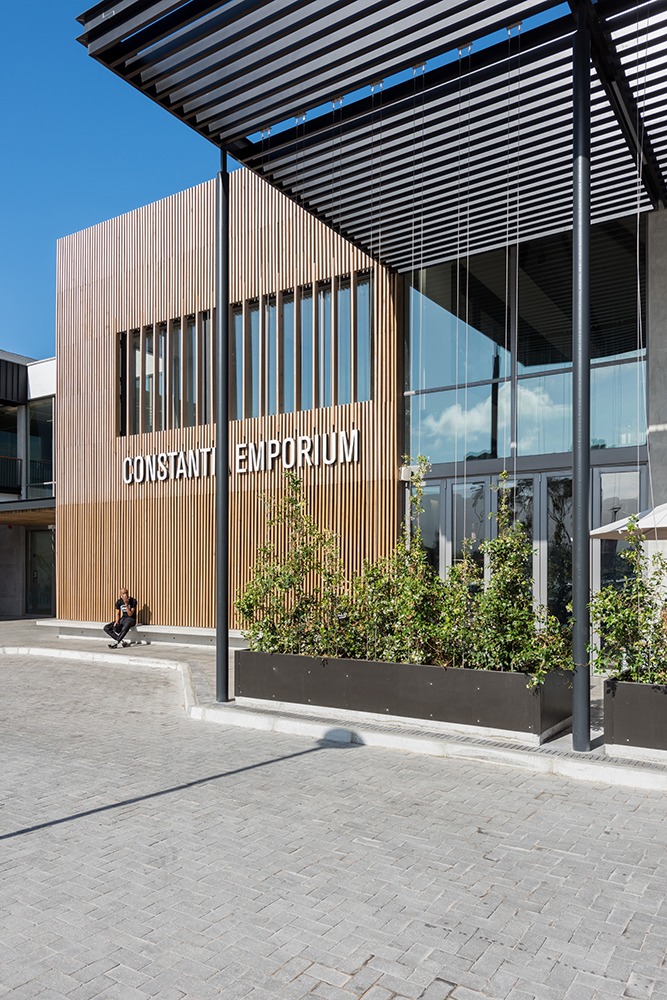
FPG Holdings, a property company that already owns eight retail centres within 15km, has bought the shopping centre built on land returned to a Constantia family after apartheid forced removals.
On 8 October, the Competition Commission recommended that the Competition Tribunal approve the sale without conditions. However, the Tribunal must still give final approval before the transfer goes through.
In addition to the shopping centre on the corner of Ladies Mile and Spaanschemat River Roads, the deal includes an adjacent vacant plot. The purchase price has not been disclosed.
Why the sale has no conditions
The commission found the merger would not significantly alter the structure of the market, spokesperson Siyabulela Makunga told People’s Post.
“The Commission found that merger is not significantly altering the structure of the market as there are several other retail properties available within the relevant areas which are not owned by the merger parties,” he said.
Furthermore, Makunga said the commission considers conditions only when a merger might substantially prevent or lessen competition or raise substantial public-interest concerns.
“In this case there are not public interest concerns or employment concerns that require to be remedied by a condition. Thus, there were no conditions considered by the Commission,” he said.
He also confirmed the commission assessed the development potential of the adjacent vacant erven as part of its competition assessment.
“As merger investigations are always forward-looking, the activities and assets of the ilk mentioned above are considered in the assessment,” he said.
Meanwhile, Makunga noted that the Tribunal operates independently and sets its own timelines for final approval.
A family’s land, returned then sold
The land beneath Constantia Emporium carries a history that sets it apart from any other retail transaction in Cape Town.
From 1902, the Solomon family farmed the land, growing vegetables and grapes for local consumption and export to England. Then, in the 1960s, the apartheid government forcibly removed them under the Group Areas Act, which assigned residential areas by race. Consequently, the state declared Constantia a whites-only area, and the land became a municipal waste drop-off facility.
After lodging a restitution claim in 1996, the family waited 14 years. Despite more than R400 000 in legal costs, according to the Solomon Family Trust’s website, the Land Claims Court eventually concluded a Deed of Settlement. In 2012, the family received title deeds.
Because the Land Claims Commissioner required a business plan as part of the settlement, the family partnered with Shoprite Checkers to develop the land. Farming was no longer viable. As a result, the centre opened in November 2019 with 26 stores across 7 900 m². Anchor tenants include Checkers, Woolworths and Clicks.
“The family has carefully considered the type and nature of redevelopment which will be able to function as a financially viable standalone entity and to serve as a catalyst for the development of the remaining restitution sites,” Rashaad Solomon, founder and chairman of the trust, said in a statement at the time.
The adjacent vacant plot in the sale is also restitution land. Planning documents originally outlined a mixed-use vision for the broader site, including residential properties and public open spaces.
People’s Post contacted the Solomon Family Trust for comment on whether the family chose to sell, whether the trust retains any interest in the land, and what the sale means for the restitution legacy, but had not received a response at the time of publication.
Who is buying
FPG Holdings forms part of the FPG Group, a property investment and development company headquartered in Plattekloof. Its portfolio includes free-standing convenience stores, neighbourhood centres, a lifestyle centre and a hyper centre. Additionally, the group lists present developments in Blouberg and Rondebosch.
People’s Post contacted FPG Holdings for comment on its plans for the site but had not received a response at the time of publication.
What it means for shoppers and tenants
For shoppers and tenants, the question is practical. Will rents change? Will the tenant mix shift? Will the centre rebrand?
Ultimately, the vacant plot in one of the city’s most affluent suburbs could become a commercial, residential or affordable housing development. That decision now rests with FPG Holdings.
ALSO READ: Ward 62 service delivery remains strong despite homelessness challenges