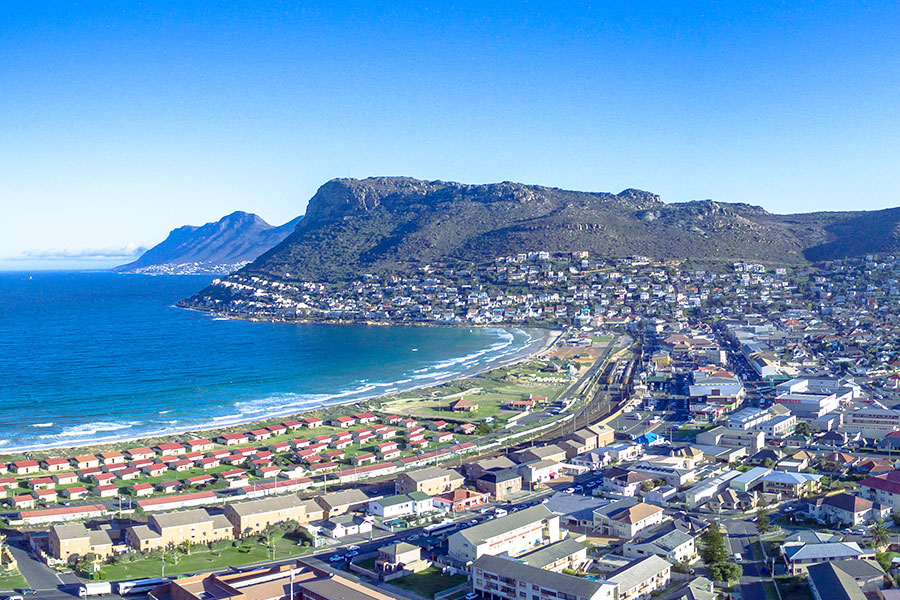
A new study led by researchers at the University of Cape Town (UCT) has reportedly found traces of pharmaceuticals, pesticides and metals in False Bay’s waters.
The findings, recently published in the Marine Pollution Bulletin, investigated the presence and ecological effects of selected pharmaceutical compounds, herbicides and metals across 19 sampling stations in False Bay between April and June 2021.
False Bay is described as one of the most varied and diverse areas in the world for marine life and plays host to an abundance of species large and small, according to Cape Radd (Research and Diver Development).
Hidden contaminants
Researchers detected pharmaceuticals such as acetaminophen, carbamazepine and diclofenac, along with the herbicides atrazine and metolachlor, in both seawater and marine sediments throughout the bay.
The study involved testing sampling at 19 locations throughout the bay.
“We found that pharmaceuticals and herbicides are widespread throughout False Bay and that sediments appear to retain these contaminants over extended periods,” said Dr Buyani Mazeka, the study’s lead researcher and a postdoctoral fellow at UCT’s Department of Biological Sciences.
The City of Cape Town says it is aware of the findings reported in the UCT study and has read the report with interest.
“It is important to reiterate that the study found that all of these contaminant concentrations remain below the levels that are of ecological risk and are not yet having adverse ecological effects. This aligns with the City’s own findings along its coastline,” said deputy mayor and mayco member for spatial planning and environment, Eddie Andrews.
In terms of addressing these contaminants, Andrews stated that wastewater treatment works are “currently not designed to remove these chemicals, which are found at extremely low trace levels in effluent.”
The sightings of pharmaceuticals, pesticides and metals are linked to urban development, wastewater discharges and harbour activities, according to the study.
Wastewater treatment challenges
“This is a global challenge, and only very expensive advanced wastewater treatment plants that produce drinking-water-quality reclaimed water are able to remove them more effectively. The City has already commenced its own long-term contaminant monitoring programme across False Bay and the Atlantic Seaboard, as well as five of the largest estuaries in Cape Town. This programme includes fish tissue, mussel tissue and sediment sampling and will be repeated at the same locations every three years to track and monitor changes in contaminant levels over time,” he explained.
The highest seawater contaminant loads were recorded in the northeastern sector of the bay near Gordon’s Bay, while the highest sediment accumulations were found in areas near Muizenberg and parts of the northeastern coastline, researchers say.
Sites near Gordon’s Bay showed particularly high concentrations of some metals, which researchers linked to maritime activities, vessel maintenance operations and land-based pollution sources.
Environmental risk assessments showed that risk quotient values remained well below internationally recognised thresholds of concern.
The metal concentrations were also generally below levels associated with adverse biological effects.
Environmental impact
Oceans activist, Dr Cleeve Robertson told People’s Post he was aware of the UCT study’s findings but says that the reported pollution does not show “significant levels for acute poisoning. Chronically maybe.”
“This confirms the pollution but time will tell the impact! Can we afford to wait before there are significant impacts?,” Robertson asked.
The research team examined both larger bottom-dwelling animals and microscopic nematodes, which are used as indicators of ecosystem health.
Nematodes are microscopic, soil-dwelling worms that serve as excellent biological indicators of soil health and assist scientists with evaluating nutrient cycling rates to detect early signs of soil degradation or pollution.
The study’s nematode indicators suggested that most sampling sites maintained good to high ecological quality.
“The concentrations measured during this study were generally insufficient to produce consistent changes in benthic community structure,” said Mazeka.
Benthic communities – organisms living on and within the seafloor – remained diverse and healthy across the sampling sites.
Most frequent contaminant
The findings revealed that contaminant concentrations were generally much higher in sediments than in seawater.
The researchers suggest that the seabed acts as a “long-term storage reservoir for pollution entering the bay.”
Diclofenac, a commonly used anti-inflammatory medicine, was among the most frequently detected pharmaceutical compounds.
Dr Mazeka said the persistence of this contaminant in the environment and wastewater systems is concerning.
The City recognises that pharmaceutical and personal care products pose “evolving challenges for wastewater management worldwide”, said mayco member for water and sanitation, Zahid Badroodien.
“These substances are not fully removed in most municipal wastewater treatment works globally, and research into effective removal technologies – as well as into which compounds are partially or fully treated by existing processes – is ongoing. The City encourages continued engagement between independent researchers, the City and other municipalities as this field develops,” Badroodien said.
Concentrations of copper, iron, manganese, lead and zinc in sediments were also measured in the UCT study.
Elevated metal levels were found in areas influenced by urbanisation, wastewater discharges and harbour-related activities, the researchers noted.
Sites near Gordon’s Bay showed high concentrations of some metals, which researchers linked to maritime activities, vessel maintenance operations and land-based pollution sources.
Future monitoring
However, despite recording widespread contaminants, the researchers found “little evidence that current pollution levels are causing immediate ecological damage.”
“Pharmaceuticals can accumulate in sediments and may be transferred through marine food webs,” said Mazeka.
“Previous research in False Bay has already demonstrated uptake of some pharmaceutical compounds by marine organisms, including mussels, limpets, sea snails, sea urchins and starfish. We therefore describe pharmaceutical residues as contaminants of emerging concern that warrant continued attention,” he shared.
According to UCT, this is the first field-based baseline study of its kind in Africa and among the first in the Southern Hemisphere.
To avoid a future devastating impact on the marine ecosystem, the study recommended long-term monitoring programmes, more comprehensive contaminant screening and higher-resolution biological assessments to improve understanding of cumulative ecological risks.
People’s Post reached out to the BayOfSewage and RethinkTheStink for comment but they could not respond before going to print.
ALSO READ: Dagbreek Cottage safe for now as heritage authority confirms no application