
The City of Cape Town today opened supplementary public participation on amendments to its City of Hope Budget 2026/27 following the Western Cape High Court’s ruling on tariff structures, with public comment open until 10 June.
This, according to the City, will allow sufficient time to adopt a budget before the financial year begins on 1 July 2026 as the law requires.
A key impact of the ruling is that the City reverts to the previous method of using meter size to determine fixed water and sanitation charges. Because these fixed charges are no longer linked to property value bands, properties under R2.8 million will pay more and higher-value properties will pay less for water and sanitation fixed charges (for meter sizes up to 22mm).
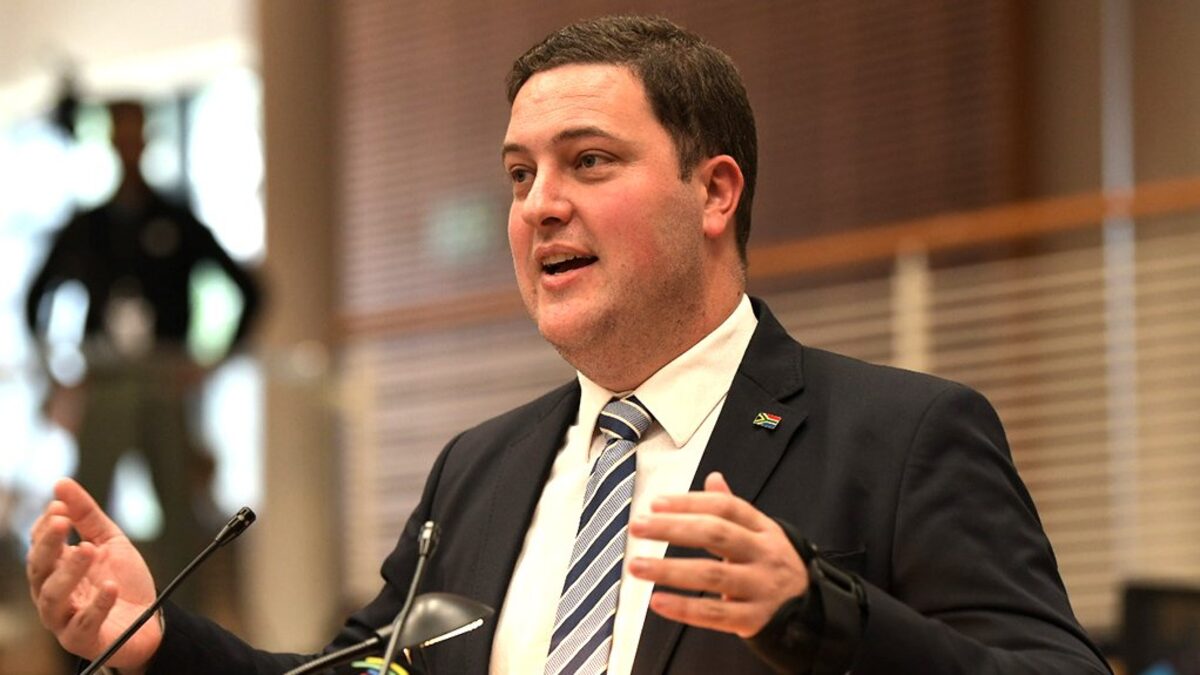
Mayor Geordin Hill-Lewis said the City will protect these lower- and middle-income households by further raising the rates-free rebate for those homes up to R620 000, up from R450 000.
All residential properties up to R8 million (previously R7 million) will now get the first R620 000 rates-free, up from R450 000. Indigent benefits will apply for all properties under the new R620 000 threshold.
Lifeline electricity to pensioners
He says pensioners will continue to benefit from the country’s widest rebate qualifying criteria, thanks to the previous raising of the monthly income threshold to R27 000, regardless of property value. “Cape Town is also the only metro offering lifeline electricity to pensioners up to this threshold. In other cities pensioners must be classified as indigent to qualify. This expanded protection will, on average, offset the rise in fixed charges for most properties under R2.8 million due to the court ruling’s impact,” said Hill-Lewis.
“The main impact of the judgment is to limit the ability of the City – and all municipalities – to cross-subsidise to protect lower- and middle- income households. These amendments represent the City’s proposed efforts to continue offering this protection within the framework of the ruling. We will also be engaging National Treasury on our options for cross-subsidisation going forward,”
This engagement will focus on other available means to secure cross-subsidisation going forward, especially in relation to National Treasury’s metro trading services reform initiative and the White Paper on Local Government.
No budget cuts
The Mayor emphasised that the City is not proposing any cuts to Cape Town’s essential infrastructure projects.
The collapse and decay that we see in all the other major cities in South Africa is a direct result of not meeting this minimum level of required investment in new infrastructure.
“We made a solemn vow that Cape Town would never follow that path, and that we would do whatever it takes to ensure that our city both remains the most functional city in the country, and that it is a better place to live for every resident.
“Whether it is pipe replacement across our water and sewer network, the massive upgrades to our wastewater treatment works, the new Cape Flats MyCiti route across the Cape Flats to Khayelitsha and Mitchells Plain, critical investments to our electricity grid, informal settlements upgrade programmes, or any of the hundreds of projects to improve public amenities, roads, waterways and public spaces – each and every one of them is vital to Cape Town’s future.
“We will not listen to the demands of one party in particular in this Council to cut our capital budget for basic services infrastructure. We will not heed this call because we are committed to seeing Cape Town succeed for all,” said Mayor Hill-Lewis.
ALSO READ: Sapoa welcomes Cape Town’s decision not to appeal tariff ruling — and now comes for legal costs
It is proposed that the City-wide cleaning costs move back into property rates. Residents previously funded city-wide cleaning services via an electricity surcharge contribution to property rates revenue. In 2025/26, the cost of city-wide cleaning was made a standalone charge for residential properties, lowering electricity prices.
This method has been amended following the high court ruling. City-wide cleaning costs move back into property rates – albeit directly and not via an electricity surcharge contribution to rates.
This removes the standalone city-wide charge and increases property rates for residential customers – amending the -10,2% reduction tabled in March to -2,09%. Despite this, Cape Town’s rate-in-rand still remains the lowest of all metros by some distance.
Commercial property rates will also increase, while electricity unit costs will reduce due to the phased reduction of the surcharge contribution to city-wide cleaning. Residential electricity tariffs remain unchanged as these customers no longer contribute to city-wide cleaning in this way.
The overall average energy tariff increase for commercial customers has been reduced to 5.46% (from 6.82% in the March tabled budget), while the residential increase remains unchanged at 6.64%.
To accommodate the shift in City-wide cleaning to rates, and the phasing out of the electricity contribution for commercial properties, the rate-in-the-rand and the rates ratios are proposed to be amended.
Water and Sanitation Tariff changes
Fixed water and sanitation charges revert to water meter size, the method used before property value bands. According to the City, this impact of the court ruling means that higher value properties will pay less fixed charges while lower value properties will pay more than they do currently.
“This is largely offset by lower property rates thanks to the raised rates-free and indigent benefits. The proposed further raising of the indigent relief threshold will see many more properties benefiting from the City’s indigent rebates with the threshold increasing from R450 000 to R620 000, which includes a 100% property rates rebate,” the City stated.
The City is also proposing the following measures to further buffer the impact of the fixed charges change: a lower overall fixed charges portion of the tariff; consolidating the fixed tariff for the most common water meter sizes – those under 22mm; and shifting costs to higher consumption users compared to the March tabled budget – through increases to the step-tariff for usage over 10.5kl.
Water usage will cost R2,09 more per KL from 10,5 – 35KL compared to the March tabled budget, and R8.06 (excl VAT) more over 35KL, with similar increases for sanitation per KL in these usage bands.
Had the City proposed consumption-only tariffs, this would raise usage costs significantly right from the first kilolitre, disabling the ability of households to save through lower consumption. This would pose a major risk especially for the poor in a drought, as usage tariffs rise significantly with restriction levels.
Consumption-only tariffs would also compromise the overall sustainability of water and sanitation services, as fixed charges are necessary to ensure a predictable portion of income for long-term infrastructure investments and fixed service costs, including protection from sudden cash-backed revenue drops in times of drought.
No amendments to expenditure
The impact of the ruling does not affect the expenditure aspects of the tabled budget, and no new comment is invited in that regard, with Cape Town’s “City of Hope” Budget draft containing a R40 billion three-year infrastructure budget – a South African record.
All revenue raised in 2025/26 has gone to the intended purpose of infrastructure and service delivery. It is important to further note that the ruling does not take issue with the necessity of these funds to run the city. Ratepayers will now contribute to these same running costs but in a different way based on the new proposals for 2026/27.
According to the City, around 130 000 construction-related jobs will flow from capital investment in the current term of office, with 75% of infrastructure spending directly benefiting lower-income households.
“After a term of raised infrastructure investment backed by good governance and employment gains, today Cape Town is undeniably South Africa’s beacon of hope, which is also the title of the final budget of this term – the City of Hope Budget 2026/27.
“This draft budget – even with amendments – still achieves several things at once that simply wouldn’t be possible in other cities: an SA-record infrastructure investment that outpaces all Gauteng metros combined; the most comprehensive relief for struggling households and pensioners; and the lowest property rates and total monthly bills of any metro. Cape Town is SA’s one city that works, and with these investments we are building a city of hope for all, in line with our long-term vision,” said Hill-Lewis.
The court ruling’s effect is prospective and applicable from 1 July 2026 onwards. Visit www.capetown.gov.za and click the draft budget trending box on the homepage for all budget-related information, as well as a public engagement schedule.