

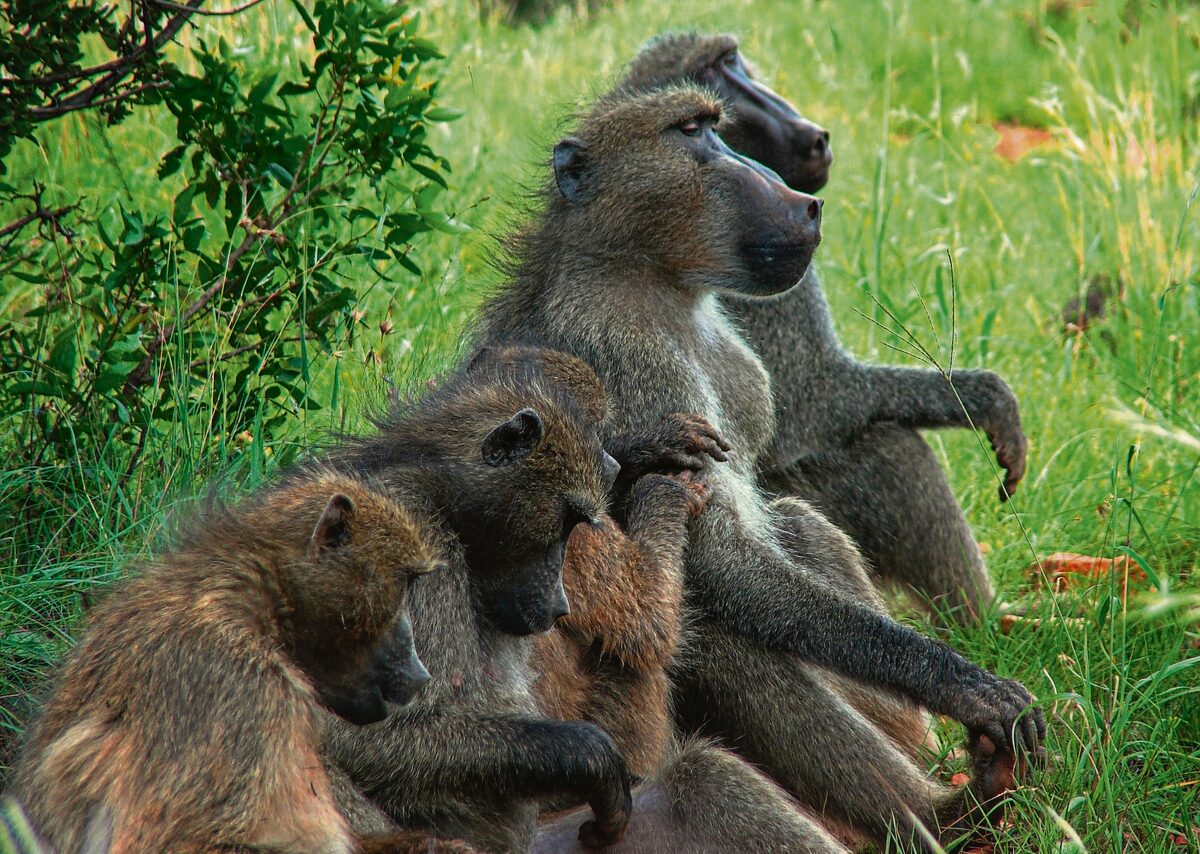
CAPE TOWN – The wellbeing and safety of two baboon troops in the Southern Peninsula that will be relocated to a proposed sanctuary, is still a topic for concern for some animal activists.
The planning and development of the proposed sanctuary for two baboon troops in the Southern Peninsula is currently underway, the City of Cape Town confirmed.
Last year, the Cape Peninsula Baboon Action Plan for relocating the primates was approved by the City, South African National Parks (SANParks), and CapeNature.
The Cape Peninsula Baboon Management Joint Task Team (CPBMJTT) is overseeing this operation and comprises three authorities: CapeNature, SANParks and the City, who are responsible for developing and implementing a baboon management programme in the Cape Peninsula.
This month, the CPBMJTT confirmed that they have approved the intention to capture and relocate two baboon troops to a purpose-built sanctuary, said the City’s manager of coastal environmental management, Gregg Oelofse.
“The globally recognised enclosure standard for chacma baboons, as set by the Global Federation of Animal Sanctuaries (GFAS) Animal Care Standards, is 1,5 hectares per 20 adult baboons. The Cape of Good Hope Baboon Sanctuary will exceed this minimum guideline in order to better cater for the two troops,” he said.
Activist concerns
However, the CPBMJTT still faces criticism and concern from some activists who hope the primates will be allowed to thrive and survive in their new environments.
David Barritt, executive director at Network for Animals and Animal Survival International (ASI) said that Dr Dave Gaynor, a distinguished primatologist, who is acting independently with no affiliation to ASI, has been in regular contact with both the City and the CPBMJTT.
Animal Survival International (ASI) works to help wildlife around the world whose survival is threatened by climate change and habitat destruction.
“We approach this from an animal welfare perspective. The city essentially plans to take wild animals and confine them to a limited space while vasectomizing male baboons so they can’t breed. This raises serious concerns. It is always cruel to confine free-ranging animals and sterilizing the males will completely disrupt the social order of the troop. Enclosing wild animals and allowing tourists to visit them sounds more like a zoo than a sanctuary, and baboons most certainly do not belong in zoos,” he said.
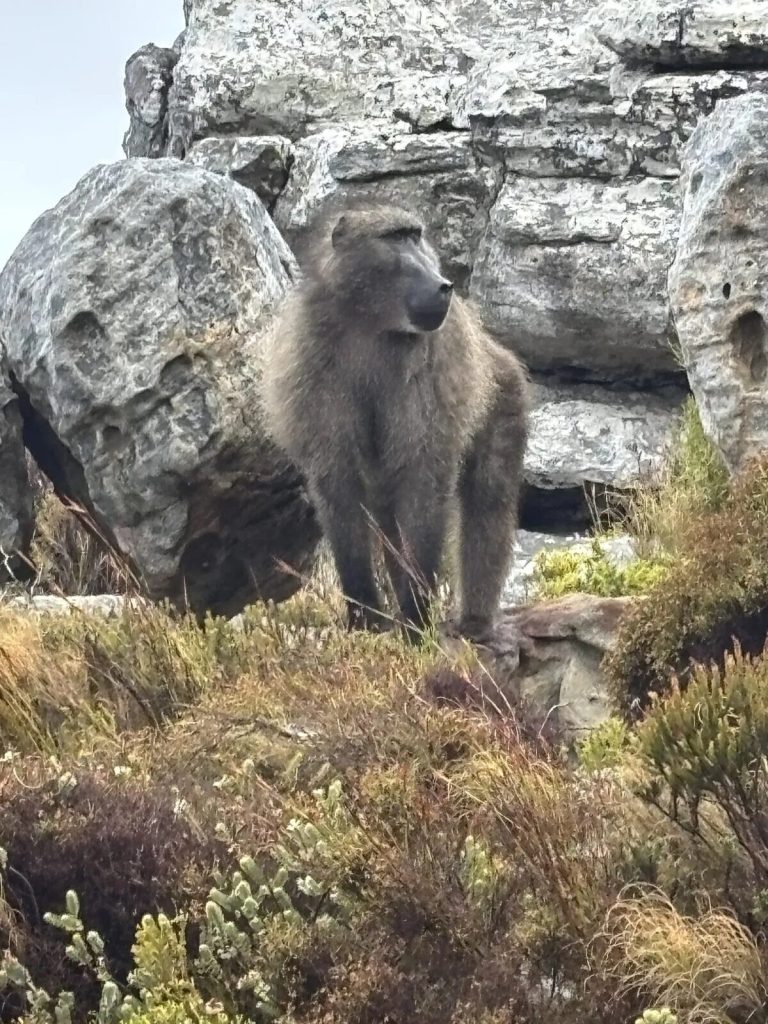
Spokesperson at the Cape Peninsula Civil Conservation (CPCC) Lynda Silk says she is sad to see the baboon troops be relocated.
This was an opportunity for the City to turn certain areas into something more truly resembling an eco-village, where people live in harmony with the rare and precious natural splendour that surrounds them. We have heard from the City that property values and tourism are good industries, and that they pander to these, and this is what we are seeing play out. The cost of this is our wild heritage. What does all of this mean for the less wealthy residents of our city and the future of other aspects of our biodiversity?,” she said.
CPCC is a non-profit organisation (NPO) that focuses on educating the community on the importance of biodiversity, through various projects such as Baboon Wise, Nature Club and Safe in the Sea.
Cape Baboon Partnership Northern area manager, Jon Friedman reiterates that the welfare of the baboons will be protected and that the Sanctuary project is being developed within a formal regulatory framework and is subject to permitting, oversight and review by the relevant competent authorities. “The Sanctuary has been proposed explicitly to prevent ongoing harm to the baboons of Simon’s Town and to avoid lethal outcomes for specific troops for whom existing management options have failed. Portraying this as something other than a welfare-led intervention misleads the public and inflames opposition on an inaccurate basis,” Friedman said.
Five key components
The main goal of this action plan is the long-term conservation, health and welfare of the Peninsula baboon population, the CPBMJTT explains.
The plan introduces sanctuaries, fencing, waste management measures, and population controls to manage the baboon troops across the Cape Peninsula.
ALSO READ Cape Peninsula Baboon action plan approved by City of Cape Town
“Should the sanctuary proceed, each troop will reside in their own purpose-built enclosure that meets or exceeds the Global Federation of Animal Sanctuaries (GFAS) Animal Care Standards,” Oelofse added.
Within the framework of the Cape Peninsula Baboon Action Plan, five critical interventions are outlined:
- Sanctuary creation: Build purpose-designed baboon sanctuaries along Plateau Road.
- Northern fencing: Install a baboon-proof barrier stretching from Zwaanswyk to Constantia Nek.
- Waste management strategy: Introduce baboon-proof bins and enforce strict waste disposal protocols.
- Urban wildlife by-law: Enact new legislation with a zero-tolerance approach to baboon interference, per the action plan.
- By-law enforcement: Implement hard boundaries and enforce strict population control measures.
- Troop relocation timeline
ALSO READ Kommetjie teen pens letter advocating for baboon safety
The plan sets clear deadlines for relocating the affected baboon troops as part of the Cape Peninsula Baboon Action initiative:
- Seaforth troop: Relocate to sanctuary by February 2026
- Waterfall troop: Relocate to sanctuary by September 2026
- CT1 and CT2 troops: Relocate to mountainside by May/June 2026
- Infrastructure and safety measures
ALSO READ Activists march in Simon’s Town to stop removal of Cape Peninsula baboons
Key infrastructure developments include plans under the Cape Peninsula Baboon Action framework:
- Northern fence: Complete construction by July 2026, from Zwaanswyk to Constantia Nek
- Baboon-proof bins: Deploy in high-impact areas by May 2026
- Sanctuary trial: Start with a 1,5-hectare enclosure on private land, featuring underground power cables to reduce electrocutions
The full Cape Peninsula Baboon Management Action Plan 2025 is available for public review.




You must be logged in to post a comment.