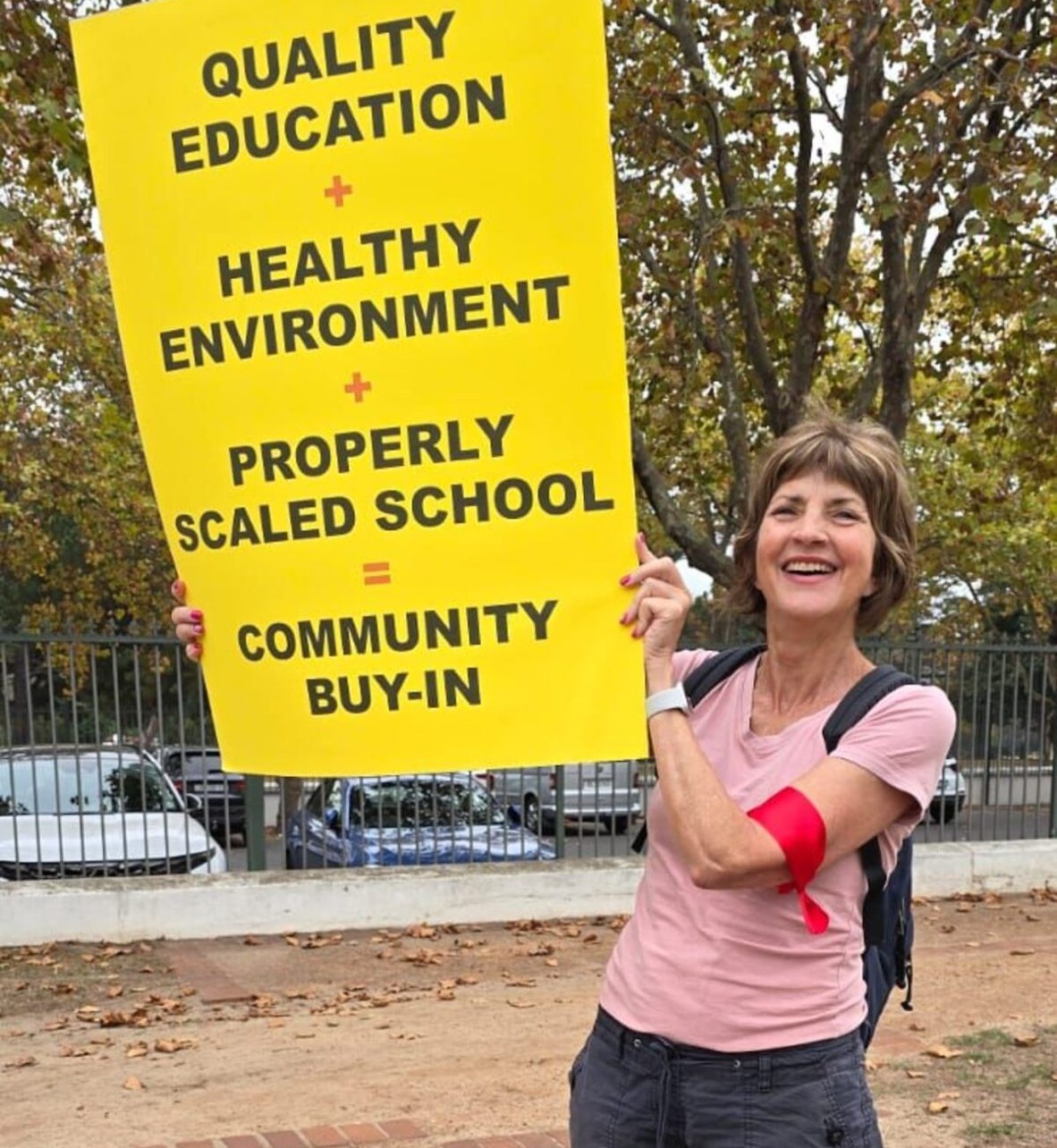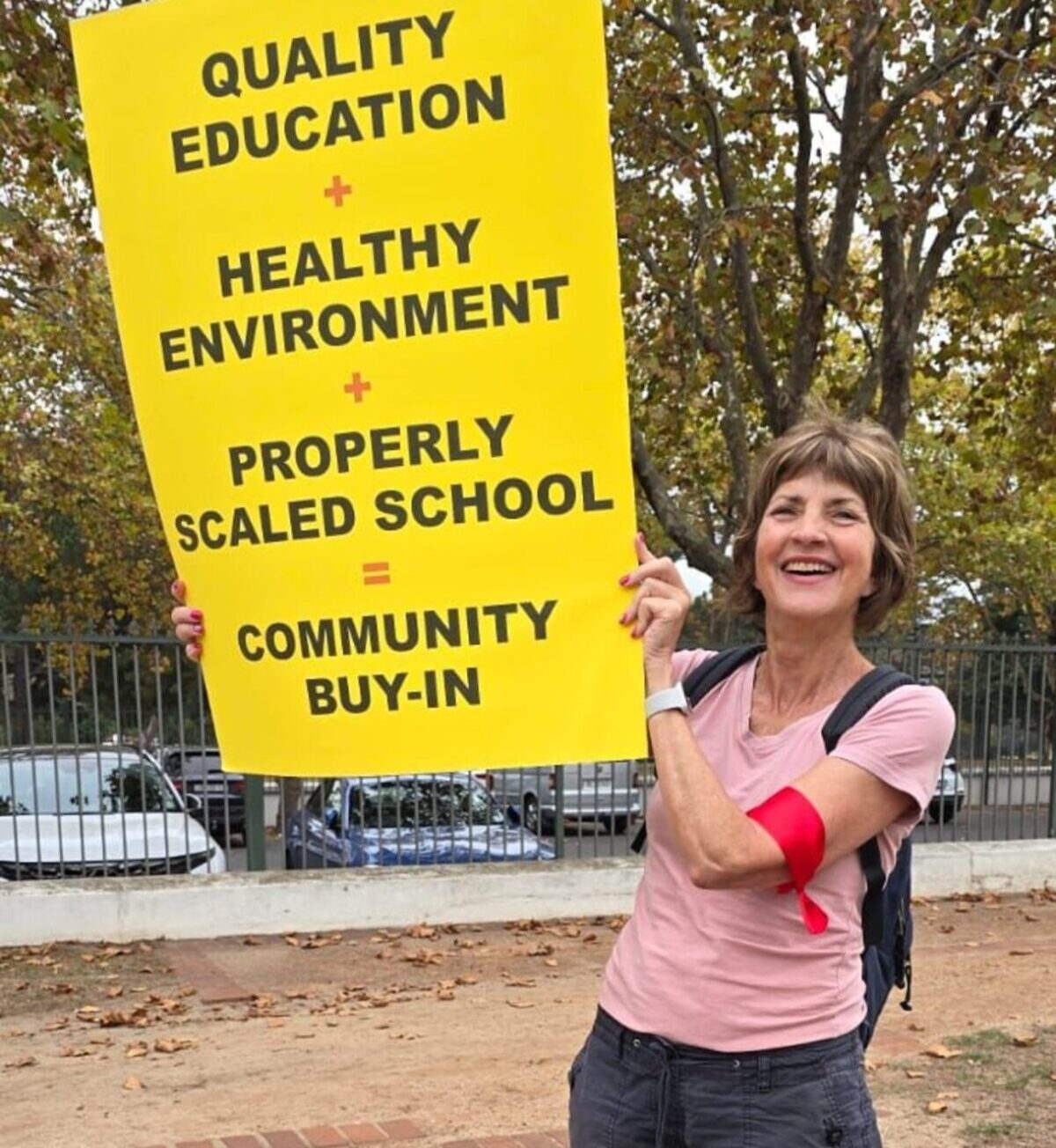
Bergvliet residents have been left stunned after learning the City of Cape Town has already “approved” the contentious high-capacity secondary school. As a result, construction is now free to proceed.
The proposed Tokai High School on Erf 1061 is planned for up to 1 100 learners. The site covers a 3,87-hectare plot along the Bergvliet residential interface in Ward 73.
The disputed development has set tongues wagging since coming to light in March and residents have held protests against the proposed development (“Mega school plan opposed”, People’s Post, 24 March). However, their efforts have been in vain.
Ingrid van den Berg, a member of the Bergvliet Voluntary Association (BVA), said the announcement came during an online meeting with ward councillor Eddie Andrews on Wednesday 21 May.
The community had understood the project was still in its planning and public engagement phases, she said.
Van den Berg said residents had since continued engaging the Western Cape Education Department (WCED) and the City of Cape Town. They raised concerns over traffic, environmental impact, and the scale of the development.
Struggle for information
Van den Berg said a key flashpoint was the community’s effort to access the project’s Traffic Impact Assessment (TIA). She said two requests submitted under the Promotion of Access to Information Act (Paia) were refused. Later, an appeal to the Ombudsman, who ruled in the community’s favour finally secured the document’s release.
The document provided was a draft, Van den Berg said. This raised questions about whether approvals had been granted on incomplete information.
She said an independently commissioned review of the draft TIA estimated up to 1 500 peak-hour vehicle movements in and out of the site. In addition, a community survey had identified traffic as residents’ single greatest concern.
“Traffic, environment, scale, they are all interconnected,” Van den Berg said. “You cannot assess one in isolation and still arrive at a responsible planning decision.”
Van den Berg said environmental concerns had also emerged around the site. She said the Western Leopard Toad (Sclerophrys pantherina) listed as Endangered by the International Union for Conservation of Nature (IUCN) and found only on the Cape Peninsula, was a confirmed presence on Erf 1061.
Verified records on the citizen science platform iNaturalist showed the presence of the toads on the site during breeding season, she said. Van den Berg said the toads migrated northward across the property and surrounding roads between July and October each year. They travel to breed at Die Oog conservation area, roughly 300 metres away.
She said peer-reviewed research showed more than 20% of Western Leopard Toads were killed on peri-urban roads during migration. No specialist fauna study had been commissioned and no mitigation plan had been made public, Van den Berg said.
Wetlands and waterways
Van den Berg said the site bordered the Keysers River, which fed into the Dreyersdal wetlands and ultimately the Zandvlei Estuary Nature Reserve. She described the wetland system as already ecologically compromised. Poor water quality is driving eutrophication and siltation downstream.
Converting the permeable land into hard surfacing buildings, parking areas and access roads would increase polluted stormwater runoff into the catchment, Van den Berg said. She said fuel residues, tyre particles and chemical contaminants would add further strain. The system, according to her, needed restoration, not additional loading.
Stormwater documentation was only provided to the community on 22 May and had not yet been independently reviewed, she added.
Zoning dispute
Van den Berg said the City of Cape Town had argued no Environmental Impact Assessment (EIA) was required, citing zoning that designated the site for a school in 1967. She said this predated the National Environmental Management Act (Nema), the National Water Act, and South Africa’s Constitution.
Section 24 of the Constitution guarantees the right to an environment not harmful to health or wellbeing. Section 2(4)(a)(vii) of Nema enshrines the precautionary principle — where there is a risk of serious or irreversible harm, the absence of full scientific certainty cannot justify inaction.
Community calls for review
Van den Berg said the BVA was calling for:
- A specialist Western Leopard Toad migration study;
- A comprehensive stormwater and hydrological impact assessment;
- Independent peer review of the Traffic Impact Assessment;
- Enforceable lighting and construction restrictions; and
- Legal scrutiny of the City’s reliance on the 1967 zoning exemption.
“Oversized development forced through on flawed data will destroy both community safety and ecological heritage,” Van den Berg said.
ALSO READ: Bergvliet residents oppose proposed WCED mega school over traffic and environmental concerns