The City of Cape Town has approved a revised Traffic Calming Policy aimed at expanding safety measures for pedestrians, cyclists, and people with disabilities.
The policy was adopted by Council on Thursday, 30 April this year.
Councillor Mikhail Manuel, Chairperson of the Urban Mobility Portfolio Committee, said the revised framework marks a significant shift from the City’s 2016 policy. In particular, there is a change in how and where traffic calming measures can be introduced.
“This is the most responsive traffic calming policy that Council has come across. It puts people over cars,” he said.
Expanded focus on schools and pedestrian zones
One of the key changes is the extension of traffic calming eligibility beyond streets directly outside schools. Now it also includes roads leading to schools.
“Where traffic calming could only be implemented previously in the street which a school is actually in, now traffic calming can be implemented in a street leading to a school,” Manuel said.
The City has set a target of implementing traffic calming measures at 60 schools per financial year, up from the previous target of 50. To qualify, schools must be registered with the Western Cape Education Department.
The revised policy also allows interventions in areas that have become highly pedestrianised due to land-use changes. This includes raised crossings and intersections where appropriate.
Broader range of traffic calming measures
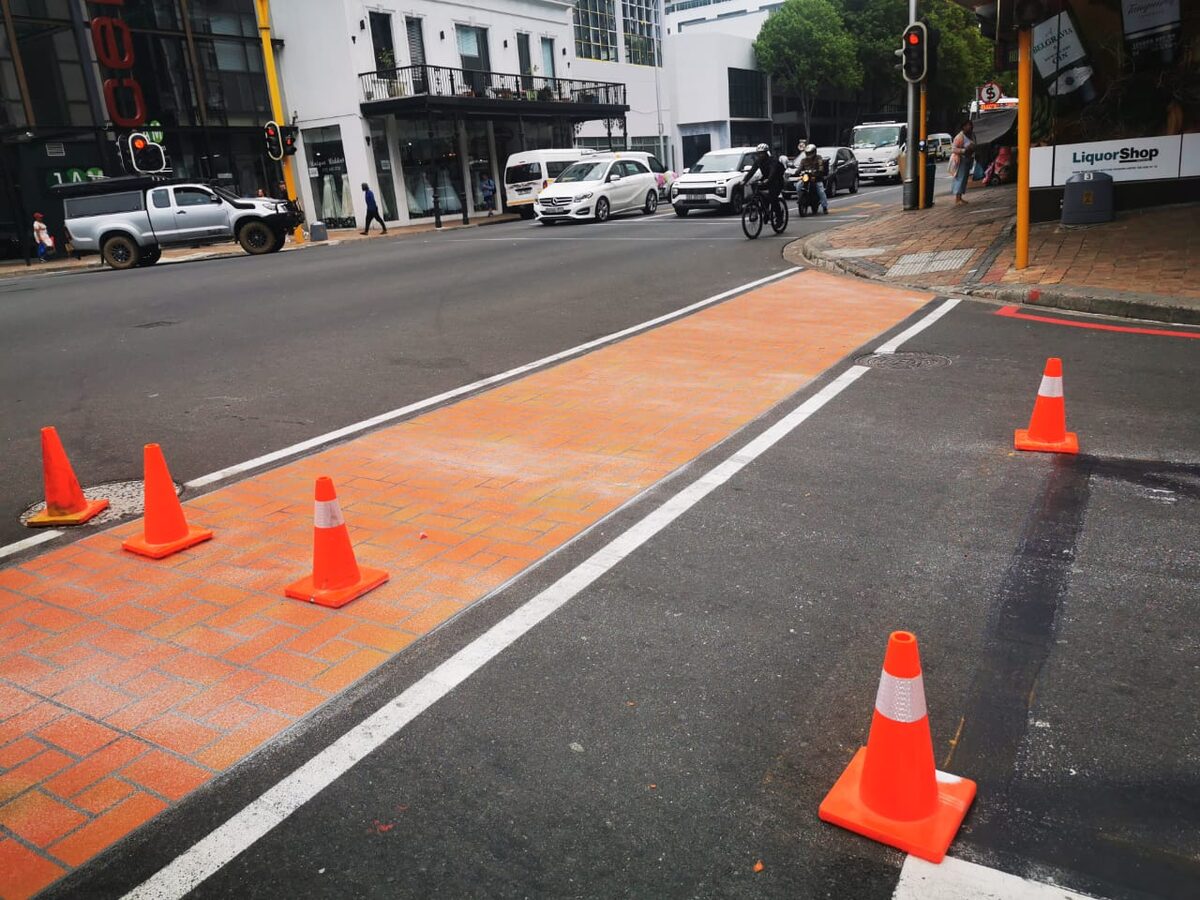
Under the new framework, the City may implement a wider range of traffic calming tools. These include speed humps, raised pedestrian crossings, mini traffic circles, road narrowing, and surface changes.
The Urban Mobility Directorate will issue technical guidelines and assess all applications on the basis of safety, feasibility, and cost.
Temporary measures may also be introduced on certain routes, but must be removed once normal traffic conditions are restored.
How residents can apply
The Urban Mobility Directorate will oversee the assessment and implementation of traffic calming requests. Ward councillors may nominate streets through sub-council processes, provided there is evidence of a crash history or serious incidents.
The policy also permits private funding of traffic calming projects, subject to City approval. Departments including Human Settlements and Spatial Planning are required to incorporate traffic calming considerations into new developments.
Residents and organisations can submit requests to the City at transport.info@capetown.gov.za
Questions over rollout remain
The City said the revised policy is the outcome of public participation processes that began in 2023. It is also a direct response to community calls for safer streets.
However, the policy does not set out specific budget allocations or detailed timelines for implementation across all areas. As a result, questions about the pace and reach of the rollout remain unanswered.
To comment on this, email peoplespost@novusmedia.co.za