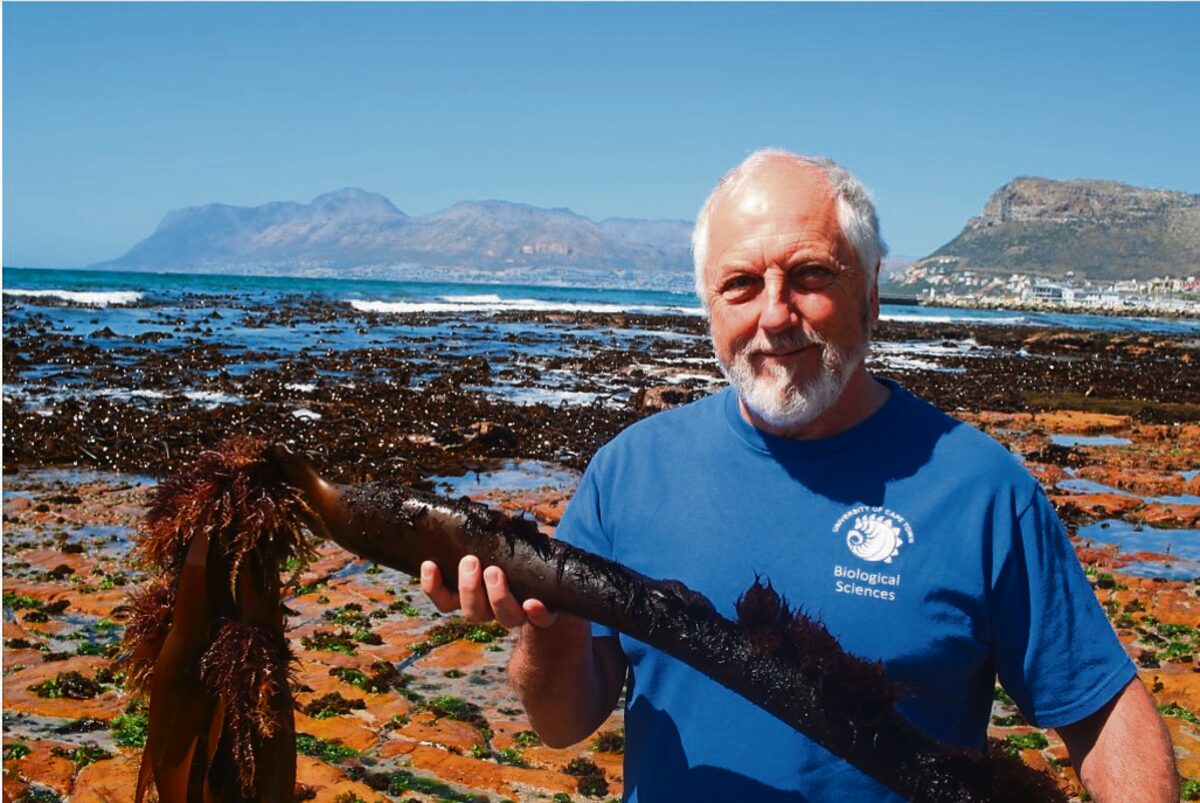
The Shark Museum in Simon’s Town will host a public talk this weekend exploring the future of seaweed cultivation and its potential role in sustainability and economic development.
Titled Seaweeds for the Future?, the talk will be presented by Professor John Bolton on Saturday 9 May at 10:30.
The event, organised with the support of the museum, will unpack global trends in seaweed farming and consider how South Africa could expand its role in the growing industry.
Seaweed Growth
According to museum representative Alessandro De Maddalena, the discussion will examine the rapid rise of seaweed cultivation in Asia over the past five decades.
Production in the region has grown steadily by more than 6% annually, with countries such as China dominating the global market.
Bolton, a researcher from the University of Cape Town, said the reasons for Asia’s success extend beyond dietary traditions.
More than 60% of global seaweed farming takes place in China, supported by strong research collaboration and established aquaculture systems.
In contrast, Africa’s seaweed production remains limited, with most activity centred in Tanzania, where red seaweed is cultivated primarily for carrageenan, a substance used in food and industrial products.
The talk will also explore the environmental benefits of seaweed farming, often described as a “sustainable super-resource”.
Ocean Opportunities
Unlike animal aquaculture, seaweed does not require feeding and instead absorbs nutrients from the water, helping to reduce pollution.
Integrated aquaculture systems, where seaweed is grown alongside species such as abalone, are already in use locally.
In South Africa, more than 2 000 tonnes of sea lettuce are produced annually on land-based abalone farms. This process not only provides feed but also improves water quality and reduces operational costs.
Despite these advantages, challenges remain. South Africa has limited sheltered coastal areas suitable for large-scale aquaculture, with most marine farming currently concentrated in Saldanha Bay.
Expanding the sector will require investment, research and careful environmental planning.
Sustainable Farming
Emerging projects, including early-stage kelp farming initiatives, signal growing interest in the field. However, Bolton noted that while global demand is expected to rise, the industry outside Asia is still developing.
He described the current period as both promising and uncertain, with increasing research in Europe and North America yet to translate into large-scale production.
The upcoming talk aims to provide insight into these opportunities and challenges, while encouraging discussion on how South Africa can participate in what some have termed a global “seaweed revolution”.
The event is open to the public and is expected to draw interest from researchers, conservationists and community members curious about sustainable ocean-based industries.
READ ALSO: SPCA rescues 16 neglected animals from Philippi property