

CAPE TOWN-The Cape of Good Hope Society for the Prevention of Cruelty to Animals
(SPCA) urges the public to be cautious and avoid petting seals.
This follows an incident in Kalk Bay when a child was reportedly bitten by one.
On Saturday afternoon 1 November, at 15:40, the City said it was alerted to a seal reportedly acting aggressively on Kalk Bay Beach.
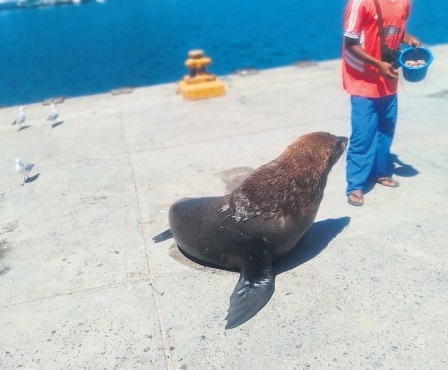
practice that has led to several arrests. PHOTO: SUPPLIED
A video of the incident went viral on Facebook with many speculating and commenting on it.
However, the City of Cape Town could not confirm the attack but cautioned against rabies
in some of the seals.
Rabies transmission, which is now considered endemic to the Cape, occurs through direct contact, including licking, scratching, nipping and biting, with infections proving fatal once clinical signs appear.
The City said it conducted regular surveillance at seal colonies and responded to all reports from the public and stakeholders about seals behaving abnormally with its partners.
“Members of the public are reminded to respect marine and coastal wildlife,” Andrews said.
“Animals, including seals, should be observed from a safe distance, not disturbed or harassed, and dogs should be kept away. These precautions apply to all wildlife and are essential for the safety of both people and animals.
“If someone is bitten by a seal, they should see a doctor immediately and let them know it was a seal bite. Rabies can take a long time to show symptoms, and there are no early warning signs.
“Once symptoms appear, the disease is almost always fatal. That’s why getting prompt medical
care and receiving rabies treatment right away is so important.”
Cape Town authorities have also issued an urgent warning to holiday visitors about rabies in local seal populations, which has become endemic since first being detected in Cape Fur Seals last year.
“Rabies was first detected in our Cape Fur Seal populations in 2024 and is now considered endemic in our colonies,” said SPCA spokesperson Belinda Abrahams.
“As the holiday season approaches we are concerned for the many travellers to Cape Town’s shores. Given that rabies infections are fatal once clinical signs start showing, and there is no treatment, a precautionary approach is being taken.”
Behaviours exhibited by potentially rabid seals include highly aggressive behaviour towards other seals, inanimate objects, boats or people, unprovoked aggressive behaviour such as charging at or rushing at the public and snapping at imaginary objects, head bashing, twitching, and uncontrollable shaking.
Report illegal feeding or seal abuse to the Cape of Good Hope SPCA at 021 700 4158 or to City
Law Enforcement via 021 480 7700.



You must be logged in to post a comment.