


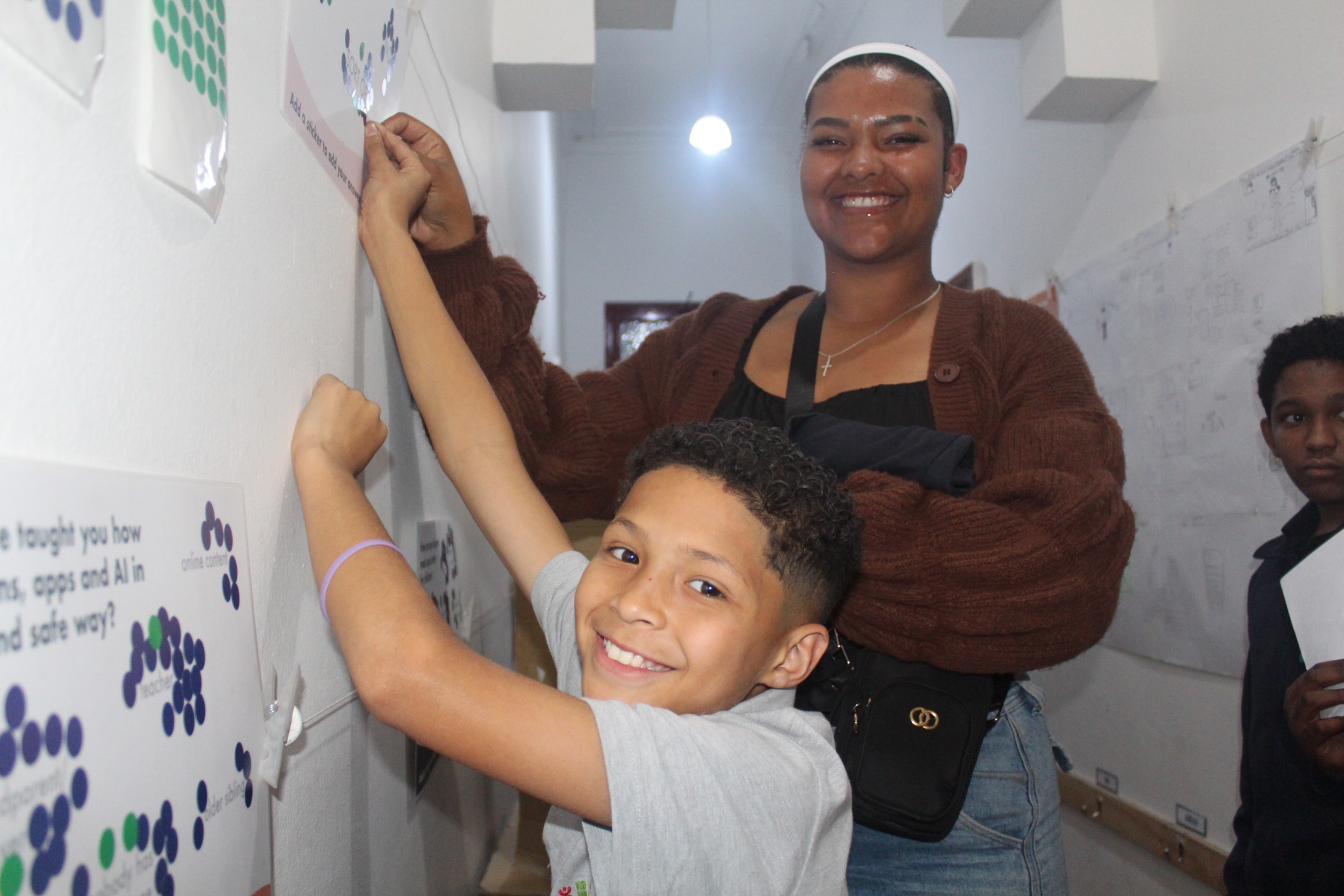
While many children spend hours scrolling, watching and playing on apps designed to keep them online for as long as possible, a group of young learners from Paarl and Wellington are asking a different question: What if technology was designed to help children live better, rather than simply keep them on a screen?
Learners between the ages of nine and 15 at Carnegie House Paarl and Carnegie House Wellington recently put that question into practice by designing their own apps focused on children’s well-being and health. The learners took part in the four-day Scroller to Designer programme, facilitated by Iske De Lange. She founded the organisation Design My Screentime, through which the programme forms part of.
“The Scroller to Designer programme is about creative digital literacy. The idea is to teach children why it’s so hard for you to put your phone down and what the technical aspects are behind it,” De Lange explained.
Read Also: New York City bans AI in public schools for students up to eighth grade
According to De Lange, Carnegie House is one of a few schools that chose to offer the programme. She also speaks to parents and provides shorter versions of the course for families, arguing that managing screen use is not simply a matter of willpower. Her message is instead, to understand how different platforms work and make more deliberate choices about the technology being used.
“Instead of constantly blaming yourself for not being able to get off Instagram choose Pinterest, which is a bit boring. It’s not a variable reward. You type in what you’re looking for [on Pinterest] and that’s typically what you get. It’s just more realistic screen time management,” she said.
The young designers’ work ultimately puts the focus back where De Lange believes it belongs – on using technology intentionally. Rather than asking how long a child can be kept on a screen, the learners were challenged to consider what that screen time could actually achieve – and whether technology can be designed to support healthier habits, stronger relationships, learning and rest.
She says the programme is developed from research she conducted for her master’s thesis in 2022, which involved Gen Z participants from different countries, including learners from Paarl and Wellington. De Lange said one of the key findings was that children, like adults, often blame themselves when they struggle to put their phones down.
“People often think ‘We need to have better willpower’. But when you get into my field, you understand that it’s actually the design [of the app that’s a problem].”
Understanding the scroll
Over the course of four classes, learners explored how popular platforms such as Roblox, TikTok, YouTube and WhatsApp are designed, including features that can encourage users to remain on their devices.
They learned about design features such as infinite scrolling, autoplay and notifications and how these can turn an intention to spend just 10 minutes online into much longer periods of screen use. De Lange used infinite scrolling as an example of how a seemingly small design decision can influence behaviour.
“The infinite scroll is the fact that you can always scroll through content [without end]. The man, Aza Raskin, who designed it, now feels it wastes so many people’s time,” she added.
Learners were also introduced to research on the potential effects of excessive screen use on children’s development, including studies examining attention, sleep and changes in certain areas of the brain.
“There is a lot of research around what the screen time impact has on children’s brain development. For example, they have a shorter attention span or they sleep less, many of the latest studies say,” remarks De Lange.
The purpose was not simply to tell children to spend less time on their phones, but to equip them with an understanding of why certain digital experiences can be difficult to put down.
“If you think about it 10 years ago we didn’t really struggle to put down our cellphones because there was no infinite scrolling, autoplay and tons of notifications,” she said.

Once the learners understood how existing apps work, they were challenged to turn the concept around. Instead of designing an app to maximise screen time, they could decide what they wanted technology to help people achieve – from better sleep and exercise to spending more time with family and friends.
“Then we look at an alternative world where we don’t use powerful technology to keep people on their phones longer. Instead, we decide what if we harnessed this powerful technology to help people do things that are important to them. Like sleep or learn or spend more time with family and friends,” De Lange says.
Among the young designers were 11-year-old Selena-Rose Ngatia and 10-year-old Dominic Philander, who teamed up to create an app called FN, short for Family Night. Their concept combines entertainment, family interaction and features intended to support better sleep.
“So, our proposal is to show everyone an app that we designed for kids and for all ages to enjoy, while actually having fun and learning new things online safely,” Selena-Rose says.
The app includes soft rain sounds to help users sleep, as well as games that can be played with family and friends.
“You can play online or offline and it also has some cooking features for you to learn recipes and you just click on it and it will give you easy recipes with step-by-step instructions,” explains the young girl.
For Dominic, the idea was about finding a balance between enjoying technology and avoiding excessive screen use. “Our app is to let people have fun while not having too much screen time, because it can ruin their brains and affect their education,” he said. “Our app also helps you sleep whenever it does go off and there’s lots of features that can help you to sleep better.”
Rethinking digital habits
For De Lange, the significance of the project extends beyond the apps created by the learners. She believes children need to become more aware of the technology they use as digital platforms continue to become more powerful.
“Technology is only going to get stronger, so it’s critical that we start learning and talking about the design of technology. That’s what I’m trying to teach them.”
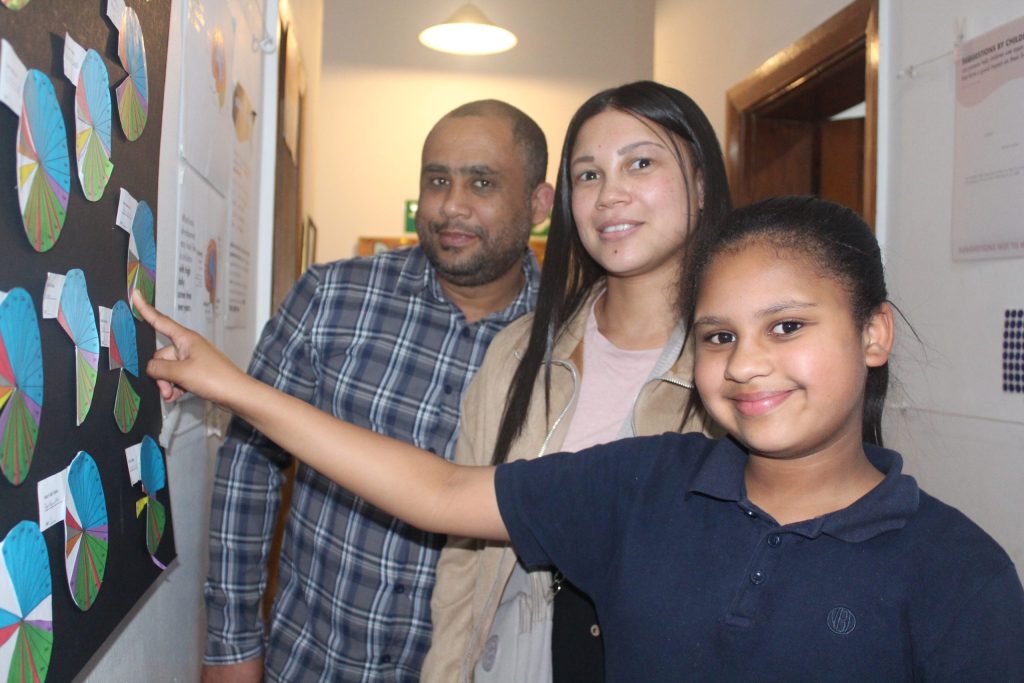
- Family members who attended the exhibition could also take part in a survey around apps.


You must be logged in to post a comment.