It is estimated that there are more than 300,000 amputees in South Africa, with many from lower-income households unable to afford quality, if any, prosthetic legs, which can cost upwards of R100,000.
This is, amidst the public health system that often lacks resources and has long waiting lists for those in need.
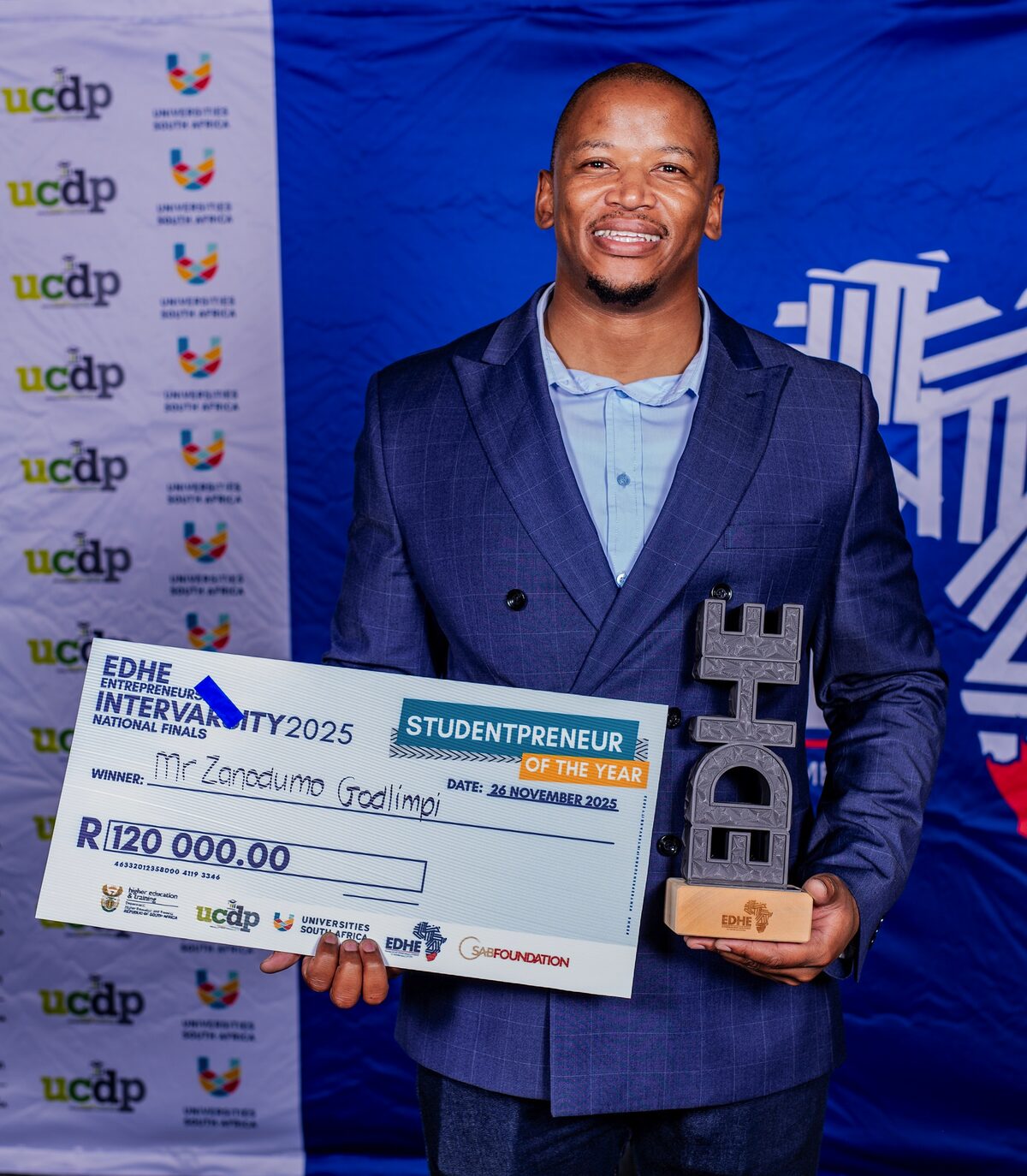
More than seven years ago, Eastern Cape entrepreneur and innovator, Zanodumo Godlimpi, made it his mission to do something about this. His hard work and determination paid off recently when he was named the 2025 EDHE Studentpreneur of the Year at the seventh annual EDHE Entrepreneurship Intervarsity, winning R120,000.
The Walter Sisulu University (WSU) part-time postgraduate student and employee won a further R25,000 as the winner in the Academic Research Commercialisation category.
Godlimpi was rewarded for his cost-effective design of a pneumatic prosthetic foot, an advanced type of prosthetic that uses air pressure (pneumatics) for more powerful and adaptive movement, often mimicking the biomechanics of a natural ankle. The device provides dynamic support, control and energy return, offering a greater range of motion and responsiveness than basic passive feet.
When his name was announced as the winner at the awards ceremony, which took place in Johannesburg, Godlimpi says he reacted purely out of instinct.
The Entrepreneurship Development in Higher Education (EDHE), a programme of the Department of Higher Education and Training (DHET) administered and implemented by Universities South Africa (USAf), is the custodian of the annual EDHE Entrepreneurship Intervarsity. EDHE is predominantly funded through the University Capacity Development Programme (UCDP) of the DHET.
The Intervarsity is a platform designed to identify, recognise and celebrate top student entrepreneurs at South Africa’s 26 public universities. The event has, over the years, enjoyed the support of numerous private sector entities including the SAB Foundation, which, in 2025, supported the initiative for the sixth year in a row.
Godlimpi explained what is different about his award-winning design.
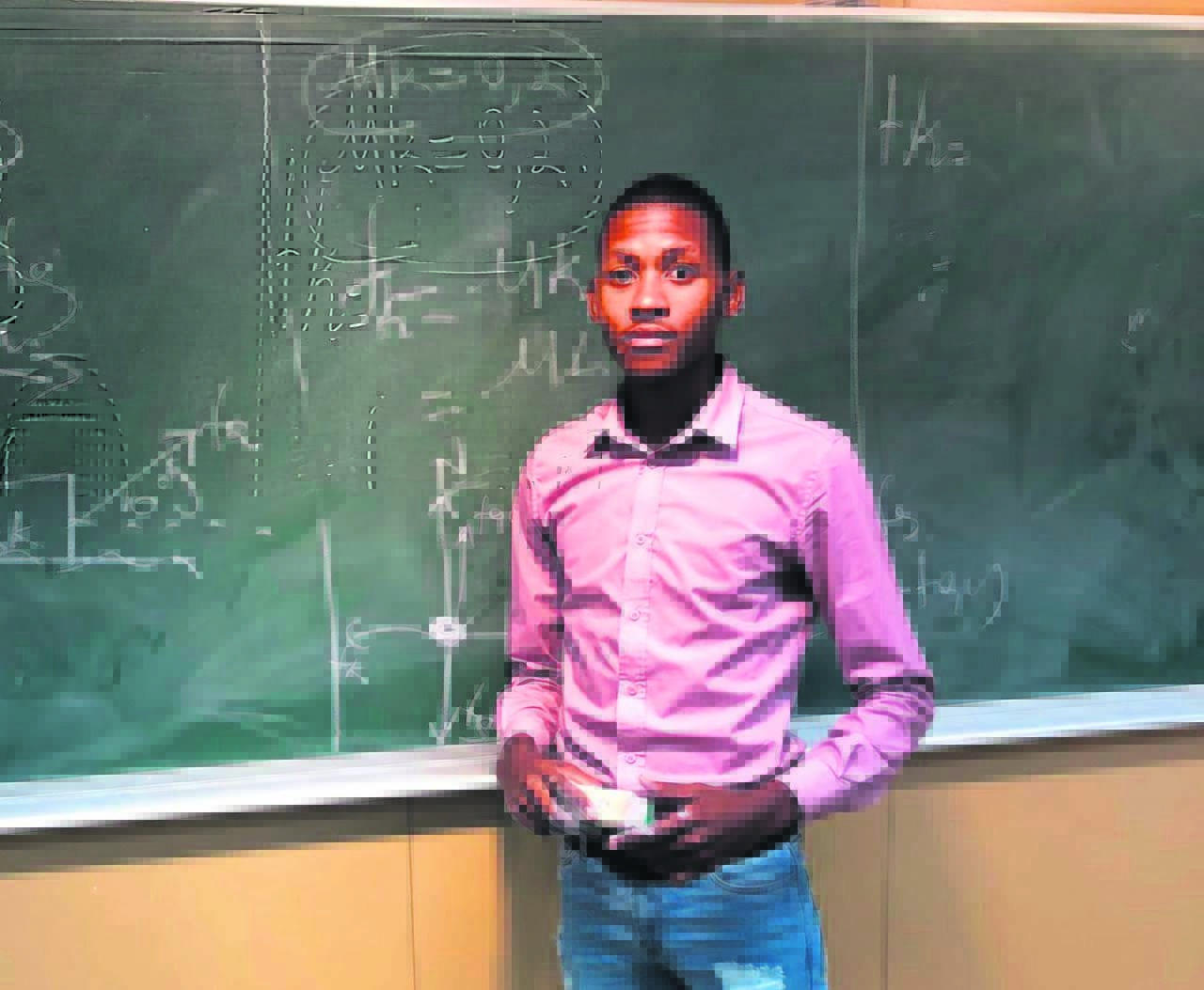
While studying at the Medicine and Health Sciences faculty at WSU, Godlimpi had to spend time in a public hospital.
“I saw that although the patients were fitted with prosthetic devices and were able to walk, they could not simulate the normal way of walking, similar to non-amputees. The difficulty was worse for patients who lived in rural areas where there was a lack of basic infrastructure.
“Some of the comments from those I spoke to highlighted difficulties walking uphill and down slopes, where the patients would feel as though their foot was pushing them backwards or their knees felt unstable.
“Adaptive, powered prosthetic devices were available during that time; however, this remains a luxury for our people, both then and now. And so in 2018, I started working on my prosthetic foot prototype to address the problems faced by this specific part of the population. I took my book allowance money and bought a pneumatic cylinder and other components to develop my first model,” he explains.
Thanks to the promising outcomes, Godlimpi and a colleague applied for funding from the Technology and Innovation Agency, which granted them R485,000 to further develop the prototype. With the help of WSU, he has filed patents in South Africa, China and Europe.
His EDHE R120,000 prize money will be used to buy a 3D printer and assist in covering travelling costs during the second phase of testing.
So where does he see himself in the next five years?
“Running a company specialising in designing and manufacturing prosthetic devices and components. The current prosthetic foot innovation will be segmented into three tiers: a lower tier with fewer features, a middle tier with robust gait adaptation and energy input, and a premium product that is connected to an AI-powered application for real-time gait parameter tuning, enabling seamless and smooth step-to-step transitions. This strategy will ensure that various people have access to this innovation and will not be limited by the price.”
Godlimpi believes that competitions, such as the EDHE Entrepreneurship Intervarsity, are important as they allow emerging innovators and entrepreneurs to showcase their work to potential investors, business partners and clients. It also creates opportunities for mentorship, networking and access to resources that many young innovators would not otherwise have.
“Beyond funding and visibility, they help validate ideas, build confidence and open doors for collaboration, ultimately accelerating the journey from concept to real-world impact,” he says.
Even though he has lived and breathed designing and building his pneumatic prosthetic foot prototype for the past seven years, he believes that even the most passionate inventor needs downtime: “I go to the gym and sometimes watch soccer; I am an ardent Kaizer Chiefs supporter! I also spend time in the holidays doing carpentry, a skill I taught myself. It allows me to be creative and switch off from the world while focusing on the work in front of me.”
Godlimpi says he will be eternally grateful for the support he has received throughout his entrepreneurial journey to make a meaningful difference in the lives of amputees: “My work has been strengthened by the unwavering support from the WSU Office of Technology Transfer and the Faculty of Medicine and Health Sciences. It also reflects the value of collaboration across institutions; the progress we have made is thanks to our partnership with the Centre for Rapid Prototyping and Manufacturing, [located at the Central University of Technology in Bloemfontein]. I am open to collaborating with potential partners who share the vision of creating meaningful impact and supporting the commercialisation of this innovation.”