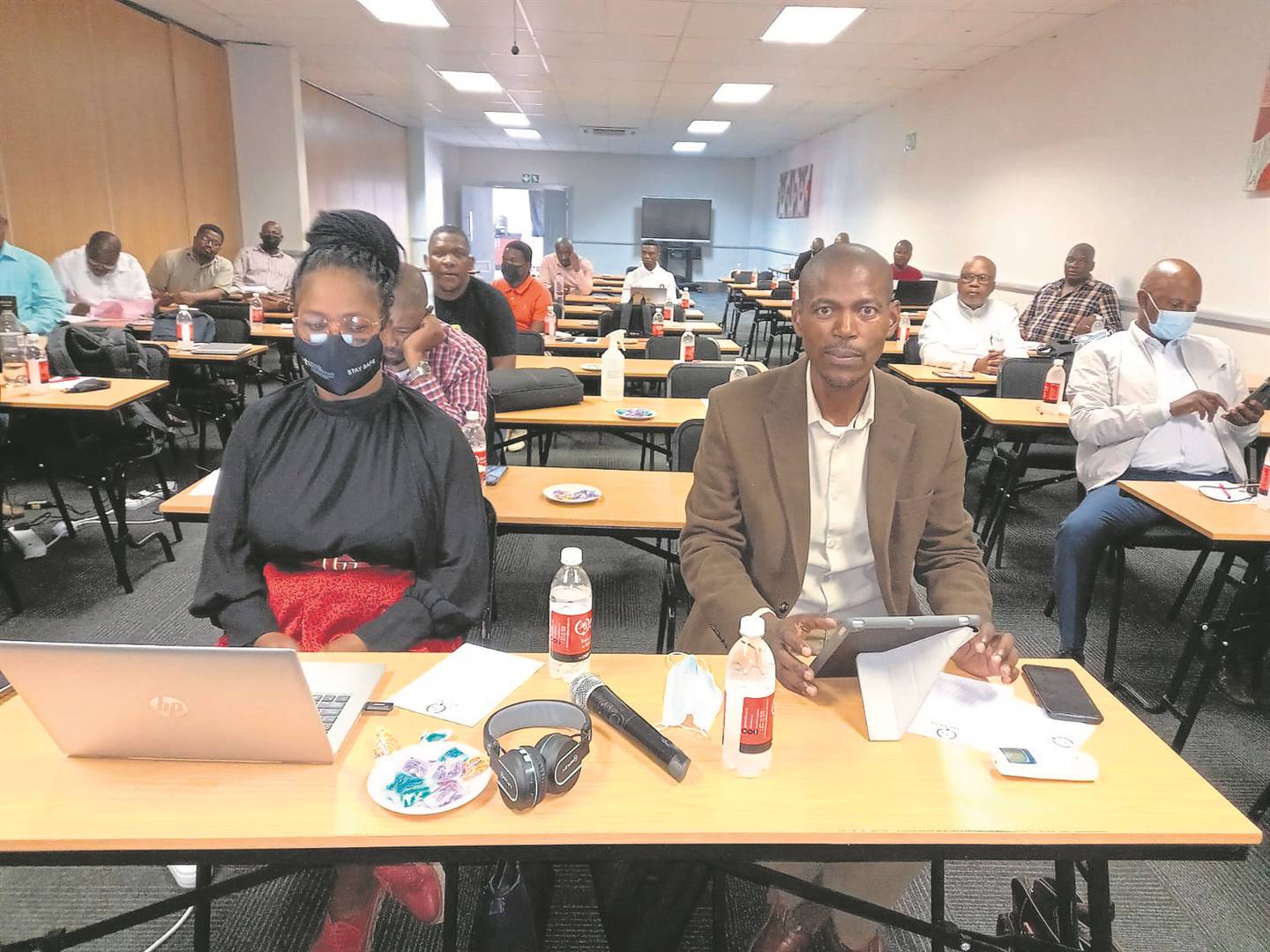
The Commission for Gender Equality (CGE) in the Eastern Cape hosted a stakeholder accountability engagement on the findings and recommendations of its research report titled, “Illegal Initiation Schools in South Africa: Assessing Risks to Boys and Young Men.”
In 2022, the Commission launched this study to assess the risks boys and young men face when undergoing initiation rites.
This engagement was held at the Garden Court in Mthatha last week.
According to the research department of the Commission for Gender Equality, the CGE hosted this stakeholder accountability engagement to share the findings and recommendations of the illegal initiation school research report with interested stakeholders.
This study was conducted in various provinces of South Africa. It is also part of the Commission’s broader mandate to disseminate information on gender-related issues, as outlined in its various reports, whether research or legal.
The CGE believes that gender justice and recourse must be attained for those whose rights are infringed, as outlined in the Constitution of the Republic of South Africa.
The stakeholder accountability engagement also provided an opportunity to engage with traditional, cultural, and religious leaders in the province, helping them to understand the findings and recommendations, and enabling them to recognise the impact and subsequent actions required from them.
This will also assist in holding duty-bearers accountable and ensure that best practices in addressing issues related to initiation schools are adhered to.
The Commission believes that these recommendations can have a positive effect on how initiation issues are handled moving forward, helping to close the identified gaps.
The Deputy Executive Mayor of the O.R. Tambo District Municipality, Thandekile Sabisa, said that the O.R. Tambo District is facing a high rate of initiates dying while at circumcision schools. He noted that, for instance, during the last winter season, out of 23 initiates, 12 died in the district.
“This incident shocked us, and as the district municipality, this prompted us to convene a meeting involving all the stakeholders and to support the Initiation Forum led by Chief Zwelizolile Lutuka. There is a lot of negligence in this initiative, and it has been left to children to make their own decisions. It has also been left in the hands of traditional nurses to make decisions,” said Sabisa.
He added that parental support and strict rules are very limited, and this lack of involvement impacts the success of the initiative.
Another issue he mentioned was the challenge of drug use, with children using substances that affect their bodies’ ability to function properly, especially in responding to the demands of initiation schools.
He emphasised the need to educate community members about the rules outlined in the government-approved Initiation Act of 2021.
“We have noticed that people are not aware of the actions the government has taken to approve this act. To address this problem, we need to ensure that people understand what is in the act.
“We realise that many are unaware, and that’s why we need to conduct campaigns to educate people about what happens when a boy prepares to go to an initiation school. As a government, we believe we should carry out awareness campaigns so that people are informed.”
Sabisa added that they had realised the O.R. Tambo District only intervenes when it is time to monitor the initiation schools.
By then, the damage is already done, as boys have made mistakes, and traditional nurses are often to blame. He stated that the Initiation Act must receive government support.
“As much as we are talking about initiation campaigns, the issue of resource funding remains a problem. Provincial and national governments must assist, and all municipalities should contribute to this initiative before the end of March. We must ensure that awareness is raised, so that by June, everyone knows what is expected.
“These are things we must do. However, we are happy to report that we managed to reduce the number of deaths among initiates in the summer season from 12 to 7. While the number has decreased, we cannot become complacent. We are saying that each municipality must contribute to this programme.”
Chairperson of the Initiation Forum in the O.R. Tambo District, Chief Zwelizolile Lutuka, said that they realised someone must be assigned responsibility for funding and managing needs.
He emphasised that the issue of funding is the primary problem because, despite planning, they lack financial resources.
“There is a problem we do not talk about often — the issue of rescue centres. The district has only two rescue centres: one in the Mhlontlo Local area and another near completion in the Nyandeni Local area. It is difficult to transport an injured boy from Flagstaff to the rescue centre in Mhlontlo because, according to legislation, there is no protection for Forum members if the victim dies during transport. What happens then?” asked Lutuka.
He mentioned that many aspects of this initiative require funding, including Personal Protective Equipment (PPE) and accommodation.
Forum members need to visit initiation schools in the five municipalities, and to do so, they need accommodation to stay on-site and work closely with local forums.
He said they should emphasise awareness campaigns because some people still believe that initiation schools must be far from their homes to prevent witchcraft.
Lutuka explained that people must be educated that sometimes a boy is not affected by witchcraft, but other factors, because the transport cannot manage to reach the area, and those issues can prevent the forum from reaching the area to assist the boy.
Commissioner from the South African Human Rights Commission, Leanne van der Merwe, noted that several stakeholders highlighted the lack of funding to sustain the programme.
She observed that while stakeholders discussed their interventions, they also emphasised that the programmes were lacking due to limited resources.
“What I am happy to see today is the political commitment regarding this issue. What I would like to see more of is the role of women in the issue of cultural circumcision,” she said.