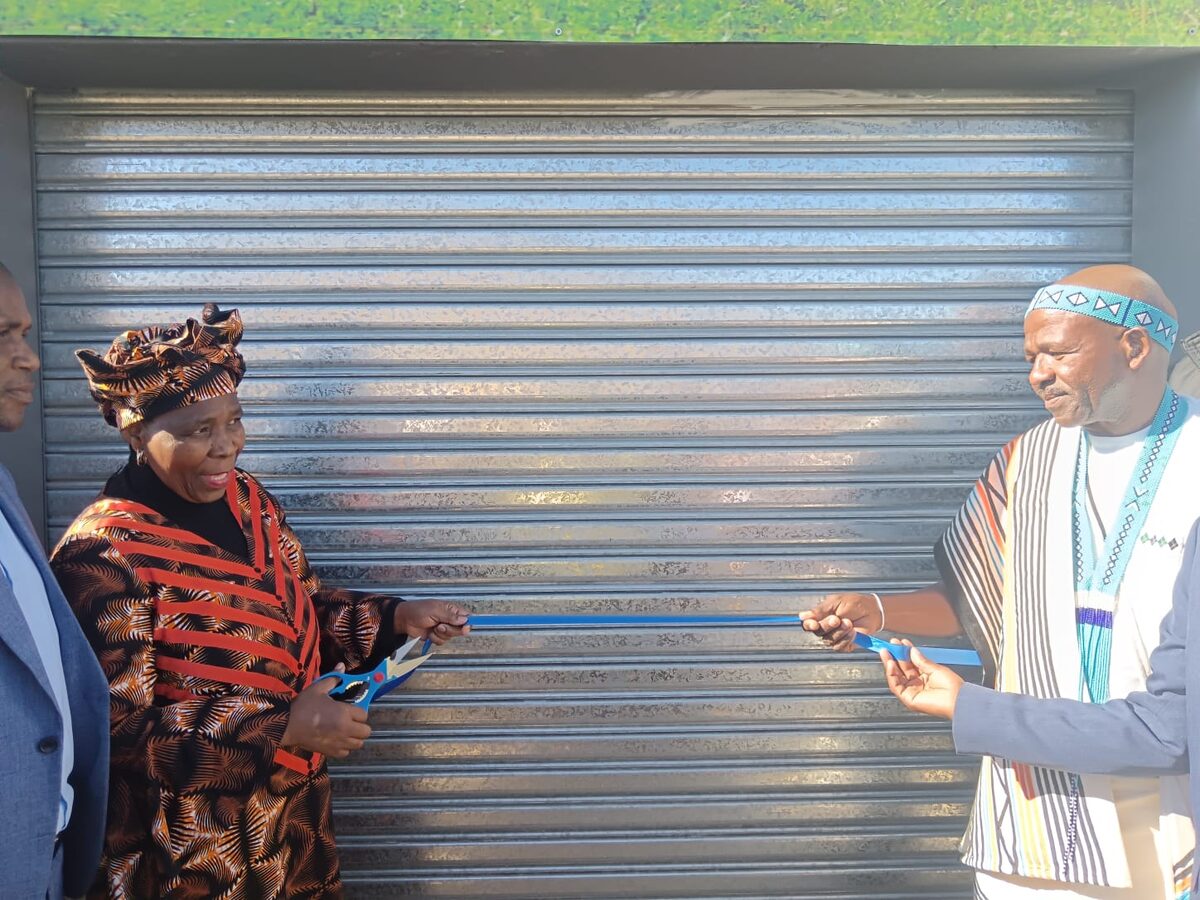
The Eastern Cape Department of Agriculture has handed over a R1.7 million shearing shed to the Upper Thuthukani Wool Growers’ Association in Upper Qebe, Ngcobo.
This marks the 20th shearing shed delivered by the department during the 2024/25 financial year.
Agriculture MEC, Nonceba Kontsiwe, stated that the department is equipping communal and emerging farmers with shearing sheds to enhance both the quality and quantity of wool production. This initiative aims to contribute to improving the lives of rural farmers. She added that this move is part of a larger strategy to ensure rural farmers reap the benefits of a profitable wool industry.
“We understand that farmers view wool as their wealth, so we are encouraging them by providing shearing sheds. This allows them to improve wool quality, minimise contamination, and increase production volumes by having a modern space to shear their sheep,” Kontsiwe said.
The MEC encouraged farmers to join associations, as the government cannot provide individual shearing sheds. She emphasised cooperation and collective growth as key to success. “The department has invested a total of R1,654,903 in infrastructure to assist farmers who previously sheared sheep in unsuitable conditions, such as rondavels. Our aim is to help rural farmers commercialise wool production and boost their livelihoods,” she explained.
The 28-member Upper Thuthukani Wool Growers Association, founded in 2015 and comprising 20 women and eight men, has already seen significant benefits. In 2024, they sheared 2,800 sheep, producing 19 bales of wool worth R154,324, with a steady market through BKB. Association Chairperson, Mgcineli Koyo, shared his excitement, explaining how the new shed is a game changer after years of using mud houses that compromised wool quality.
“This structure means a brighter future for our children. We promise that in the next five years, with government support, we’ll expand and employ more than the nine young people we currently hire during shearing in September,” Koyo affirmed.
He further highlighted how farming has helped feed families and fund children’s education, expressing hope that the next generation values wool production. “Farmers must unite, share resources, and exchange advice to fight challenges like sheep scab that affect wool quality,” he added.
The department plans to construct 12 more shearing sheds in the 2025/26 financial year to make communal and smallholding farmers more commercially viable.