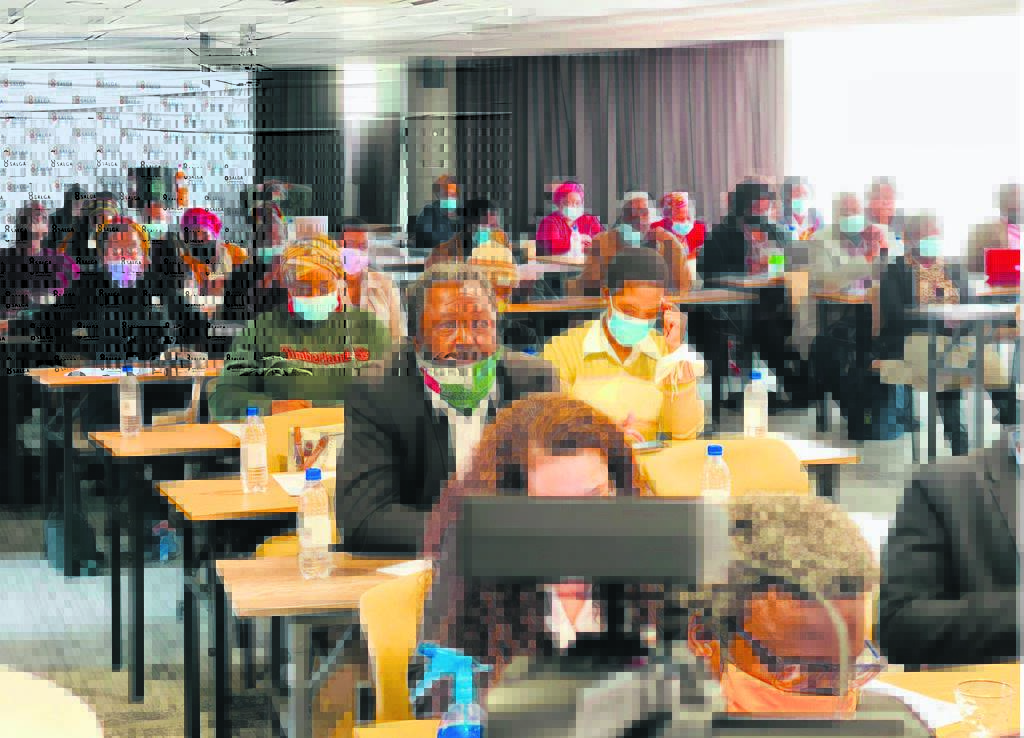
Councillors from King Sabatha Dalindyebo (KSD) Local Municipality, in partnership with the Department of Forestry, Fisheries, and the Environment (DFFE) and other stakeholders, conducted a Climate Change Response Strategy Workshop at Mthatha Stadium last week.
According to the spokesperson for the KSD Local Municipality, Sonwabo Mampoza, the aim of this gathering was to equip municipal officials with the knowledge to identify and respond to specific climate change risks and opportunities relevant at the local level.
“To build capacity and strategically address this issue, the DFFE runs a project called the Local Government Climate Change Support Programme (LGCCSP), which aims to assist local and district municipalities in better responding to climate change,” he explained.
He added that in the workshop, different sectors formed groups to answer a worksheet to collect data on how the local impact of climate change can be minimised. According to him, that data was collected via the assessments conducted during the workshop.
“Those worksheets were submitted to DFFE so they can be assessed and compiled into a larger strategy for the Eastern Cape. Since KSD has other municipalities bordering it, the big strategy will include strategies from other municipalities to have a unanimous way forward. Yes, the preliminary risk assessment report, when done, will be submitted to MALCOM. It will be tabled/submitted to Council before it goes to Public Participation. Climate patterns are no longer the same as 20 years ago, meaning there is a shift in climate. Climate change poses risks to all living things because of the devastating effects.”
According to him, the reason for this workshop was to capacitate government officials to better understand what needs to be done when a problem arises. The data collection is to get a grip on the landscape of the entire KSD and identify risks and possible solutions to those risks.
Representing the Executive Mayor, Councillor Sihlwele Nyengane, a member of the Mayoral Committee for the Community Services Department, stressed the importance of continuing the conversation around climate change. “It is essential for everyone — whether in government or the private sector, as individuals or collectives — to strategise on how to minimise the impact of climate change for current and future generations,” he emphasised.
Nyengane also noted that careless waste disposal contributes to the problem and urged residents to follow the rubbish collection procedures provided by the municipality.
The workshop’s first day covered climate projections for the Eastern Cape, with a focus on KSD, along with presentations on risk and vulnerability assessments and an analysis of the municipality’s socio-economic vulnerability. The second day addressed environmental vulnerabilities, marine and coastal environmental trends, and climate change impacts. The third day focused on physical risks and vulnerabilities.
The presentations painted a sobering picture of the risks facing KSD, highlighting the importance of such gatherings to prevent future disasters. Droughts and floods are among the extreme climate changes projected for the municipality.
The information shared was not intended to cause panic but to serve as a wake-up call for the community to take action. The municipality urges residents to understand that climate change is not a distant or foreign concept but a pressing reality that must be confronted.
The municipality encourages everyone to care for the environment, reminding people that humanity and all living creatures depend on a healthy, thriving ecosystem.