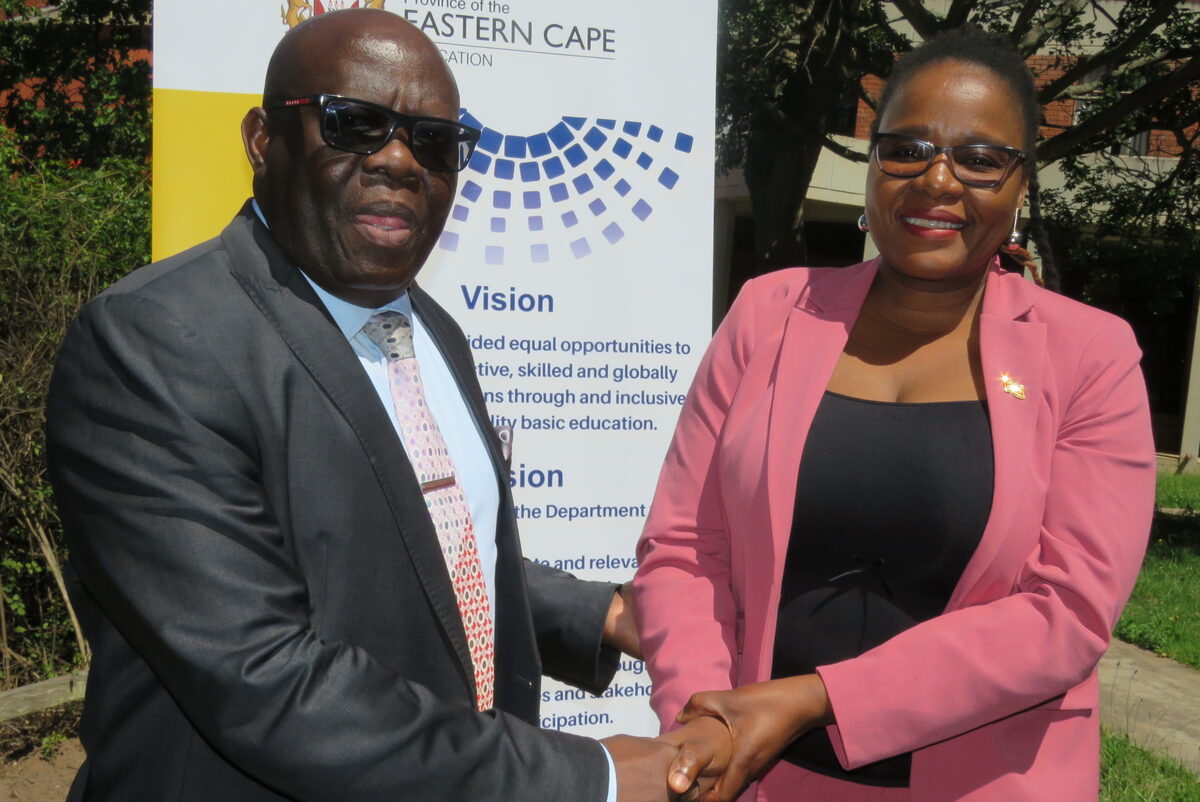
The Deputy Director-General for the Eastern Cape Department of Education (ECDoE), Thembani Mtyida, confirmed that the department welcomed a study group from the Eswatini Ministry of Education at the Trinset Education Leadership Institute in Mthatha last week.
He said the study group was visiting to benchmark the ECDoE primary schooling system, specifically focusing on the Teaching at the Right Level (TARL) programme. Mtyida explained that the provincial department, under the National Department of Basic Education (DBE), had been tasked with hosting the delegation from the Kingdom of Eswatini for a three-day benchmarking exercise in the province.
“This assignment is about us as a province because we are one of the provinces that has a majority of rural schools. The focus of the benchmarking exercise is really about sharing experiences on how we support and deliver education in our rural schools. We are a province that has quite a number of small, often under-resourced schools that still participate in all our learning programmes,” said Mtyida.
He added that this was the reason the national department chose the Eastern Cape to host the Eswatini delegates. According to Mtyida, the Eastern Cape has led the country in implementing programmes that support early grade reading and is also leading in the introduction of mother-tongue bilingual education.
“We are amongs the first provinces to have developed our own reading and writing strategy in the entire country. Today, we are meeting in the boardroom to take our visitors through what our programmes look like and how they support early reading, particularly in the foundation phase. We are exchanging experiences and have also visited some schools where these programmes are implemented.”
He added that although the delegates were learning from them, the local department was also learning and gaining insights from the Eswatini team.
“This is an exchange and benchmarking programme — both countries are learning from each other. We feel honoured that, amongst all nine provinces, ours was chosen by the DBE to showcase some of the best practices in education. We are truly humbled that Eswatini was directed to our province to learn.”
He further mentioned that visiting Eswatini should also be part of future discussions, noting that this was not the first country to visit them, as they had recently hosted delegations from Lesotho and other nations. “I believe this is the beginning of a relationship and partnership with Eswatini. We cannot rule out the possibility that in the near future we shall also visit their country to learn from them.”
The Director for Education and Training in Eswatini’s Ministry of Education and Training, Dr Tholakele Mngometulu-Dlamini, said there were many reasons for their visit to the Eastern Cape. She explained that Eswatini is currently transforming its curriculum and implementing important projects funded by the World Bank, aimed at strengthening early childhood development and basic education.
“We realised that we are facing a number of challenges with learners struggling with numeracy and literacy. You find a Grade 8 learner unable to do basic arithmetic or read simple text. We heard that Mthatha is very strong in the Teaching at the Right Level project. The World Bank advised us to come here so that we can learn from the best. I just want to give Mtyida credit because we were told they are doing very well, especially considering that the region is largely rural yet continues to make great progress. We want the same for our children back home — we want them to be able to read and do basic arithmetic,” said Mngometulu-Dlamini.
She emphasised that foundational learning is the base for future learning, adding that if learners are unable to read and write at an early age, they will face academic challenges later on. Dr Mngometulu-Dlamini said their intention in visiting schools in the OR Tambo Inland district was to observe how the TARL model is implemented in classrooms.
“We wanted to see teachers on the ground implementing the programme. Hearing about it is different from seeing it in action. We wanted to observe teachers, understand the challenges they face, and learn how they overcome them.” She concluded by saying that the visit had helped them build strong relationships and that they were confident they could return for further collaboration in the future.