INVESTIGATIONS are currently underway to establish whether instant porridge caused the death of three young children in Mdantsane last week.
Police spokesperson Lieutenant-Colonel Siphokazi Mawisa confirmed the incident and said that according to their reports, it is alleged that the children ate instant porridge and soon after complained about stomachaches.
She said, “They were taken to a nearby clinic for treatment where they succumbed to death. Police were summoned to the scene, and three counts of inquest have been opened.”
She further added, “A police investigation is currently underway.”
According to a statement by BCM, health inspectors, South African Police Services, the Department of Health, and BCM Law Enforcement, on Saturday morning, September 28, responded to an incident in which four children had to be rushed to the hospital after consuming porridge on September 27.
“Sadly, three of the children, between the ages of 1 and 4 years, passed away. Two of them were from the same household,” the statement read.
The statement revealed that a fourth child, aged 7, was discharged in a stable condition and further tests will be conducted.
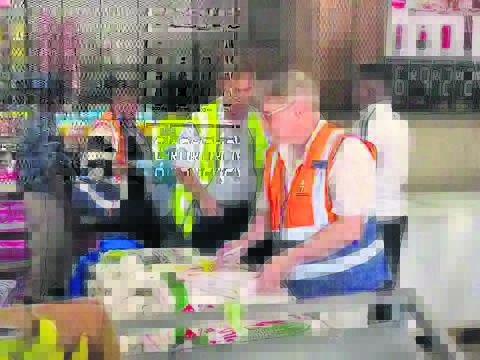
A supermarket in Mdantsane, where the porridge was allegedly bought, was visited and temporarily closed down in order to detain all the batches of suspected products.
“Samples will be dispatched to the National Health Laboratory Services (NHLS) Microbiological and Chemical lab for analysis.
“All the batches of the suspected product, instant porridge, have been removed from the shelves and storages for detention until laboratory reports are back,” the statement further added.
“Currently, our municipal health teams together with members of the security cluster, are visiting the affected homes to obtain more information as part of an ongoing investigation.
“We have further instructed regional managers at the supermarket to voluntarily remove the suspected product from circulation across the City until tests are conducted.
Whilst the direct link to the fatalities has not been scientifically established, we suspect organophosphate poisoning based on clinical information obtained from the Nontyatyambo health clinic.
“This is, however, subject to reports of the product sampling test results to be dispatched to the National Health Laboratory Services for Microbiological and Chemical analysis at their Charlotte Maxeke facility in Gauteng and their Chemistry Forensic Laboratory in Cape Town.”
The statement concluded by stating that the BCM will intensify its ongoing weekly operations targeting all urban and peri-urban areas, towns, townships and/or informal settlements, and rural areas.