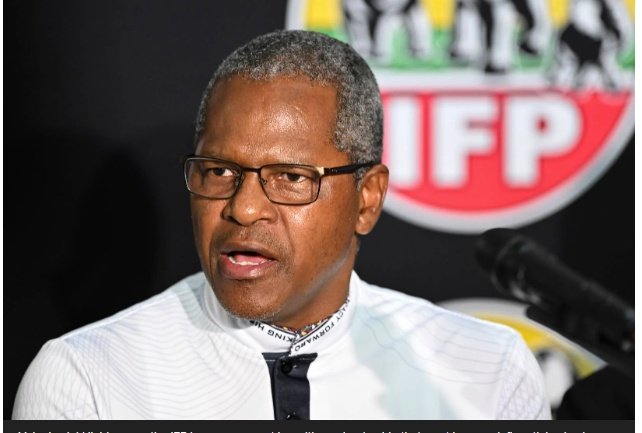
Cooperative Governance and Traditional Affairs (CoGTA) Minister Velenkosini Hlabisa convened a special Minister and Members of the Executive Council (MINMEC) meeting to consider guidelines aimed at promoting stable coalitions in local government following the 2026 Local Government Elections.
The guidelines follow a Technical MINMEC meeting held on 9 November, where draft proposals were considered and technical inputs made to strengthen the document.
Hlabisa expressed appreciation to the entire CoGTA sector for the work undertaken before and during the 2026 Local Government Elections (LGEs). He said the preparations and coordination across the sector were important in supporting the electoral process and ensuring that municipalities were ready for the critical democratic exercise.
“Following the successful conclusion of the LGE on 4 November, our immediate responsibility is to ensure that municipalities proceed with the constitution of their newly elected councils in accordance with the applicable legislative and constitutional frameworks.
“As a sector, we must play a proactive role in supporting municipalities throughout this process, particularly those where no political party has secured an outright majority and where negotiations between political parties may result in deadlocks or delays in constituting councils,” said Hlabisa.
Bill undergoing parliamentary processes
He reminded the meeting that the Local Government: Municipal Structures Amendment Bill, 2026, commonly called the Municipal Coalitions Bill, is still undergoing parliamentary processes.
Therefore, it is not yet available to provide the intended legislative framework for guiding coalition arrangements in local government, particularly in municipalities with hung councils.
“However, the Guidelines for Stable Coalitions in Local Government have been developed to provide an interim framework to guide political parties and municipalities in navigating coalition arrangements, managing potential disagreements and establishing stable governance structures as the new municipal councils are constituted.
“Where no single party has a majority of seats in a municipal council, it becomes necessary to form a coalition government. A coalition government comprises more than one party (sometimes also with independent ward councillors) who join forces to form a governing majority in council.”
He said in the past, unstable coalitions have led to poor governance when “the power relations between parties in a coalition change, leading to the frequent, and sometimes opportunistic, removal and election of speakers and mayors”.
Moreover, the delay in electing officials or filling vacancies may result in a power vacuum.
Hlabisa said a dysfunctional council inevitably leads to a dysfunctional administration, which negatively impacts service delivery to residents.
Guidelines for stable coalitions
“To this effect, the Guidelines for Stable Coalitions aim to assist coalition governments in councils to provide stable and effective leadership, resulting in a more effective administration that provides uninterrupted services to residents.
“The MINMEC was informed that today, 11 November, the Electoral Commission of South Africa is expected to officially publish the election results in the Government Gazette. The publication activates the statutory 14-day period within which metropolitan and local municipal councils must be constituted. The period for the constitution of metropolitan and local municipal councils commences from 12 November to 26 November,” he said.
Hlabisa added that the time frame for the establishment of District Municipality Councils will commence once the constitution of all Local Municipal Councils within the respective districts has been finalised within the scheduled 14-day period.
District Municipal Councils cannot be constituted before the Local Municipal Councils.
According to him, all political parties and municipalities are urged to ensure that the constitution of councils proceeds within the prescribed time frames.
Where a municipality fails to constitute the council within the stipulated time frame, the matter must be addressed in accordance with the applicable legislative provisions and prescribed procedures to prevent municipal governance and service delivery disruptions.
Support will be provided by stakeholders
“After the constitution of these councils, CoGTA, together with provincial governments and other sector stakeholders, will continue providing consistent support, guidance and oversight to municipalities throughout the new term.
“This support will be particularly important to municipalities within hung councils and those that were classified as dysfunctional or experienced significant governance and administrative challenges before the elections. Our collective objective is to ensure that political arrangements do not undermine municipal administration, interrupt service delivery or compromise the ability of municipalities to fulfil their constitutional obligations.”
All parties to use the guidelines
Hlabisa urged the MECs to be available to municipalities as they constitute their councils and encouraged all parties to use the guidelines to adopt a common approach that will promote stable, functional and accountable local government.
MINMEC approved the guidelines for stable coalitions in local government. To this end, the guidelines will be signed by Hlabisa and thereafter issued to provincial CoGTA and municipalities for implementation.
ALSO READ: Voters urged to choose leaders who will improve municipalities