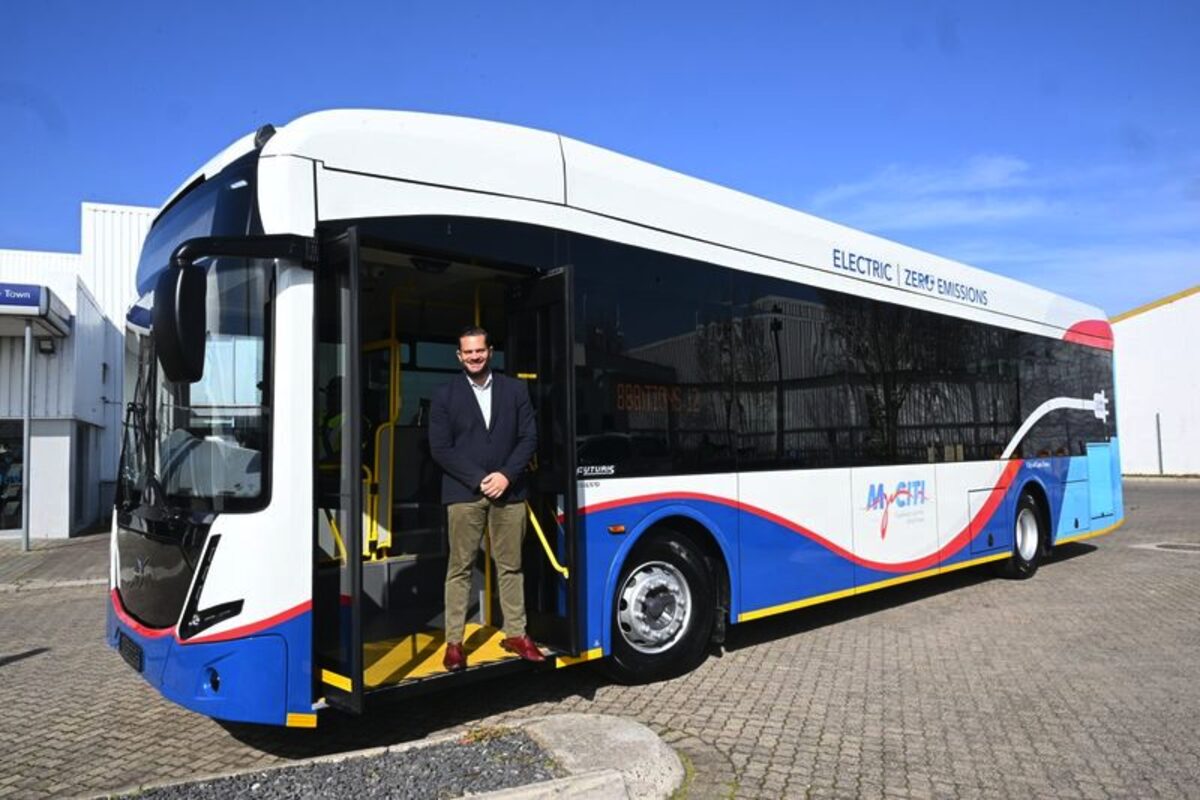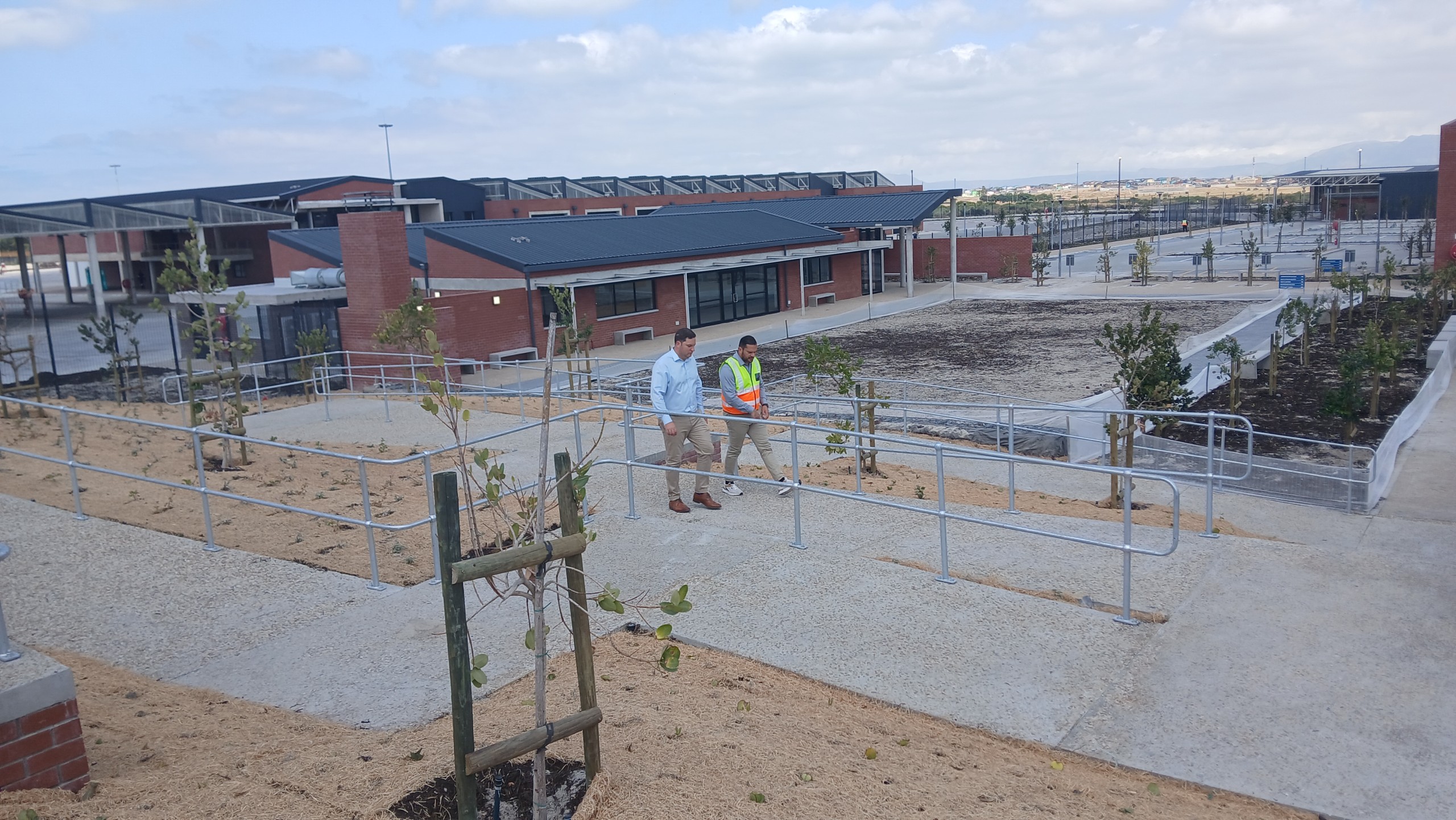

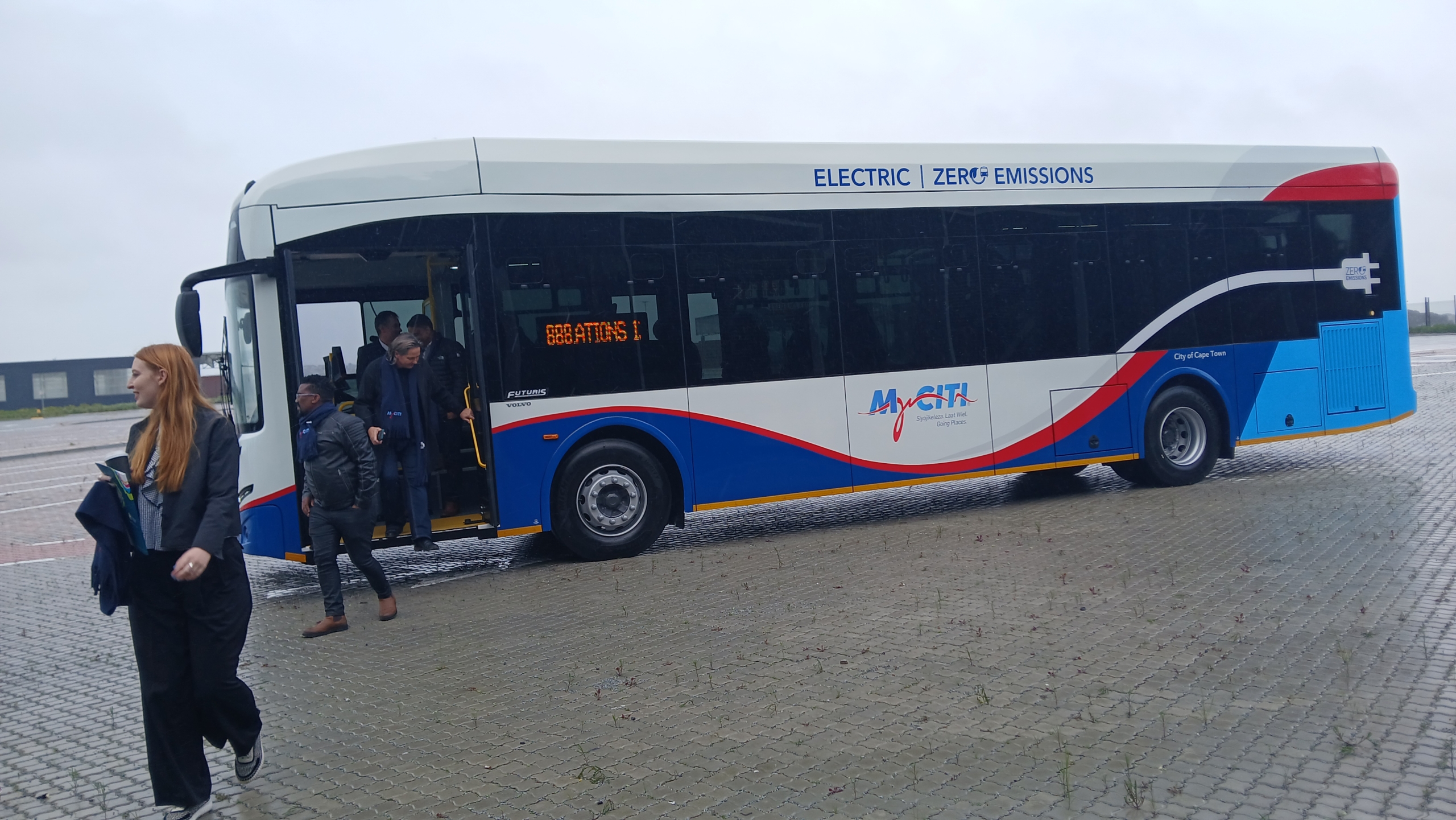
The City launched its first electric MyCiTi bus at the Khayelitsha MyCiTi depot on Thursday, 23 July. The event was attended by Mayor Geordin Hill-Lewis and Mayco member for Urban Mobility, Rob Quintas.
Cape Town’s electric MyCiTi bus passes all performance tests
Hill-Lewis stated that it is the first electric bus on the continent. He said the bus, which has been named “Evie”, has passed performance testing on several routes.
“The City has confirmed an order for an initial 38 battery-electric buses as part of broader plans for a public transport system that is cleaner, smarter and less susceptible to diesel price fluctuations. The electric bus fleet will be deployed along the major new Cape Flats route expansion, set to benefit over 1,4 million residents across 30 neighbourhoods, from Mitchells Plain and Khayelitsha to Wynberg and Claremont.”
R7,1 billion investment in cleaner public transport
The Mayor described the project as the country’s biggest metro-led public transport undertaking, with an overall infrastructure investment of R7,1 billion committed to date.
“This morning I took a spin on Cape Town‘s first electric MyCiTi bus, which we are excited to announce, has passed all performance tests. We have now given the go-ahead for 38 of these battery-electric vehicles to be manufactured, with the first batch expected before the end of the year.
“The key benefit of these electric buses is affordability for customers. They will make our fleet less susceptible to diesel price changes, which means more stable and affordable fares for commuters.”
Moreover, Hill-Lewis added that these are the first electric buses with locally manufactured bodies, fully assembled in the country.
Rigorous route testing across Cape Town
He said the e-bus had been tested on a variety of routes to determine its performance on steep inclines and descents, in city environments with frequent stop-and-go traffic, in heavy traffic during peak periods, and over longer distances.
ALSO READ: R430m MyCiTi Bus Depots completed between Khayelitsha and Mitchells Plain
“It is a great moment to confirm that our first e-bus has been rigorously tested and passed our requirements with flying colours. I’ve been told that she reached perfect speeds on Hospital Bend, known for its steep incline, and performed equally well on the N2 highway, in Camps Bay with many stop-and-go at traffic signals, and along other routes such as Polkadraai Road and Jip de Jager Drive. Now the remaining 37 e-buses will go into production and be manufactured in line with this prototype.”
All in all, the City was expected to take delivery of 38 of these 12-metre Volvo BZRLE battery-electric buses.
Delivery timeline for the battery-electric bus fleet
Quintas said the first batch was expected to arrive before the end of the year, with final delivery by the end of March 2027.
“The buses will be tested on arrival and deployed on routes as soon as the necessary processes have been concluded. Bus drivers will also need to be trained. The procurement of the City’s first e-fleet is a major achievement and supports our transition towards a cleaner, more sustainable public transport system that is not only more cost-effective to operate and maintain, but more resilient as we keep Cape Town moving.”
He said the acquisition of more battery-electric buses remained a strategic priority for the City, but depended on the availability of future funding from national government.
MyCiTi ridership has grown 68% since 2021
“MyCiTi ridership has grown by 68% since 2021 to 23 million passenger trips annually and is set to reach 30 million once the Cape Flats extension begins operating. Cape Town’s MyCiTi is the most successful service of its kind, accounting for 42% of all passenger trips on Bus Rapid Transit (BRT) nationally.”