


Why her story still unsettles South Africa
At the heart of Freedom Day, Netflix’s The Trials of Winnie Mandela has pulled one of South Africa’s most contested political figures back into national debate.
The documentary does more than revisit history. It forces us to confront how unsettled our memory remains, especially when we talk about liberation and what freedom was meant to deliver.
As a born-free, I did not live through apartheid. But I live with its consequences.
That distance shapes how many of my generation engage with figures like Winnie Madikizela-Mandela. We encounter her through archives, political commentary and inherited narratives. Yet the questions her life raises feel anything but historical.
The documentary presents competing views, admiration, criticism, testimony and political interpretation. It asks us to reckon not only with what she did, but with how South Africa continues to remember her.
At the centre of that reckoning lies a difficult question raised by publisher and writer Palesa Morudu in the series: how do we hold political figures accountable while recognising the violence, surveillance and distortion of the systems they operated within?
That question belongs as much to the present as it does to the past.
The warning that still echoes
One of the documentary’s most striking moments comes when Madikizela-Mandela recalls warning Nelson Mandela during South Africa’s democratic transition.
“I begged Tata and told him this is a dummy freedom we are giving to the people. In 20 years’ time the same memorandum we carried to the apartheid government will be carried to us.”
As a born free, that warning lands with uncomfortable force.
South Africa remains one of the most unequal societies in the world. Unemployment continues to trap millions. Economic exclusion still defines daily life for many South Africans.
Democracy delivered political freedom. It did not automatically deliver economic justice.
That does not mean the transition failed.
To my understanding, political settlements are rarely neat. They emerge through compromise, negotiation and immense pressure.
Still, the gap between the promise of 1994 and the reality many people live today demands honest reflection.
Madikizela-Mandela understood that tension. Her critique was not simply political defiance. It reflected a deep unease about whether liberation would reach ordinary people in material ways.
That question remains open.
The woman behind the symbol
Public memory often forgets that before she became a liberation icon, Madikizela-Mandela was a social worker.
That matters.
Her professional training placed her in direct contact with poverty, family hardship and systemic inequality long before she became a “radical” political symbol. She understood structural injustice not as abstract theory, but as lived reality.
When apartheid tightened its grip, that awareness sharpened her politics.
Her shift into political resistance was not accidental. It grew from direct exposure to systems that harmed people every day.
Yet history rarely preserves that kind of complexity, especially for women.
Too often, public memory flattens women like Winnie Madikizela-Mandela into binaries: hero or villain, victim or perpetrator, icon or disgrace.
The truth is harder to package.
She carried contradictions. She made choices that remain deeply contested. Her legacy includes pain and controversy that cannot be dismissed or rewritten.
But reducing her to those controversies alone creates its own distortion.
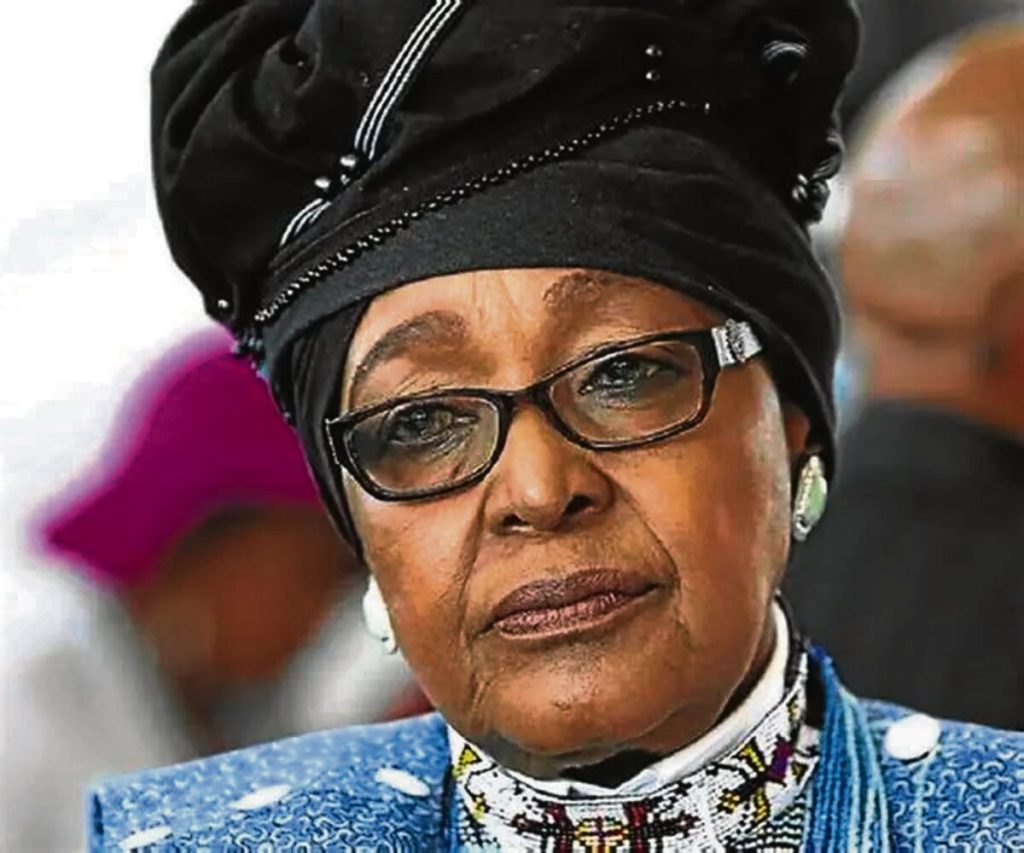
The gendered politics of memory
Madikizela-Mandela was judged not only for what she did, but for what she represented.
She was a woman who refused to become politically manageable.
That refusal unsettled many people.
South Africa, like much of the world, often treats assertive women in public life differently from men. Their authority is questioned faster. Their flaws receive harsher scrutiny. Their contradictions attract less forgiveness.
This does not exempt women leaders from accountability.
It does, however, require us to examine how power shapes memory.
Madikizela-Mandela’s legacy exists inside that tension.
She was neither saint nor monster.
As she once said, she was “the product of the masses of my country and the product of my enemy”.
That statement captures a reality we often resist: history produces people through pressure, conflict and contradiction.
What her legacy asks of born-frees
The documentary offers no final verdict.
That is precisely its value.
It forces us to sit with discomfort rather than rush toward moral certainty.
As a born-free, the question I am left with is not simply who Winnie Madikizela-Mandela was.
It is what South Africa does with complexity.
What happens to women who refuse to soften themselves for public approval?
Do we remember them fully, with all their contradictions, or do we reduce them until they become easier to dismiss?
And what does it say about our democracy if we still struggle to make space for women whose power was shaped not by permission, but by history itself?
Winnie Madikizela-Mandela’s legacy remains contested because South Africa itself remains unfinished.
Perhaps that is why her story still unsettles us.
It asks whether liberation was ever meant to be comfortable.
READ ALSO: Opinion | Seven years later, a TV moment raises questions about young voters, political literacy

You must be logged in to post a comment.