

A question about whether marijuana was still being grown at Oasis Farm in Philippi popped up briefly at the subcouncil 17 meeting on Monday 15 June.
One of the councillors asked if a resident on the farm was still growing the plant before a brief discussion broke out on its legality.
Chair Elton Jansen nipped the conversation in the bud to get back to the subject at hand, which was a motion to build an eco-village on the site.
Eco-village
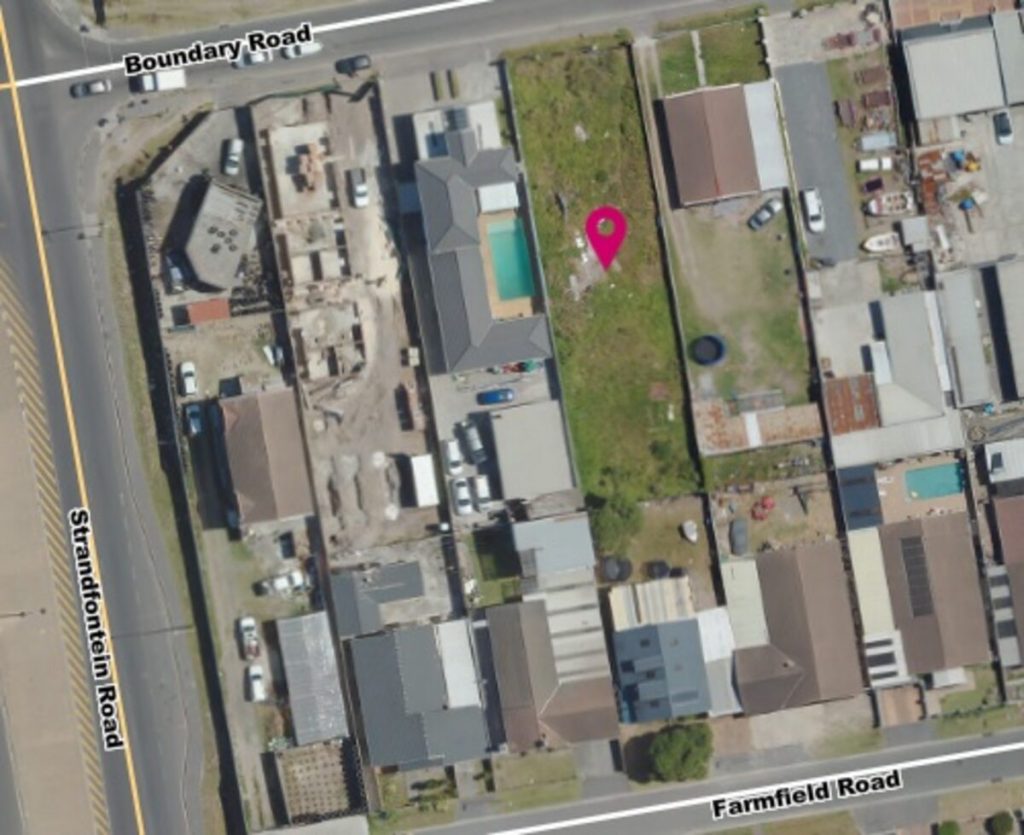
Subcouncil 17, which covers Philippi, Mitchells Plain and surrounds, has called on the City of Cape Town to look into whether an eco-village can be built at Oasis Farm in the Philippi Horticultural Area (PHA).
The motion, put forward by Jansen, the ward 43 councillor and seconded by proportional councillor Bernadette Clarke, was tabled at the meeting, at the Lentegeur administrative office. It asks several City departments to report back within 90 days on whether such a project is workable.
The PHA is known for its farming value, its role in food security and for protecting the Cape Flats Aquifer. Oasis Farm, on Portion 64 of Farm 787, sits within this sensitive area and already has roughly 250 structures on it. The farm was previously privately owned and later bought by the Western Cape Government.
What is an eco-village?
An eco-village uses low-impact building methods such as earth construction, permaculture, renewable energy and water-wise design, with some systems operating off the main grid. The idea is to provide better living conditions without harming the environment.
Two amphibian species of conservation concern have been recorded at or near the farm: the Western Leopard Toad (Sclerophrys pantherina) and the Arum Lily Frog (Hyperolius horstockii). These are among the reasons why conventional housing development on the site is restricted.
What the motion asks for
The motion requests that the City’s department of spatial planning and environment, the department of human settlements, water and sanitation, and the environmental management branch – including the Biodiversity Management Branch – carry out a preliminary investigation and report back on:
- The current zoning, land-use rights and restrictions under the Municipal Planning By-Law and the PHA Policy Framework.
- Possible environmental impacts, including effects on agricultural land, the Cape Flats Aquifer and habitats for protected species.
- The rules around alternative building methods and off-grid services and options for improving existing structures with as little ecological impact as possible.
- Whether a pilot or demonstration project could be set up under existing City policies, including Special Management Area and biodiversity offset rules.
The motion also recommends that officials consult with Oasis Farm representatives, the PHA farming community, CapeNature, the City’s Biodiversity Unit, ward stakeholders and civil society groups during the investigation.
Jansen stressed that the motion is a request for information only.
“This motion does not constitute approval of any development, but only requests investigation and feedback to inform future decision-making by council,” he said.
He added that the City has no previous record of a municipality-led eco-village within Cape Town.
He also cautioned that any future work on the site would need to account for protected species.
“You can’t just pull a bulldozer through it,” he said.
ALSO READ: Subcouncil 17 pays tribute to Ward 75 ‘thorn in the flesh’


You must be logged in to post a comment.