
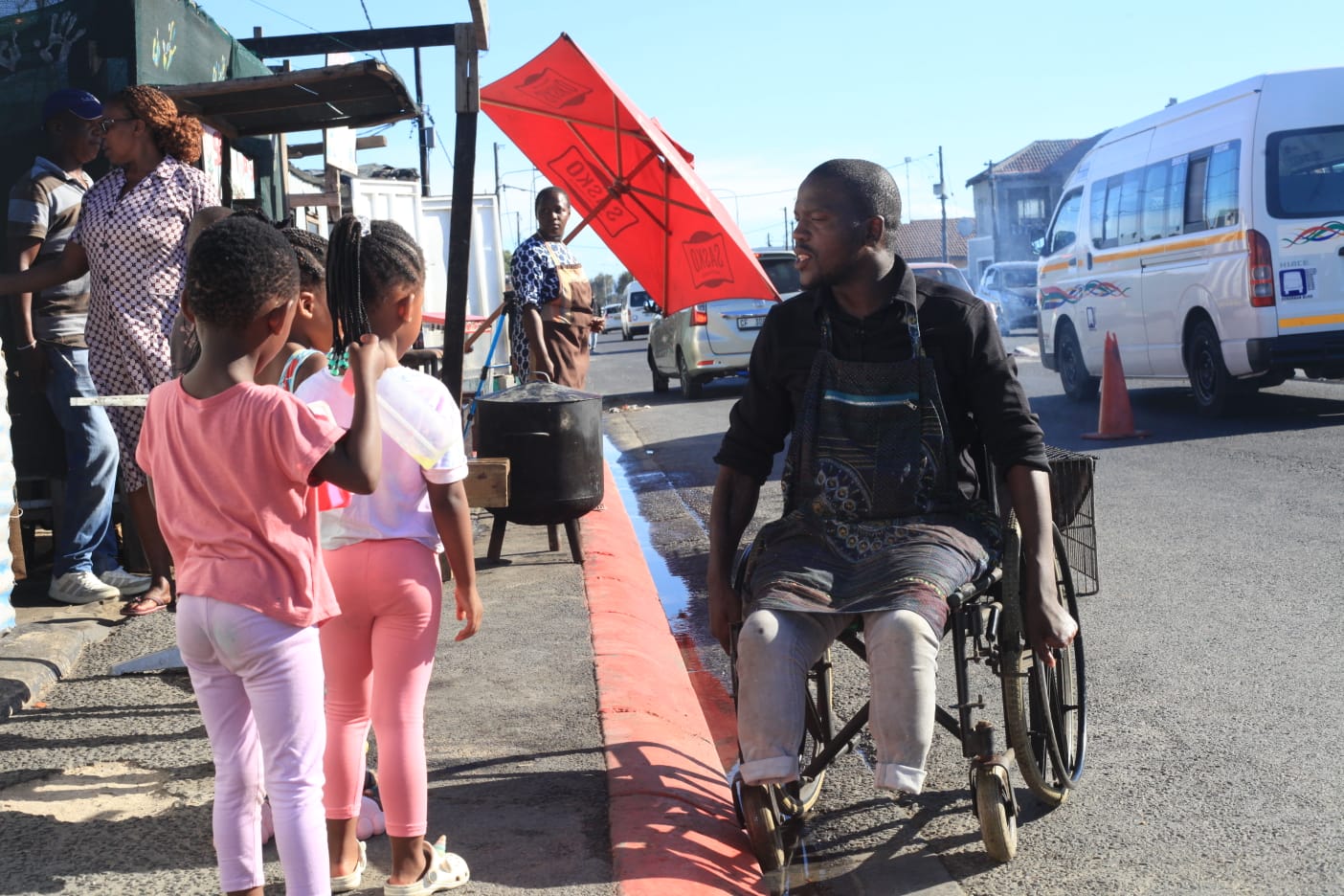
“Never give up on life” were the words of a young businessman, Inga Mkoko from Lusaka, Nyanga, founder of Sir Vas Legacy Business. He is well known in his community for his popular shisanyama (braaied-meat business) and for running a soup kitchen under his legacy initiative.
Mkoko (29) said his business has emanated from a passion for bringing positive change to his community.
The Soweto incident that changed everything
He is wheelchair-bound after surviving what he described as a shooting spree at a tavern in Soweto, Gauteng in 2022. Sixteen people died at the scene and two more later died in hospital.
Mkoko lost both his legs and four fingers on his left hand, and sustained injuries to his right arm in the incident. He said he had 13 bullet wounds in his lower body and two in his right arm.
READ ALSO: Survivor of Soweto tavern shooting rebuilds life through gardening and resilience
Early life and struggles with addiction
“So a lot happened in my life before I started this business.
“I grew up in this area. I was a drug addict from 2013 until January 2021.” He said he moved to Cofimvaba in the Eastern Cape in early 2017, when his bid for sobriety began, relapsing several times, but he has been clean since January 2021. He moved to Gauteng 10 months later, in November, and the shooting occurred the following July.
After returning to Cape Town in mid-2023 with no clear plan, Mkoko started selling seedlings, garden equipment and insecticides in Nyanga and surrounding areas.
“At that time I had an electric wheelchair. I built a small trailer where I carried my seedlings, watering cans, rakes and insecticides. I travelled from my area to Gugulethu Mall and Junxion Mall in Philippi to sell my merchandise. People got to know me and I built a customer base.”
In December 2024 the supplier he had relied on for seedlings closed down, forcing him to rethink his business.
The rise of the soup kitchen initiative
“Because I had saved some money from my business I decided to start a shisanyama,” he said. “I bought meat and a braai stand and started selling. Since then I haven’t looked back. I sell pork, sausages and rolls, and people are supporting me.”
Since running this business many people, especially children, would come asking for food, Mkoko said. In January this year he decided to start a soup kitchen, cooking for the community every Wednesday.
“When I started I expected fewer than 50 children. To my surprise I cooked for 76 on the first day. The following week there were more than 100, and the number has since stayed above 100.
“That’s when I realised the extent of the challenges in our communities, what with much unemployment.” He said he also gives food to people who collect scrap in the area.
Future plans for expansion
Mkoko hoped to grow the soup kitchen and eventually provide meals every day.
“This is how I give back to the community. I did a lot of wrong things when I was on drugs. I don’t want these children, especially young boys, to make the same mistakes. Sometimes I have informal discussions with them about life in general.”
Most of the people who come to his soup kitchen are children aged 2 to 18. Mkoko said the lack of resources in townships means many young people have too much free time and too few opportunities. “All I need now is support to grow the soup kitchen.”