
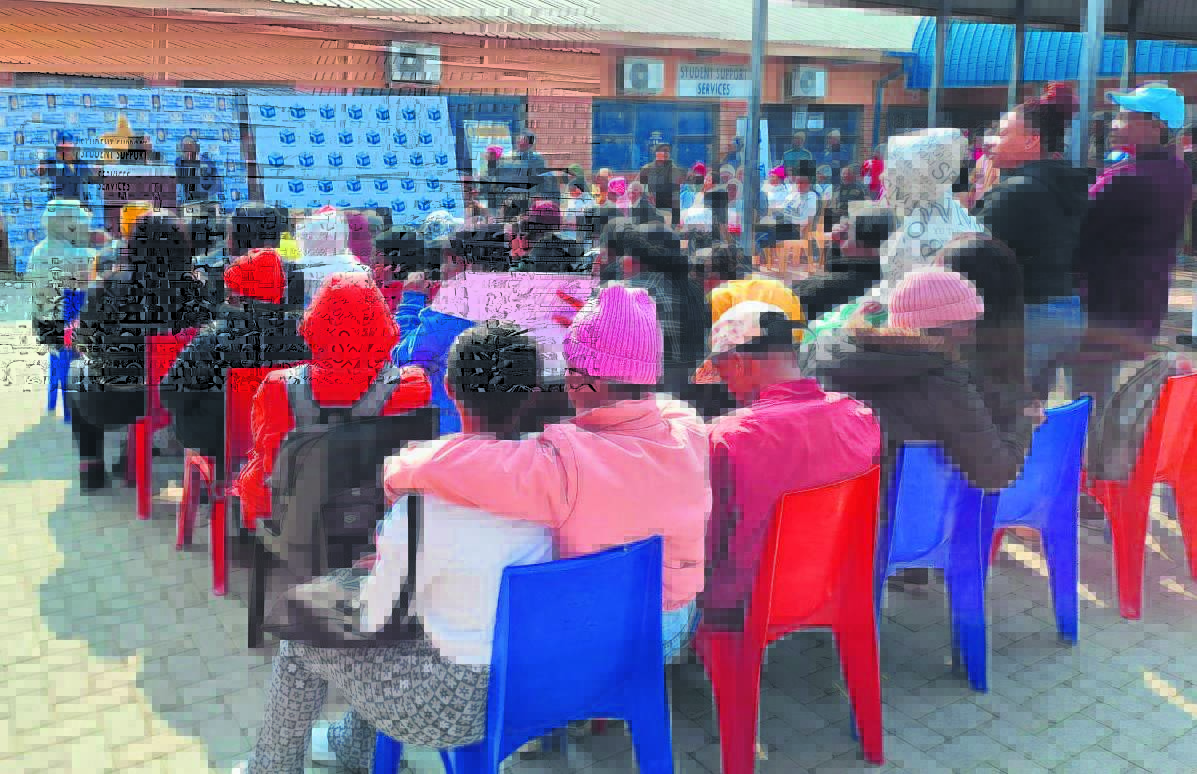
The Electoral Commission (IEC) in the Free State launched its annual provincial Civic and Democracy Education Tertiary Institutions campaign, targeting young voters as future leaders. This was done at the Flavius Mareka Technical and Vocational Education and Training (TVET) College in Sasolburg on 31 July.
Mmathabo Rasengane, provincial spokesperson for the IEC, said the initiative would be extended to other institutions in the province, informing youths of the significance of active participation in voting as a fundamental act of civic change.
“The campaign aims at improving the youth’s understanding of and participation in South Africa’s democratic processes,” said Rasengane.
“It is an ongoing plan in all other institutions to engage the youth of South Africa.”
She said the IEC’s initiation of the outreach programme, four years ago, had been informed by the low numbers of youth participation, prompting concerns regarding voter apathy.
“We get different responses from the youth regarding participation. They feel it is a waste of their time, since nothing changes in their situation.
“Their concerns pertains to the lack of development, service delivery and unemployment,” she said.
Rasengane said according to the IEC voters’ roll for the provincial and national elections on 29 May, the number of eligible youths who had registered in the Free State was as follows:
- In the 18 to 19-year-old group there were 11 450 women and 8 572 men;
- amongst the 20 to 29-year-olds there were 90 790 men and 111 816 women; and
- in the 30 to 39-year-old category there were 166 025 men and 191 212 women.
The findings reveal a trend of low and declining turnout amongst young and first-time voters, as experienced since the 2021 local government elections.
The South Africa government is sharply criticised for its inability to create sustainable employment opportunities resulting in youth despondency.
According to the global data and business intelligence platform, Statista, the country’s youth employment rate continued rising since 2004, to the current 45,5%. The global data platform pointed that the unemployment rate among young individuals (aged 15 to 34 years) is in contrast to the national average of 32,9% in the first quarter of 2024.