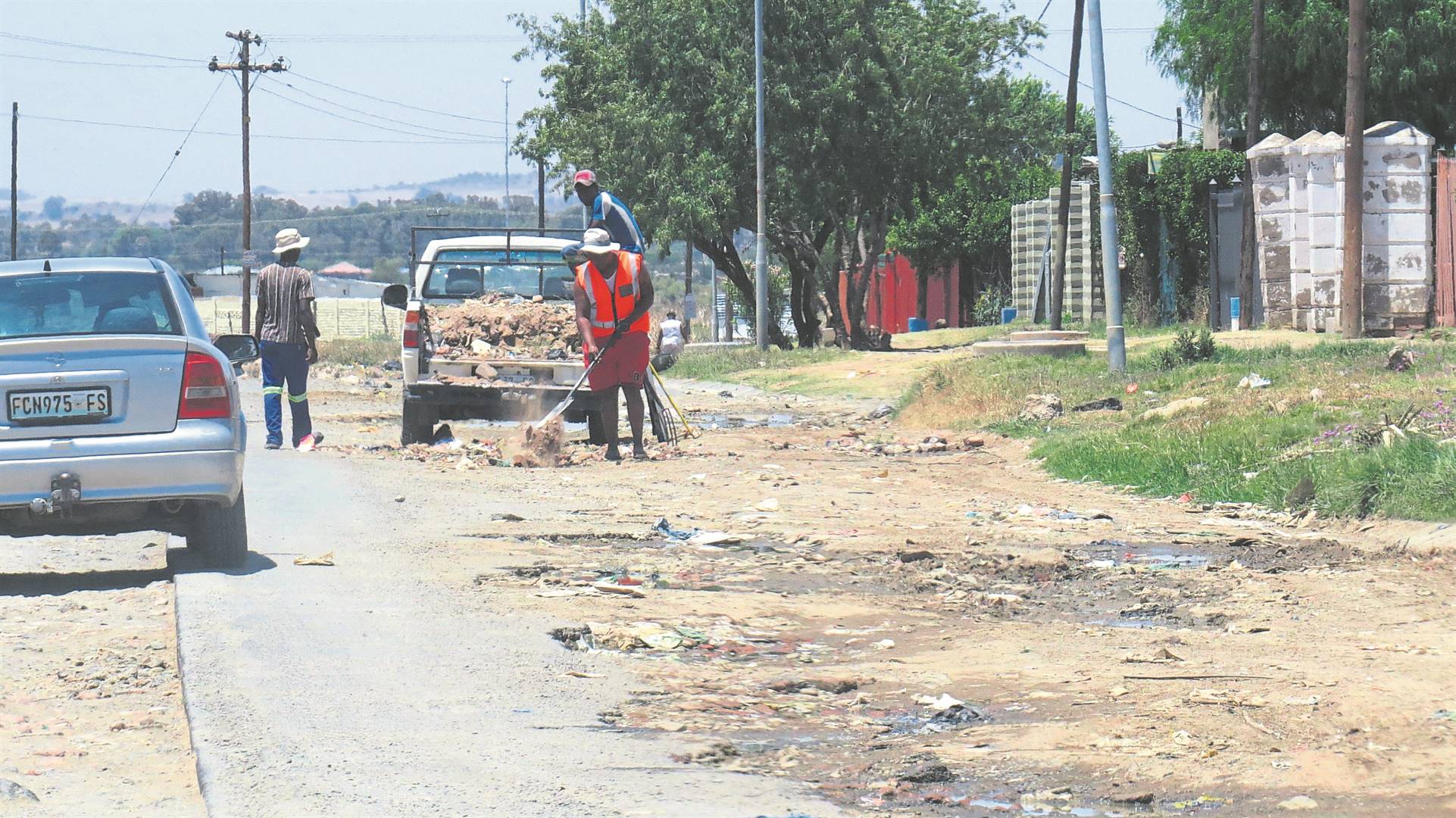


The observance of Public Service Month in South Africa during September is a stark reminder of the dismal declining state of service delivery.
The urgent restoration of government service delivery systems is needed to prevent a complete collapse – especially municipalities faced with the challenge to render services to communities. The collapse of municipalities will cause more suffering for communities in need of basic services.
Current complex problems in the South African local government sphere, due to incapable administration, is an elephant in the room.
According to the South African government’s website, as part of Public Service Month public servants should visit schools, hospitals, police stations and courts to talk to citizens, mediate the delivery of services, and unblock bottlenecks and red tape in the delivery of services, ensuring systems and infrastructure are working.
They must use public resources efficiently to the benefit of the citizens and recommit themselves to serving the people.
This theme highlights a “fit-for-purpose” public administration.
This type of administration should be anchored in an effective management praxis of systems and processes, and professional and resource capacity that fulfils local government’s mandate of contributing to transformative change in society.
Universally, this praxis of systems and processes is underpinned by activities of policy making, organising, human resourcing, financing, work procedures; and control of the functions, structures, and capacities of the public sector.
The effective management praxis of public administration systems and processes globally should be underscored by public service traits that are a composite of being professional, qualified, highly skilled, agile, responsive, goal-directed, innovative, and relevant.
The public administration praxis in South African municipalities is in distress. Evidence thereof is the volatile, uncertain, complex and ambiguous environment in which it functions.
Research shows that this distress is attributed to some municipalities’ inability to execute basic functions and service delivery, poor infrastructure planning and maintenance, financial and revenue-generation challenges, corruption, service-delivery protests, and staff turbulence.
Their recurring nature has also resulted in them being the focus of South African local government reforms over the past two decades, including the 2009 Local Government Turnaround Strategy and the 2013 Back-to-Basics campaign.
According to the 2022 Auditor-General of South Africa’s report regarding the Municipal Finance Management Act, not even the last reform has yielded the desired impact and outcomes. In this regard, service delivery challenges remain the Achilles heel of the local government landscape.
From a community participation perspective, research suggests that a lack of community engagement by some municipalities affects their responsiveness to the service-delivery needs of citizens, where community engagement is merely embarked on for legislative compliance purposes.
) Dr Maréve Biljohn is head of the Department of Public Administration
and Management at the University of the Free State (UFS).