
BLOEMFONTEIN: Several food handlers, including informal food vendors in the Free State, are set to benefit from a newly launched partnership initiative aimed at revolutionising food safety standards and practices.
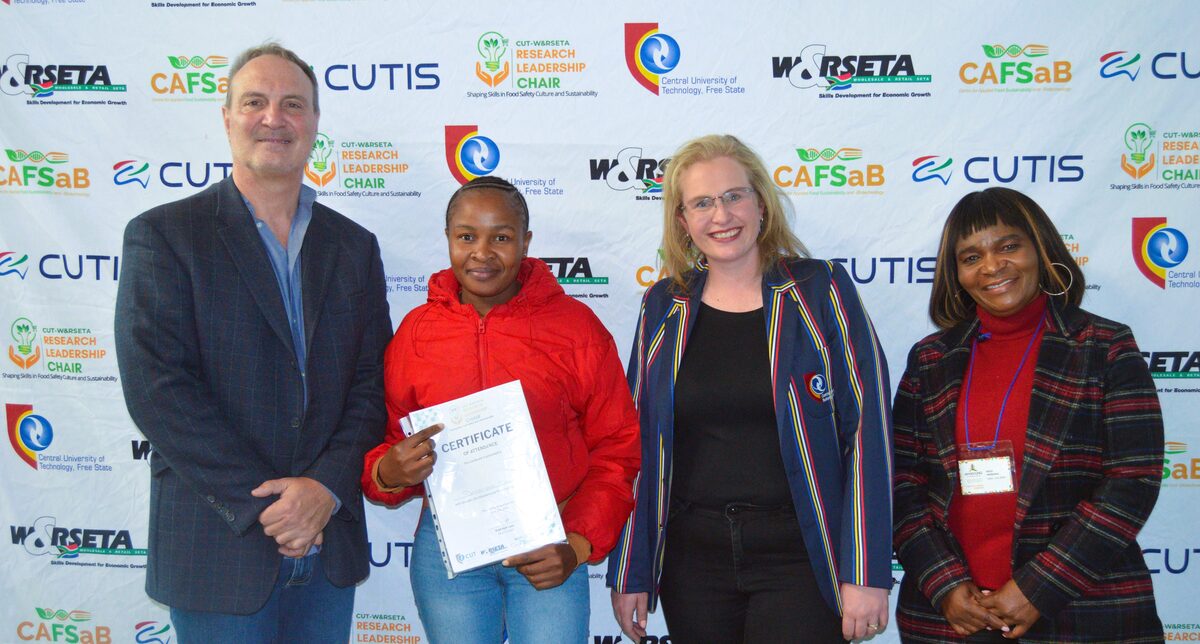
The Central University of Technology (CUT), Free State, in partnership with the Wholesale and Retail Sector Education and Training Authority (W&RSeta), launched the Tshireletso Ka Thuto campaign on Thursday, 31 July.
This transformative project is aimed at improving public health and food safety, as well as reducing the risk of contamination and foodborne illnesses across the province.
The initiative was partly inspired by the deaths of approximately 30 schoolchildren in Gauteng’s Lesedi District in 2024. It is believed this was caused by cross-contamination involving toxic substances in improperly cleaned containers.
Through this partnership project, stakeholders will be training and educating active participants in the small-scale economy.
Prof. Ryk Lues, research leadership chair in Food Safety and Sustainability of the CUT, said the programme would run until 2026, with the goal of training over 2 000 participants. They are targeting street food vendors, spaza shop owners and small-scale food processors.
He explained that Tshireletso Ka Thuto, meaning “Protection through Education”, was a community-driven campaign rooted in the belief that accessible education is key to reducing health risks associated with unsafe food handling.
“There is a lack of safety and quality in the informal food sector; not necessarily in the food itself, but in the knowledge and regulatory support surrounding it,” said Lues, while referring to the deaths in 2024.
He said the campaign adopts a two-pronged approach: Raising awareness among consumers about food safety risks, as well as training and empowering informal food suppliers to understand and apply hygiene regulations and safe food handling practices in a practical, sustainable way.
Through theoretical instruction, hands-on learning and ongoing support, the programme will impact communities such as Botshabelo, Thaba-Nchu, Clarens, Welkom and Ficksburg.
“This is where informal food trade is a vital part of daily life and local economies,” he said.
Lues said the initiative was fully supported by local municipalities, health professionals, non-governmental organisations (NGOs) and the CUT’s internal structures.
“Tshireletso Ka Thuto reflects the university’s broader mission of community engagement and inclusive development. It stands as a national model for how higher education can drive real-world change, one clean bowl at a time,” said Lues.