

BLOEMFONTEIN – The significance of the mother tongue as catalyst for lifelong learning was highlighted during a celebration of International Mother Tongue and World Read Aloud Day, organised by the Central University of Technology (CUT), Free State, Language Development and Support Unit (LDSU). This was hosted on Thursday 19 February at the university’s Bloemfontein campus.
The event was held in collaboration with CUT FM.
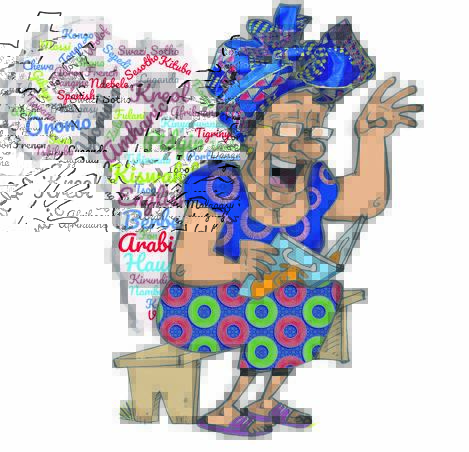
Proclaimed by the United Nations Educational, Scientific and Cultural Organisation (Unesco) in 1999, International Mother Tongue Day raises significant awareness of the importance of mother tongue use, cultural diversity and multilingualism.
This year marks the 26th anniversary of dedicated efforts to preserve linguistic diversity and promote the use of mother tongues. The aim of this year’s celebration was to promote, encourage, and strengthen the reading culture, as well as to improve cultural identity and preserve mother tongue pride.
In line with the CUT’s multilingual language policy, six Gr.4 learners of the Castle Bridge School and the Dr Viljoen Combined School participated in read aloud sessions in their mother tongues: Sotho, English and Afrikaans.
Dr Lehlohonolo Motake, deputy director of the LDSU, mentioned that the purpose of celebrating International Mother Tongue and World Read Aloud Day together demonstrated that literacy and language were deeply connected.
“When children can read confidently – especially in the languages closest to their hearts – we strengthen education, cultural pride and social inclusion,” he said.
Responding to the question why the unit put the two together, Motake stated: “The core mandate of the unit is to promote multilingualism and develop indigenous languages, while advancing literacy. Bringing World Read Aloud Day and International Mother Tongue Day together is a natural and strategic decision.
“This integrated celebration allows us to highlight that literacy development is strongest when children learn in a language they understand well. It also affirms the value of African languages in education, media and public life.”
According to the Progress in International Reading Literacy Study (Pirls), South Africa is facing a severe literacy crisis. Pirls is an international assessment and research project designed to measure reading achievement at the fourth-grade level, as well as school and teacher practices related to instruction.
Research revealed that more than 80% of Gr.4 learners in the country struggle to read for meaning and proficiency in any language – an increase from 78% in 2016. This result placed South Africa last out of 57 countries assessed.
This international comparative assessment has been conducted every five years since 2001 by the International Association for the Evaluation of Educational Achievement (IEA). It measures trends in reading literacy and comprehension for fourth-grade students, typically aged nine to 10 years old; serving as a global benchmark for reading achievement at a crucial transition stage.
Arising from the research, Motake explained that the university’s LDSU targeted Gr.4 learners to address such ongoing challenges through a community engagement initiative.
“Gr.4 is a very critical stage in a child’s academic journey – it is often the year when learners transition from ‘learning to read’ to ‘reading to learn’,” he said.
Motake has emphasised the importance of the use and influence of platforms such as CUT FM on days such as International Mother Tongue Day and World Read Aloud Day.
“Radio reaches every corner, even where printed books may be scarce and internet connectivity is limited. As the world becomes increasingly interconnected, this celebration serves as a reminder that every language is important and has a place in the airwaves,” said Motake, adding that mother tongue remained essential for cognitive development, academic success, and preserving cultural identity.
The theme for International Mother Tongue Day 2026 is “Youth voices on multilingual education”.