
A solo exhibition acknowledging and honouring the First Nation peoples of this land, the San and Khoi groups, is in construction at the Oliewenhuis Art Museum’s Reservoir venue in Bloemfontein.
Titled What remains through time, slowness and stillness?, the exhibition will officially open from 15 July to 24 August.
This is creative work by artist Sonya Rademeyer, interested in exploring notions of deep-empathy.
She explained the importance of the exhibition.
“I hereby acknowledge and honour First Nation peoples of this land, the San and Khoi, who hold deep ancestral connections and memories to this land and its people, and on whose land this project takes place.”
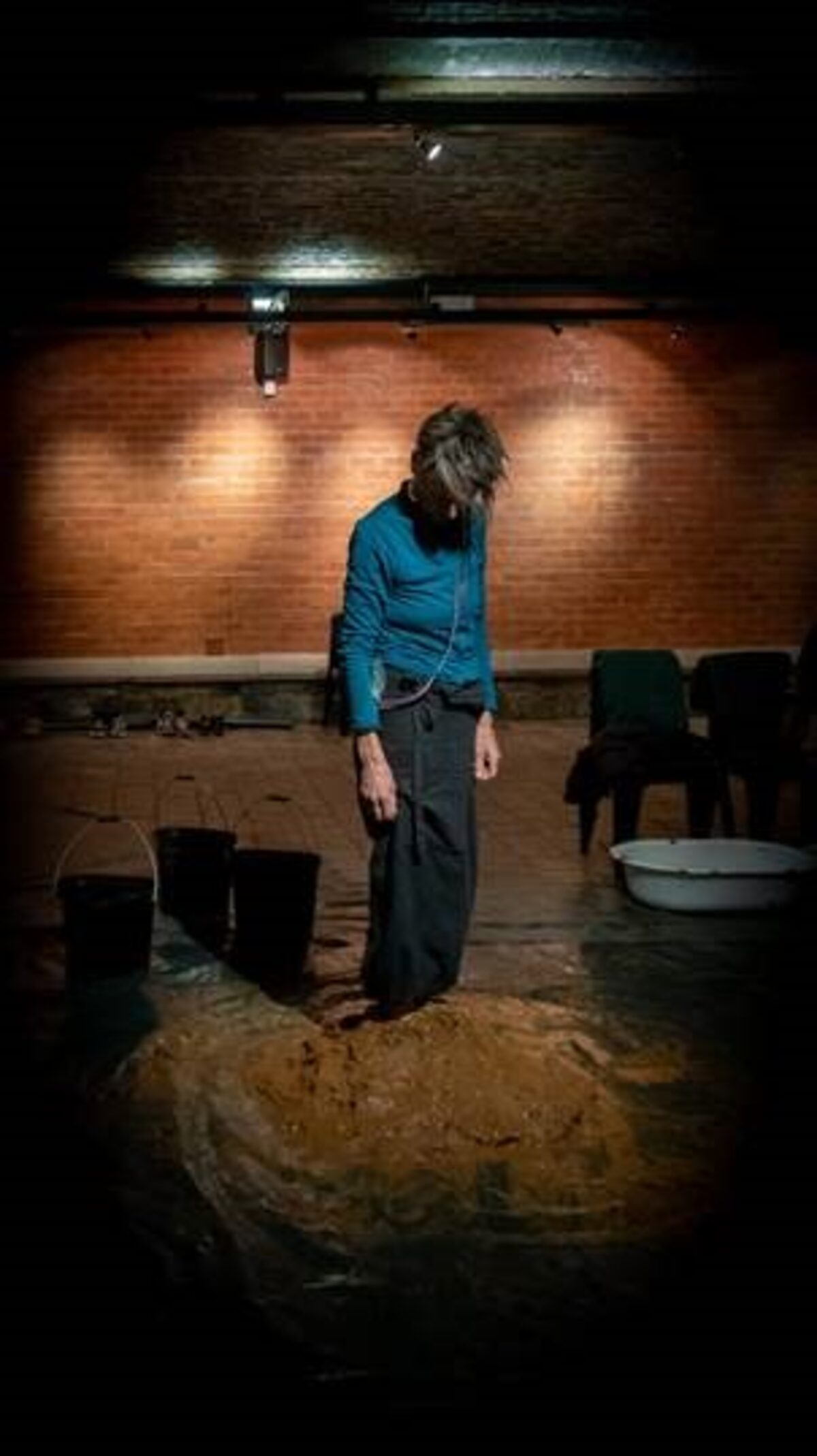
Karen Marais, senior exhibition officer, said the altar piece to the exhibition is the building of a cultural wall or “Meraka” (place of gathering) through community collaboration.
“Using post-natural and indigenous methodologies which include materials such as clay and animal dung, the collaborative building is viewed as a gesture of relationality. The wall hopes to visibilise decolonial ways of knowing through recognisable traditional building materials and particular architectural iconography. It also reads as an honouring towards the land on which the work of the solo exhibition happens,” said Marais.
The exhibition, divided into phases, is conceptualised around the theme of time and erosion, and explored through a decolonising worldview.
“In the place of stillness where erosion generally happens, such as in the natural and biological environment, the natural processes of decay an erosion of plant life generally runs unnoticed.
“However, when notions of erosion are introduced to include the historical, the social, the cultural, intellectual or the political, it becomes humanly foregrounded.
“Using conceptual ideas around time, erasure, loss, invisible belonging and time as departure points to explore notions of historical cultural erasure, the more-than-human-kin (live snails) leave traces of such erasure by eating into high-end Fabriano paper,” said Marais.
She said the exhibition in itself appeals for a new way of conscious decision-making around community inclusion, even within a solo exhibition structure.
“A broader concept of community inclusion is through the conceptual and physical linkage of the exhibition wall to a Meraka on the outskirts of Bloemfontein. This decolonising cultural act enforces a bi-directional exchange whilst decentering Oliewenhuis Art Museum as a colonial institution, creating an opportunity to open up conversations around cultural exclusion due to colonisation,” said Marais.