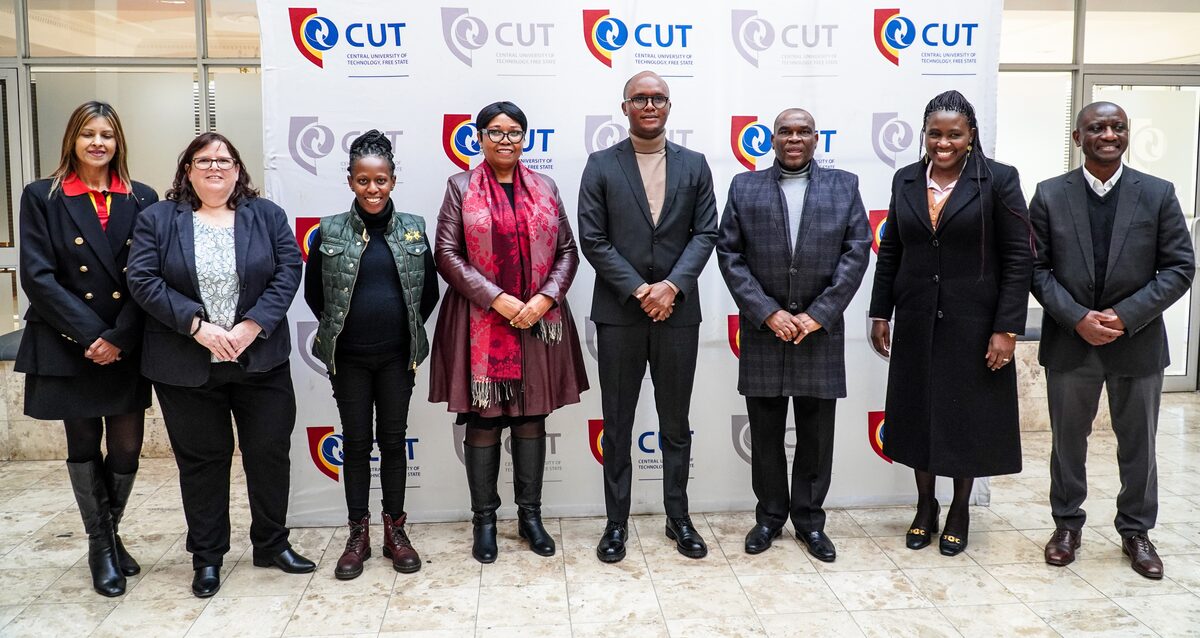


The Artificial Intelligence (AI) hub launched at the Central University of Technology (CUT), Free State, is envisaged to stimulate transformation in agricultural practices in South Africa’s central region.
The CUT has partnered with the Department of Communications and Digital Technologies (DTCT) and the Free State government to launch this hub under the auspices of the Artificial Intelligence Institute of South Africa (AIISA).
This was officially done on 1 March.
According to Prof. Alfred Ngowi, CUT deputy vice-chancellor of research, innovation, and engagement, the AI hub concept is closely aligned with the institution’s comprehensive digital transformation strategy and road map. He said the CUT would guide the operations of the hub of the AIISA.
“We firmly believe that AI will be the driving force behind the transformation of teaching and learning, research and innovation, and the overall efficiency of our operations. As depicted in our vision for 2030, the CUT AI hub aspires to be a leading centre for AI research, development, and application, significantly advancing smart agriculture value chain, smart manufacturing, natural language processing, and smart and sustainable tourism.
“Our high-level focus areas reflect our commitment to addressing societal challenges and creating sustainable solutions,” said Ngowi.
“The thematic areas of smart agriculture value chain, smart manufacturing, natural language processing, and smart and sustainable tourism are carefully chosen to align with the needs of our region and the nation. These areas will serve as the pillars upon which we build our research, development, and innovation endeavours,” he added.
Alfred Mashishi, chief director of the DTCT, said that all policies they create relating to AI would be key in building a robust digital ecosystem between government, business and academia.
“There are three aspects we must understand when we endeavour to harness AI. One is that AI data governance and connectivity to support policymaking must be a process.
“The second is that it is important to cooperate internationally to ensure that AI is an emerging technology that is trustworthy.
“The third aspect is that a common understanding of AI is built through sharing good practices and creating evidence of AI systems,” said Mashishi.