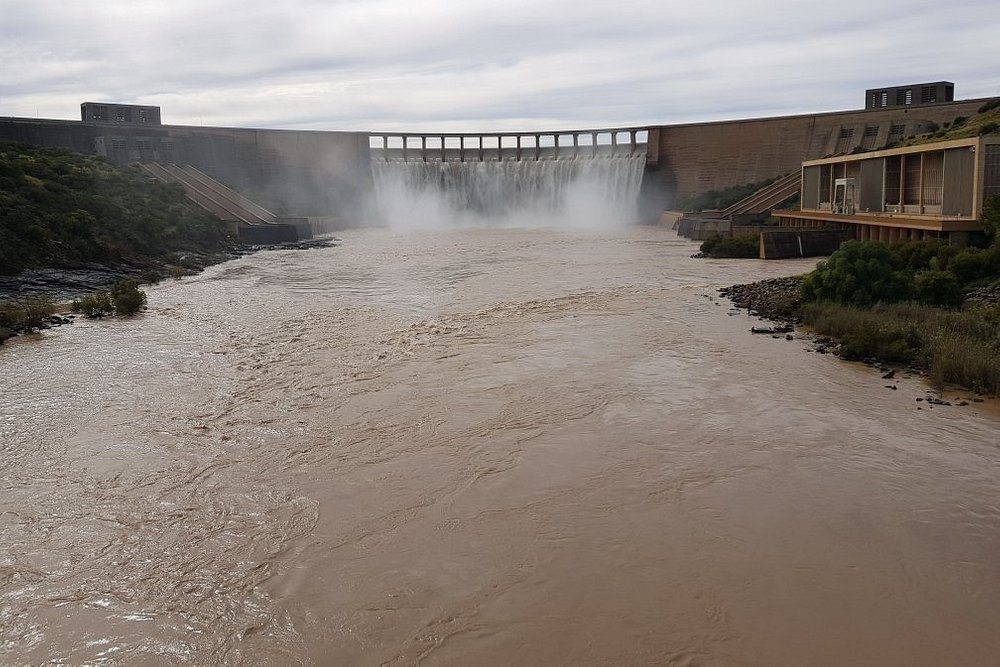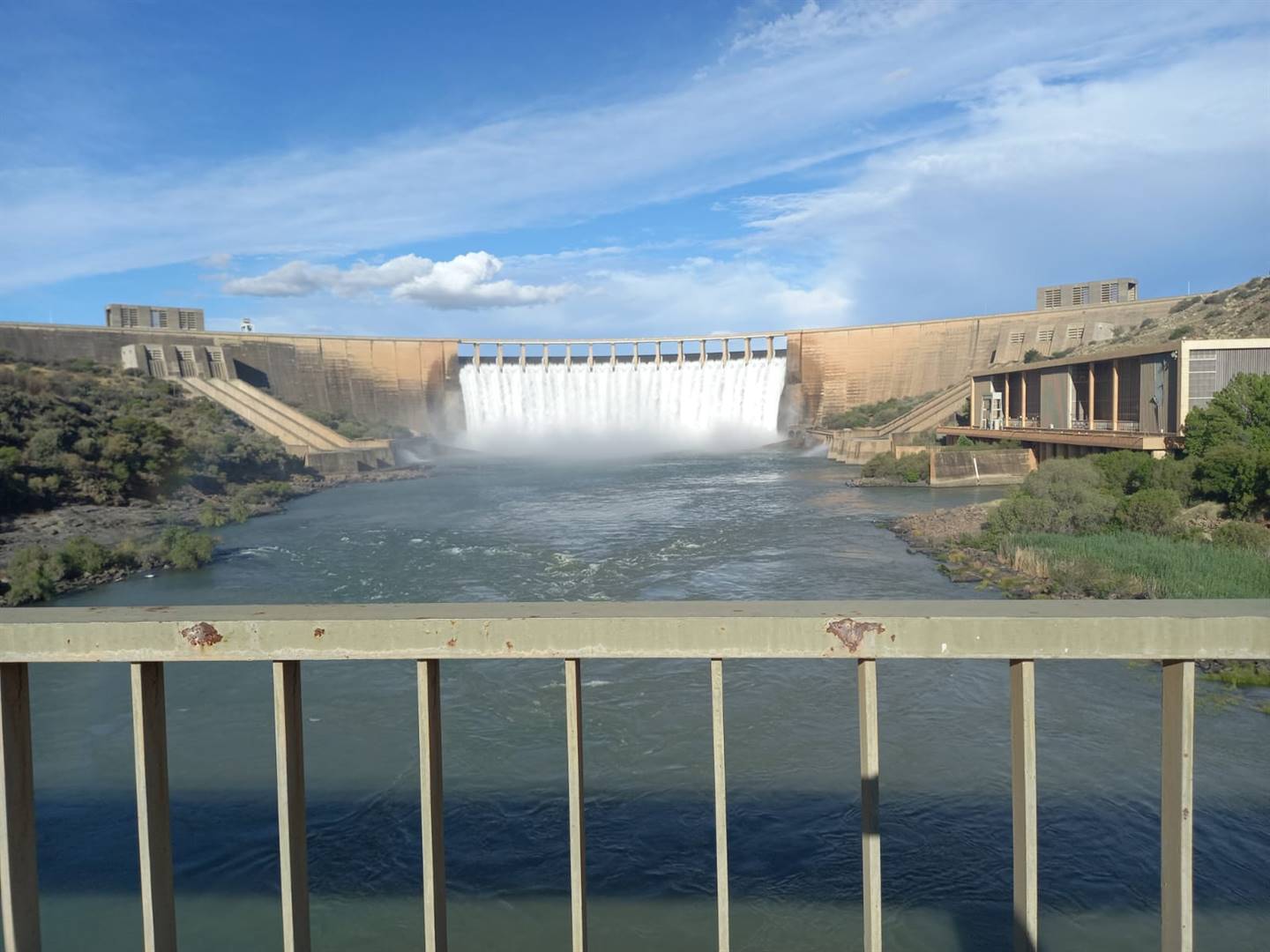

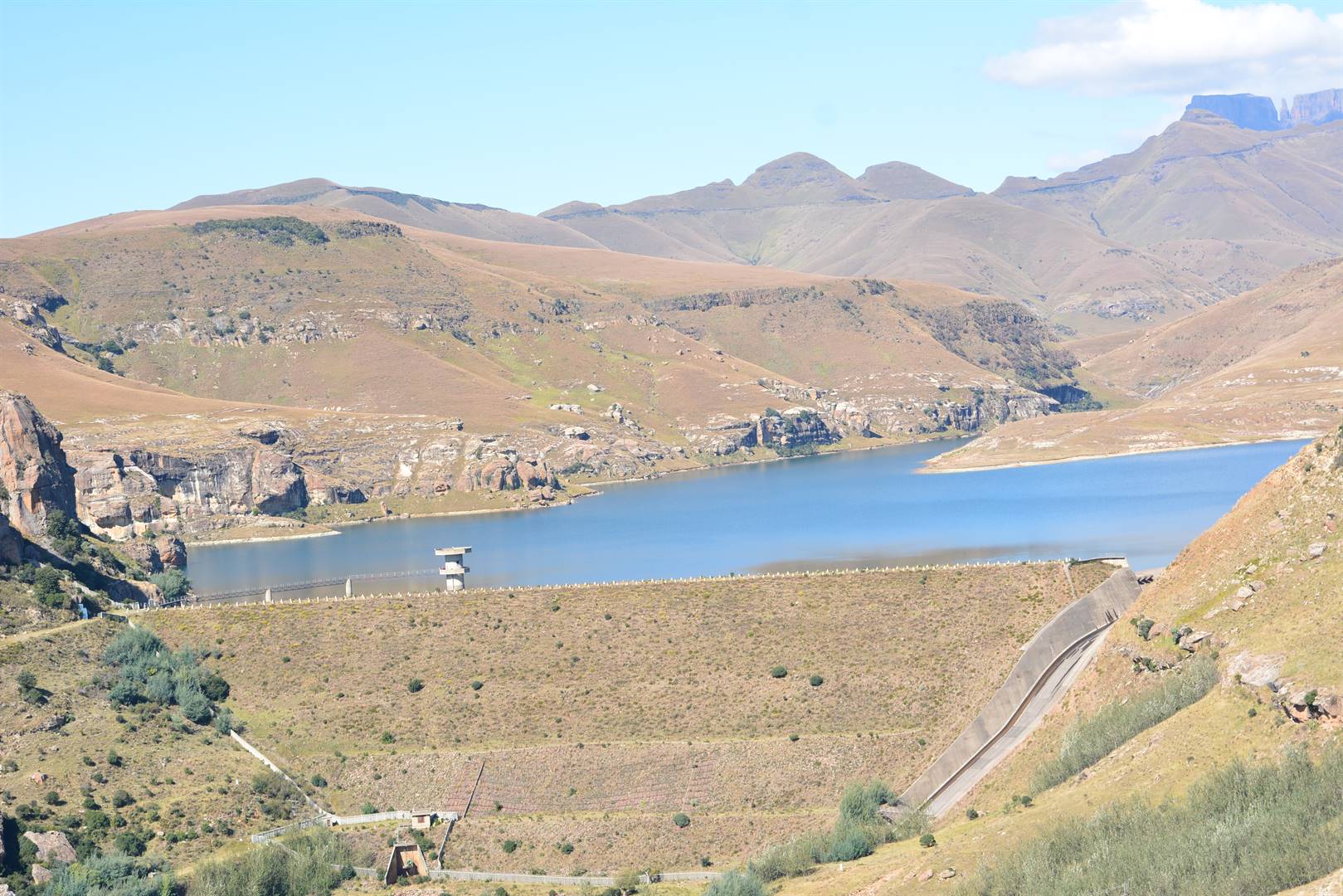
With most large Free State reservoir dams hovering above capacity levels of 97%, this supply is expected to see consumers through the winter. Several dams used for human consumption and irrigation, as well as industrial purposes, remain at their peak capacity.
According to the Department of Water and Sanitation’s (DWS) weekly report, the Free State’s total water capacity level is at 98.1%, while last year it stood at 101,5% during this time of the year.
The satisfactory state of the storage dams is attributed to persistent rainfall. For safety reasons, the department was compelled to release water from selective dams in the event that they overflow, following the constant rainfall.
The department’s weekly report shows that two dams in the greater Qwaqwa region, the Metsi-Matsho and Fika-Patso, remain significantly high (97.2%).
The dams improved significantly due to rainfall early in January, and rose above 100% from 69,4% and 79,1%, respectively.
The Bloemfontein Water Supply System, consisting of four dams supplying water to the Mangaung Metro and surrounding areas, sits at 98.4% combined, according to the department.
Rustfontein is at 96.5%, Welbedacht 80.4%, Knellpoort 99.8%, and Groothoek 101.5%. Sterkfontein Dam, which is a reserve dam, stands at 101.4%, and the Bloemhof Dam at 99.1%. Allemanskraal Dam is at 99.2% and the Erfenis Dam stands at 103.2%, after improving from 100.0% capacity.
The giant Gariep Dam is sitting at 98.4% while Vanderkloof Dam, the second-largest dam in South Africa, is at 94.8%. The Krugersdrift Dam saw an increase to 109.9% from 100.5% the previous week. The Kalkfontein Dam is at 99.4% and supplies water to towns in the western area of the Xhariep region.
The Tierpoort Dam, mainly used for agriculture irrigation purposes, is at 100.5%.
Nondumiso Mciteka, provincial spokesperson of the department, said the department encourages consumers to continue using water sparingly, given the fact that South Africa is a water-scare country.