
Five women who reside in the informal settlement Phomolong in Bloemfontein are a living example of the Sotho expression “Mmangwana o tshwara thipa ka bohaleng,” which loosely translates to “A mother would go to any lengths in protecting her children.”
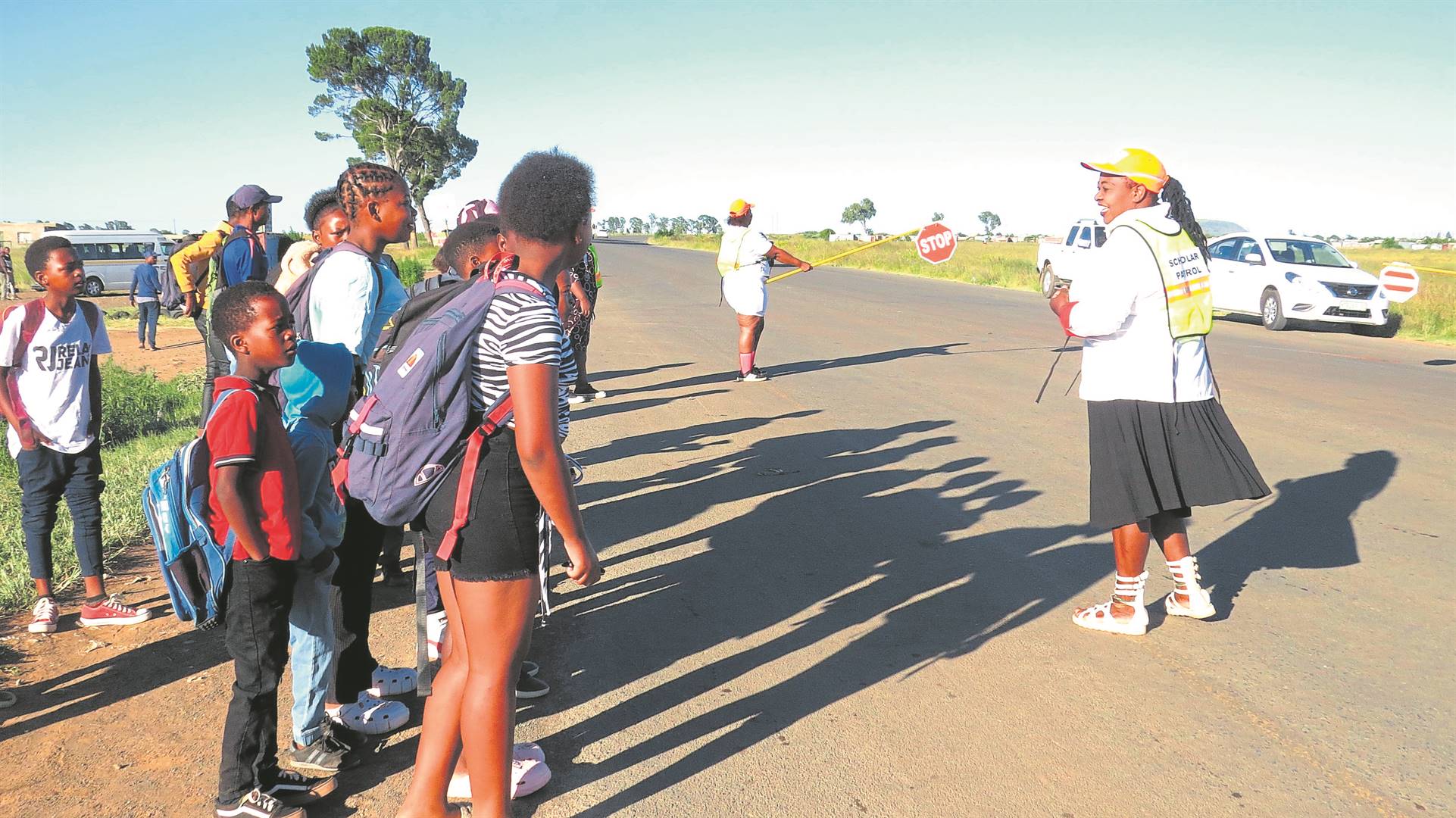
These ordinary women are volunteering as scholar patrollers to save the lives of multitudes of learners crossing the dangerous R702 road. The unsung heroines ensure the safe crossing of learners at a dedicated section. Several parents who have children crossing this national road daily to attend schools, depend on the fivesome.
The compassionate crew is made up of Kedibone Louw, Lerato Mokhafola, Retshwanetse Sebetseli, Nthabiseng Tau and Dibakiso Lethole. They are a familiar sight to motorists and pedestrians using this road daily, early in the morning. All are part of South Africa’s growing unemployed population.
The crew has been volunteering since 2021, upon relocating to establish the Phomolong settlement following an order by the Mangaung Metro Municipality (MMM). Multitudes of learners from Phomolong wake up early and walk for hours to attend schools in established residential areas such as Phase 3, Turflaagte and Rocklands. The Caleb Motshabi Primary School is the nearest school.
Lethole explains that the tragic death of a relative’s child on the notorious road prompted her to volunteer as a scholar patroller.
She says the child was going to school when killed by a vehicle in 2021.
“I immediately organised other women within my area to volunteer as scholar patrollers the same year. Some gave up along the way. They raised various issues such as having to brave severe weather, and the frustration of joblessness, which I could not solve – yet I am equally affected like every unemployed person,” said Lethole.
Her perseverance inspired Mokhafola and Tau to join. The pair of Louw and Sebetseli joined later to render this essential road safety service.
“We regulate traffic just like qualified traffic officers do, regardless that we are not trained as scholar patrollers,” said Lethole.
It is the crew’s daily routine to wake up early to ensure no other child going to school is killed on the notorious R702. They control traffic from 06:45 until 07:45, blowing their whistles to alert motorists, as well as often impatient taxi operators.
“The whistles we use we purchased with our money. That is another part of our sacrifice to safeguard children from being killed,” said Lethole.
According to Mokhafola, their one hour of service in the morning is difficult.

The compassionate crew safeguard multitudes school children crossing the national road, R702.
“Some impatient taxi operators will swear at us, using offensive language. They even drive behind us in the area, even through the patrol area while children are crossing. We are ensuring their children arrive alive at school.”
Lethole also says their goodwill has come with misfortune, in the form of motorists repeatedly being demeaning.
“We are accustomed to motorists giving us the middle finger,” says Lethole.
Their persistence has, however, come with a donation of equipment in stop signs and reflective vests from the provincial department of roads and traffic.
“We now need support in the donation of attire to use during the winter and on rainy days, plus an additional stop sign board.”