
The Research Development Support department in the Central University of Technology, Free State (CUT), faculty of Engineering, Built Environment and Information Technology, has been an important component in the milestone of the university’s 20 years of innovation.
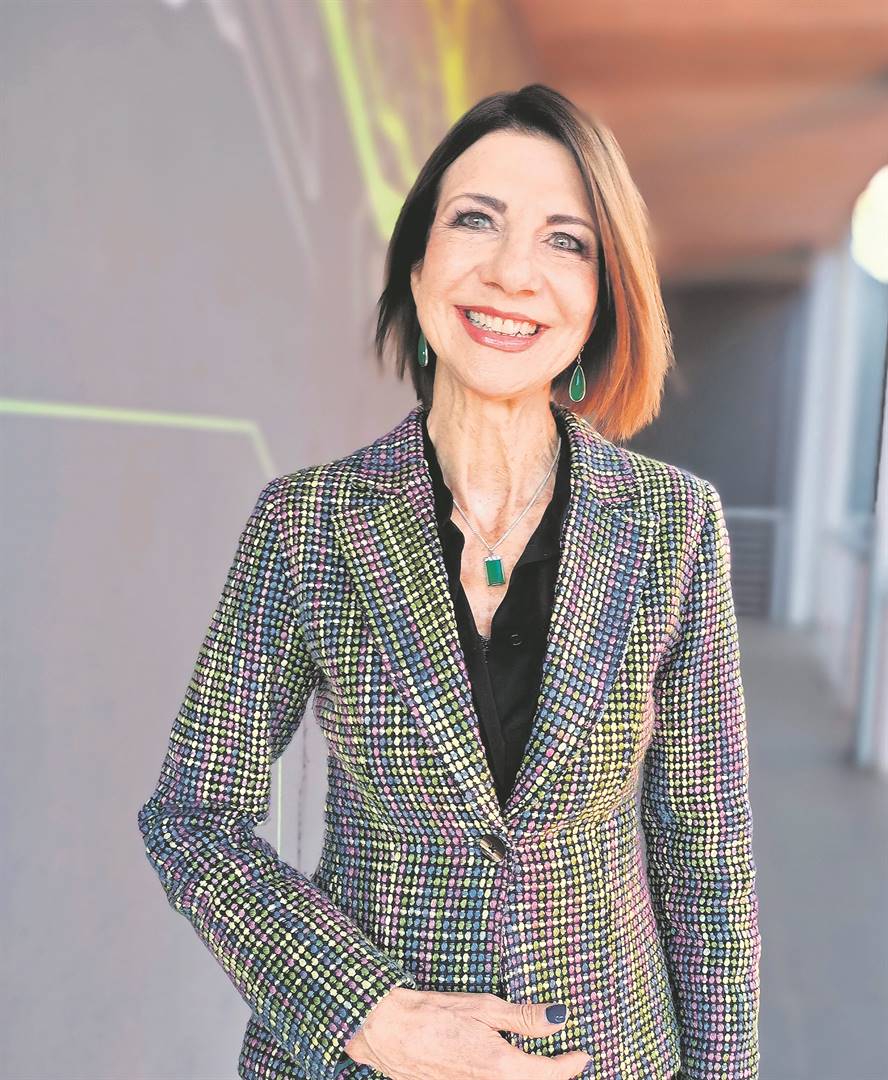
According to Edith Sempe, director of the aforementioned department, the university’s cutting-edge research made this all possible.
In support of the CUT’s Vision 2030, she said the university already focuses on future goals underpinned on three research and innovation culture themes:
- developing scholarship and a strong research culture;
- expanding the university’s pockets of excellence; and
- establishing and enhancing innovative ecosystems, including technological and social innovations that can lead to commercialisation.
“The Research Development and Postgraduate Studies Strategic Plan for 2021 to 2025 is extending on the already approved Institutional Strategic Plan for 2021 to 2025. The plan, under the umbrella of the division of research, innovation and engagement contributes to the university’s research and innovation value chain and ecosystem.
“The plan is guided by the current notion of ‘the future of universities’, where relevance of research in contributing towards society and economy is becoming vital.
“In line with global practice, is the concept of research development understood as increasing the quality and quantity of research outputs informed by publications and masters’ and doctoral graduations. The advent of the fourth industrial revolution (4IR) and the recently released report of the presidential commission on 4IR provide an opportunity to articulate how the university will address the recommendations of this report during the 2021-’25 period.”
Sempe explained that, in addition, the plan supports three important objectives, namely:
- productivity in research by all instruction and research staff (and not measured by outputs only);
- capacity development to deliver on quality and quantity of research outputs; and
- Increased support for the Women in Research Programme.
Pursuant to the CUT’s innovation goal, Sempe’s research programmes were not in isolation, as partnership formed core of the action programme.
“The CUT has been conscious of the fact that research and innovation activities do not function in a vacuum – they are influenced by national policies and strategies, the African strategic imperatives, and global research agenda. Of special importance is the global trend to be responsive to the challenges of the 4IR, the World Health Organisation’s (WHO) concern on communicable diseases, the United Nation’s (UN) sustainable development goals, the Africa Union’s 2063 agenda, the South African national development plan, the Department of Science and Innovation’s (DSI) decadal plan priorities and, the growing emphasis on transdisciplinary research,” said Sempe.
Based on the research priorities, she explains the university identified the following research focus areas or clusters:
- Investigate and apply technologies and innovations that will foster and promote sustainable development.
- Apply scientific research in different disciplines that will improve the quality of health and living standards of humans, animals, and plants.
- Conduct scientific research that empowers society for invaluable contribution towards sustainable socio-economic development.
“The CUT, in fulfilling its mandate, initiated a policy to enable the organisation of research centres as vehicles that will ensure relevant and focused research and innovation. Most significantly, the university senate had approved the research centres,” said Sempe.
The flagship research centres are the following:
- the Centre for Applied Food Security and Biotechnology (CAFSaB);
- Centre for Diversity in Higher Education Research (CDHER);
- Centre for Enterprise and Entrepreneurship Studies (CEES);
- Centre for Rapid Prototyping and Manufacturing (CRPM);
- Centre for Sustainable Smart Cities (CSSC); and
- the Centre on Quality of Health and Living (CQHL).
“The CUT takes pride in its National Research Foundation (NRF)-rated researchers. A total of 45 women (38%) received awards under different programmes in support of research.
“In terms of scholarships, 89 women (55%) were awarded scholarships, out of a total of 173 scholarships,” said Sempe.
Sempe believes the CUT’s embracing of rapid change brought by the 4IR further positions the institution as the leading university.
“The university has taken advantage of the exciting opportunity presented by the 4IR – an opportunity which can potentially transform and impact positively on our research and innovation agenda.
“For this reason, on 17 September 2018, the CUT launched the 4IR-and-circular-economy task force to prepare the institution for a rapidly changing world,” she said.
According to Sempe, the CUT’s research potential was unleashed during the Covid-19 pandemic, amidst its negative impact worldwide.
“The CUT was committed to supporting the government to overcome the Covid-19 pandemic.
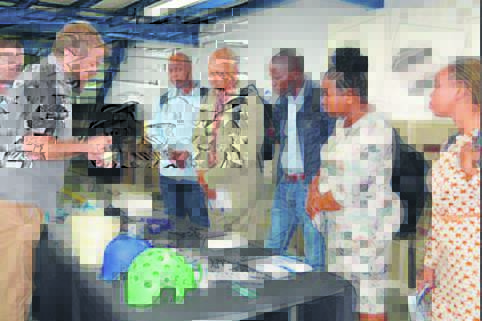
“It is pleasing to report that our Product Development Technology Station (PDTS), Centre for Rapid Prototyping and Manufacturing (CRPM), and Centre for Quality of Health and Living (CQHL) were involved with government in different processes to challenges associated with Covid-19,” said Sempe.