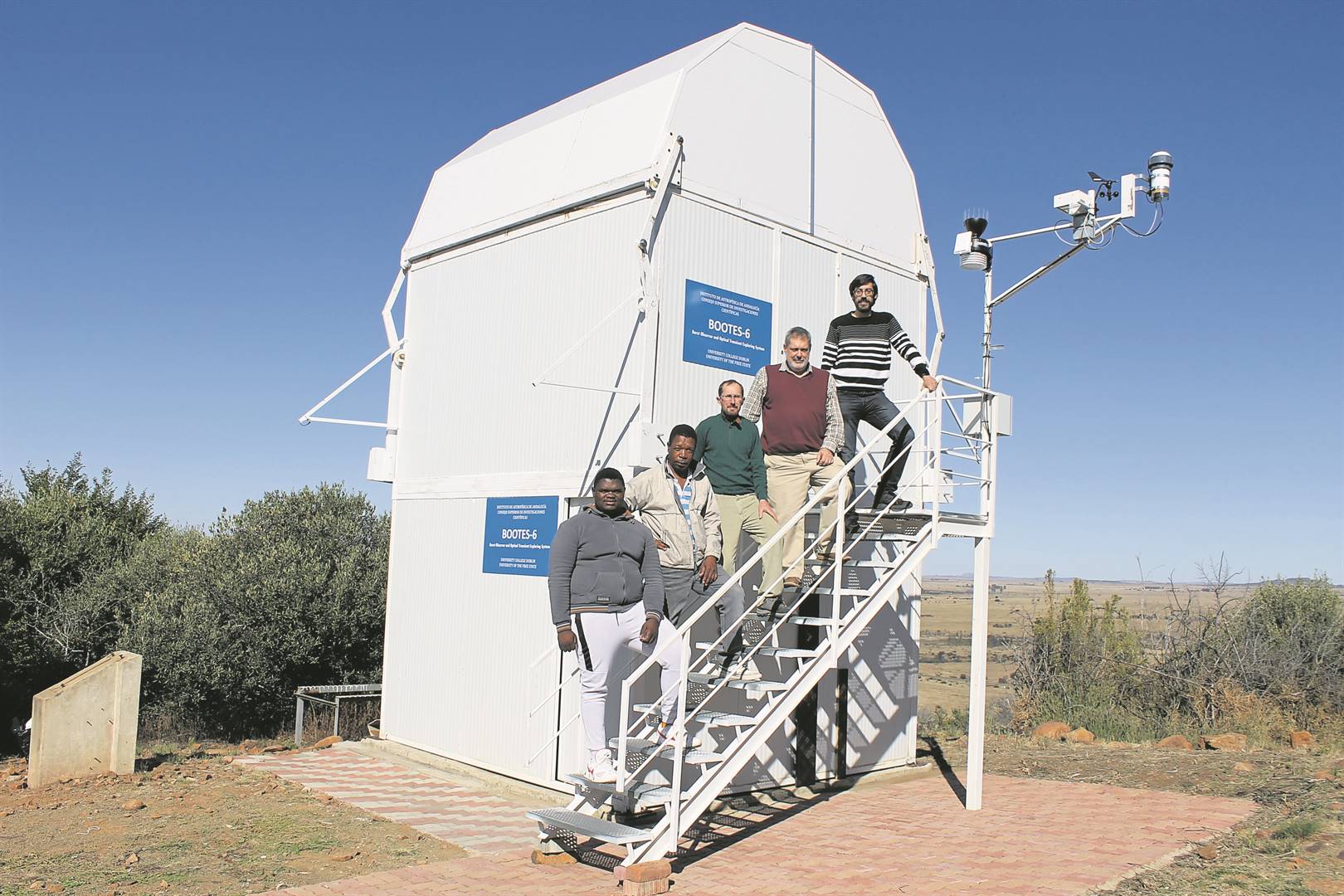


The Naval Hill Planetarium in Bloemfontein celebrates its first decade in keeping the study of astronomy alive during November and December. Special events include the South African premier of the American Museum of National History (AMNH) full-dome film, Worlds Beyond Earth.
In addition to this premier are two public shows, one in Afrikaans and the other English, every Saturday. The board of the Southern African Large Telescope (Salt), the largest single optical telescope in the southern hemisphere, will attend the premiere the University of the Free State (UFS) stated in a media statement.
The planetarium, said to be the first digital planetarium in Africa, south of the Sahara, became fully operational in 2013 after the buildings were revamped accordingly. According to a statement by the UFS, the former Lamont-Hussey Observatory was founded by the University of Michigan in 1927 for the purpose to study double stars through the largest refracting telescope in the southern hemisphere.
The celebration highlights the success of a public-private collaboration. Parties include the UFS, the Mangaung Metro Municipality (MMM), the Department of Science and Innovation, the Free State government, trusts as well as foundations. The collaboration has resulted in this former Lamont-Hussey Observatory’s ability to thrive, becoming Southern Africa’s first digital planetarium.
The collaboration entailed improvements to the buildings, the conversion of the old telescope building into a modern digital planetarium and its installation as a display outside the old telescope dome, an observing platform, and a new hall for environmental education.
Pacofs initially used the buildings as the observatory theatre after the closure of the astronomical observatory. The UFS’ department of physics is managing the planetarium.